
🎄 Win a month in Italy for two — €10,000 · The Secret Italy Prize GO →
The Templar Church of San Bevignate — Perugia
← Back
Religious places 📍 Perugia, Italy 264 views

The Templar Church of San Bevignate

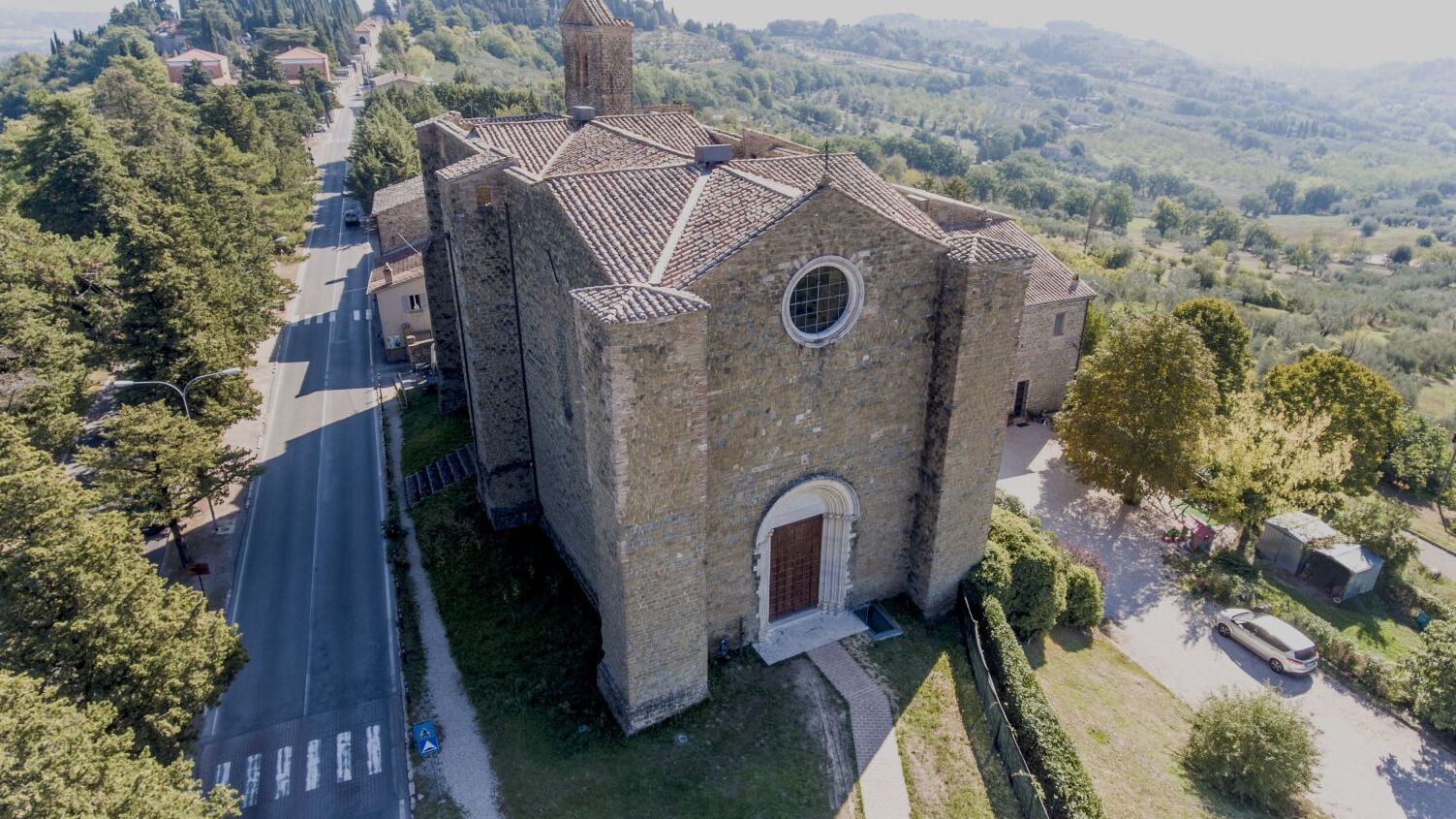
The church of San Bevignate is located on the outskirts of Perugia, in Via E. Da Pozzo, opposite the monumental cemetery. A complex series of factors contributed to its construction, around the middle of the 13th century: the movement of the flagellants of Raniero Fasani, who, st...

The Templar Church of San Bevignate — Perugia, Italy.

Location
Perugia
Type
Religious places
Opening hours
Weather now
↗ Directions

About The Templar Church of San Bevignate

The Templar Church of San Bevignate - Perugia | Secret World Trip Planner

The church of San Bevignate is located on the outskirts of Perugia, in Via E. Da Pozzo, opposite the monumental cemetery. A complex series of factors contributed to its construction, around the middle of the 13th century: the movement of the flagellants of Raniero Fasani, who, starting from the Umbrian capital in 1260, spread everywhere in Italy; the new class of the people, who, having assumed the political preeminence, felt the need to legitimize themselves with their own temple and their own saint and chose the mysterious Bevignate, never canonized and of whom there is no certain documentation.Finally the numerous experiences of hermitic life settled in that area and the presence of the Templars who needed a new church to replace the one of San Giustino d'Arna. It was the Templars who managed to obtain the patronage of the building from the Pope. After the destruction of the order, in 1312 the church passed to the Knights of San Giovanni Gerosolimitano, then to the nuns of San Giovanni and later to various brotherhoods until 1860, when it became state property and was entrusted to the Municipality of Perugia. The church is unadorned externally according to the model of buildings built by the Templars in Palestine. Inside, it has a single nave with two spans covered by a cross vault and a raised square apse introduced by a triumphal arch. It preserves two-thirds century frescoes of great importance such as the Procession of Flagellants, the Fight between Templars and Muslims, the Legend of Saint Bevignate, on whose cloak there are graffiti engraved between the end of the 15th and the 16th century by pilgrims, believers and Templar knights.

✦ Secret World · suggested day

A perfect day in Perugia

Start with The Templar Church of San Bevignate, then continue with nearby places selected by Secret World.

  1. 01
    Morning
    The Templar Church of San Bevignate
    📍 Perugia
    Start here
  2. 02
    Afternoon
    📍 1.4 km away
  3. 03
    Evening
    📍 1.5 km away

Collect this place

Turn places you discover into stamps in your Secret Passport.

Open Secret Passport →

Keep exploring · Perugia

Frequently Asked Questions

The church is situated on the outskirts of Perugia at Via E. Da Pozzo, directly opposite the monumental cemetery, making it easily identifiable. Its location on the city's periphery reflects its historical role as a spiritual sanctuary separate from the urban center.
The Templars constructed San Bevignate in the mid-13th century as a replacement for their previous church of San Giustino d'Arna, and they successfully obtained papal patronage for the building. The church's construction was also influenced by the flagellant movement and the need for the emerging merchant class to legitimize their political power through their own religious monument.
The church preserves remarkable 13th-century frescoes including the Procession of Flagellants, the Fight between Templars and Muslims, and the Legend of Saint Bevignate. Additionally, the saint's cloak features graffiti carved between the 15th and 16th centuries by pilgrims, believers, and Templar knights, creating a unique historical record.
After the Templar order was dissolved in 1312, the church passed to the Knights of San Giovanni Gerosolimitano, then to the nuns of San Giovanni, and subsequently to various brotherhoods. In 1860, it became state property and was entrusted to the Municipality of Perugia, where it remains today.
The church features austere external architecture following the Templar model used in Palestine, with minimal ornamentation reflecting the order's aesthetic principles. Inside, it contains a single nave with two spans covered by cross vaulting and a raised square apse introduced by a triumphal arch, creating an impressive interior space.

Experiences nearby · Perugia

Powered by Viator

See more on Viator.com

Secret World Hidden places, real stories — plan your trip
Get the app
