

Hidden Beneath Rome: The Underground Basilica's Enigmatic Allure
Beneath the bustling streets of Rome, a secret from the past lies quietly concealed, holding the whispers of ancient rituals and a forgotten faith. The Underground Basilica of Porta Maggiore, unearthed by accident in 1917 during railway construction, offers a rare glimpse into the mystical world of the Neo-Pythagorean cult, a spiritual movement that thrived in the first century AD.
### History and Origins
This remarkable subterranean sanctuary dates back to the Augustan era, a period marked by profound cultural and architectural advancements. The basilica was likely founded by a wealthy Roman family dedicated to the Neo-Pythagorean philosophy, which emphasized spiritual purity and the immortality of the soul. The cult drew inspiration from the teachings of Pythagoras, blending mathematics, philosophy, and mysticism into a unique religious practice.
The basilica, forgotten for nearly two millennia, was a spiritual haven during a time when such practices existed on the fringes of Roman society. Its three-chamber structure, hidden from the prying eyes of the authorities, served as a sacred meeting place for initiates committed to spiritual enlightenment.
### Art and Architecture
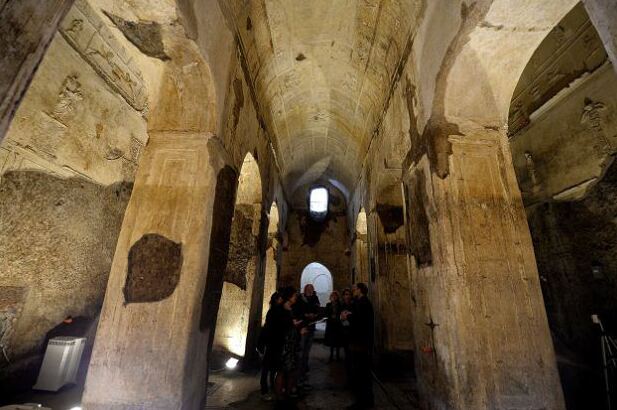
Architecturally, the Underground Basilica is a masterpiece of early Roman art, showcasing the elegance and sophistication of its time. The structure features a central nave flanked by side aisles, divided by imposing pillars that lead to a semicircular apse—a layout that prefigures later Christian basilicas. The walls and ceilings are adorned with intricate stucco work, depicting mythological scenes and allegories that reflect the Neo-Pythagorean beliefs.
Notable artworks include the delicate representations of Orpheus, a symbol of the soul's journey, and detailed portrayals of griffins and sphinxes, creatures often associated with guardianship and mystery. These exquisite decorations reveal not only the artistic prowess of the period but also the esoteric symbolism cherished by the cult.
### Local Culture and Traditions
While the Neo-Pythagorean cult has faded into history, the influence of such spiritual practices can still be felt in Rome's rich tapestry of cultural traditions. The city, with its deep historical roots, hosts a myriad of festivals celebrating its diverse religious heritage—from solemn Catholic processions to lively pagan-inspired events that harken back to the days of ancient Rome.
### Gastronomy
The area surrounding Porta Maggiore is a vibrant neighborhood where Roman culinary traditions thrive. Visitors can indulge in classic dishes such as Cacio e Pepe, a simple yet delicious pasta made with Pecorino Romano cheese and black pepper, or Saltimbocca alla Romana, a savory veal dish seasoned with prosciutto and sage. Local trattorias often serve Frascati wine, a crisp white wine that perfectly complements the rich flavors of Roman cuisine.
### Lesser-Known Curiosities
Few visitors realize that the basilica was not only a place of worship but also a testament to the architectural ingenuity of its time. The complex's design incorporates advanced engineering techniques to ensure stability and ventilation, a necessity given its subterranean location. Additionally, some believe the basilica's precise orientation may have been intentional, aligning with celestial events significant to the Neo-Pythagorean faith.
### Practical Visitor Information
Access to the Underground Basilica of Porta Maggiore is typically limited to guided tours, which can be arranged through local heritage organizations or specialized tour operators. The basilica is best visited during the spring or fall, when Rome's weather is mild, allowing for a comfortable exploration of its hidden depths.
Visitors should be prepared for a short descent into the cool, dimly lit chambers and take note of the delicate stucco work, which can be easily overlooked in the shadows. Photography is often restricted to preserve the fragile artworks, so plan to absorb the intricate details with your eyes rather than through a lens.
To uncover more of Rome's hidden wonders, consider using the Secret World app to create a personalized AI itinerary.


