
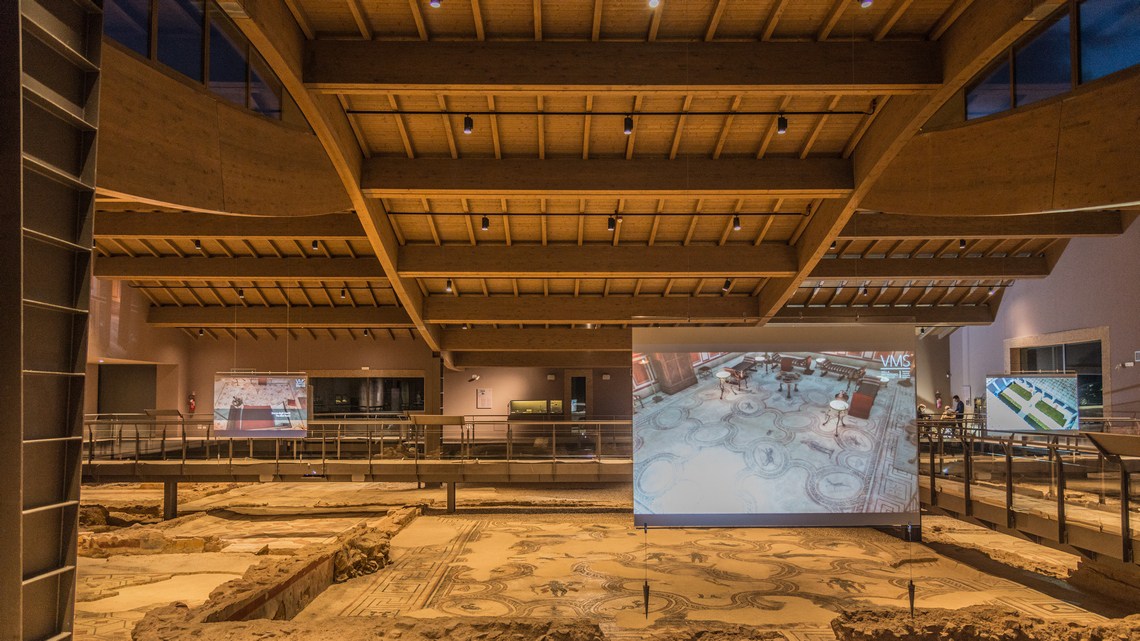

Nestled within the enchanting landscape of Spello, Italy, the Villa of Mosaics stands as a testament to the region's rich historical tapestry. Discovered serendipitously in July 2005 during construction for a public parking area just outside the town's walls, this archaeological gem has unveiled the remnants of a grand villa, illuminating aspects of Roman life long obscured by time.
The villa dates back to the Roman Empire, likely established in the 1st century AD. Its location in Umbria, a region known for its strategic importance during antiquity, suggests it was a luxurious retreat for affluent Romans. The villa’s significance grew particularly with the discovery of its exquisite mosaics, which are believed to have been meticulously crafted for both aesthetic enjoyment and social function. The excavation efforts, conducted under the oversight of the Archaeological Heritage Office of Umbria, have revealed a sprawling complex of twenty rooms covering about 500 square meters, each narrating stories of a bygone era.
Architecturally, the villa showcases typical Roman styles, with a layout centered around a peristyle, or an arcaded courtyard that encircles an internal garden. This design reflects the Roman emphasis on blending indoor and outdoor spaces, promoting relaxation and socialization. Among the standout features are the Hall of Birds, Hall of Amphoras, and the Heated Room, each adorned with polychrome mosaics that display intricate geometric patterns and vibrant figurative scenes. The Triclinium, or dining room, deserves special mention for its elaborate mosaic depicting a scene of wine pouring, symbolizing the pleasures of life and abundance.
The artistic significance of the villa cannot be overstated. The mosaics, particularly those in the Hall of Banquets, not only showcase the technical skill of ancient artisans but also serve as an insight into the cultural values of the time. The motifs represent the four seasons and include figures of Satyrs, alluding to Dionysian festivities—a celebration of wine, fertility, and revelry that underscores the villa's role in social gatherings.
Spello, with its medieval charm and stunning vistas, also possesses a rich tapestry of local culture and traditions. The town is famous for the Infiorata, a vibrant flower festival held annually in June. During this event, locals create stunning floral carpets that adorn the streets, celebrating the feast of Corpus Christi. The festival draws visitors from around the world, transforming Spello into a colorful canvas that reflects the community's artistry and devotion.
The culinary landscape of Spello is equally inviting, with local specialties that resonate with the region's agricultural heritage. Umbrian cuisine emphasizes fresh, local ingredients, and visitors can savor dishes like strangozzi, a type of handmade pasta typically served with a rich tomato sauce. Pairing these culinary delights with a glass of Sagrantino di Montefalco, a robust red wine native to the region, offers a true taste of Umbria. Olive oil from the surrounding hills is also a staple, often celebrated for its quality and flavor—perfect for drizzling over local bruschetta.
For those who wander beyond the well-trodden paths, the Villa of Mosaics hides intriguing stories waiting to be discovered. One lesser-known fact is that the villa's mosaics served not only as decoration but also as a form of storytelling, encapsulating the values and beliefs of the Roman elite. The presence of Bacchic iconography suggests that this space may have hosted lavish banquets where discussions of philosophy and art flourished amid the clinking of glasses.
When planning a visit to the Villa of Mosaics, the best time is during the spring or early fall, when the weather is mild, and the surrounding landscape bursts with color. While Spello itself is easily accessible from Assisi and Foligno, the villa offers a tranquil escape from the more crowded tourist spots. Be sure to take your time exploring the intricate details of each mosaic; guided tours can provide deeper insights into the symbolism and history behind the artwork.
Visitors should also keep in mind that, while the villa is a less conventional attraction, its serene atmosphere and historical significance make it a must-see for anyone interested in ancient Roman culture. The juxtaposition of the villa's grandeur against the quaint backdrop of Spello creates a unique experience that lingers long after leaving.
As you map out your journey through this captivating region, consider using the Secret World app to craft a personalized itinerary that ensures you don’t miss any of Spello's hidden treasures.


