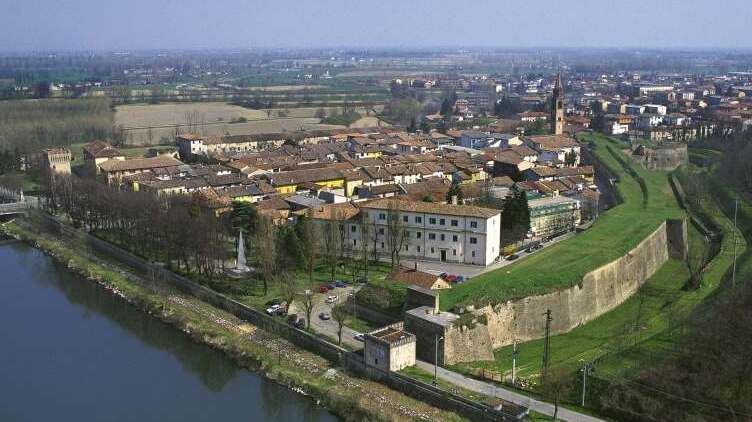

Nestled along the serene banks of the Adda River, the walled city of Pizzighettone stands as a testament to Italy’s rich military and architectural history. This fortified gem, with its impressive bastioned walls, invites you to step back in time, immersing you in tales of sieges, conquests, and the daily lives of those who once inhabited its protective embrace.
### History and Origins
Pizzighettone has roots dating back to the Roman era, originally serving as a strategic outpost due to its advantageous position along important trade routes. However, its significance surged during the Middle Ages when it became a fortified town under the control of various powers, including the Lombards and the Franks. The Visconti family played a crucial role in its development during the 14th century, transforming it into a formidable stronghold.
A pivotal moment in its history occurred in 1449, when Pizzighettone faced a siege by the forces of Francesco Sforza, who sought to consolidate his power in Lombardy. The city’s robust fortifications held strong, earning it a reputation that transcended regional borders. Today, the remnants of those fortifications tell stories of its storied past, drawing history enthusiasts from near and far.
### Art and Architecture
The architectural splendor of Pizzighettone is evident in its well-preserved bastioned walls, which stretch approximately two kilometers around the old town center. Rising to a height of twelve meters and boasting a width of fifteen meters, these walls showcase the military engineering prowess of the time. The thickness of the walls, reaching up to five meters in certain sections, speaks to their defensive purpose.
As you walk along the ramparts, don’t miss the Casematte, a series of large vault-like rooms that served as barracks and storage during times of conflict. These structures, with their barrel vaults, are a remarkable example of the military architecture of the era. The Church of San Bassiano, located within the walls, is another architectural highlight, featuring a blend of Romanesque and Gothic styles, adorned with beautiful frescoes that depict various saints and biblical scenes.
### Local Culture and Traditions
The local culture of Pizzighettone is rich in tradition, with customs that echo its historical legacy. One of the most vibrant celebrations is the Festa della Storia, held annually in September. This festival invites residents and visitors alike to don historical costumes and partake in reenactments, creating a lively atmosphere that celebrates the town's heritage.
Additionally, the Palio di Pizzighettone, a medieval-style competition, showcases the town's sporting spirit and community involvement. With events like archery and medieval games, it draws crowds eager to witness history come alive. The strong sense of community here is palpable, reflecting the enduring spirit of the Pizzighettonesi.
### Gastronomy
No visit to Pizzighettone would be complete without indulging in its gastronomic delights. The region is renowned for its exceptional cured meats, particularly salami and prosciutto, which are often enjoyed during local festivals. Pair these delicacies with a glass of Franciacorta, a sparkling wine from nearby vineyards, for a truly authentic experience.
Another local specialty is tortelli di zucca, delicious pumpkin-filled pasta that embodies the flavors of the region. For dessert, don't miss the opportunity to savor torta sbrisolona, a crumbly almond cake that has become synonymous with Lombardy's sweet offerings.
### Lesser-Known Curiosities
While Pizzighettone is celebrated for its walls, many visitors overlook the intriguing story of the Great Flood of 2000, which significantly impacted the town's landscape. The river's flooding led to the discovery of ancient artifacts, shedding light on the city’s long history.
Another captivating detail is the Labyrinth of Pizzighettone, a lesser-known but fascinating feature located just outside the walls. This unique maze, created as an artistic installation, invites visitors to explore its winding paths while contemplating the interplay between nature and architecture.
### Practical Visitor Information
The best time to visit Pizzighettone is during the spring and fall when the weather is pleasant, and local festivals are in full swing. Be sure to allocate time to stroll along the ramparts for breathtaking views of the surrounding countryside and river.
When exploring, look for the ancient stone well located in the town square, which is said to have been a gathering place for locals during the town's formative years. For a more immersive experience, consider joining a guided tour that delves deeper into the city’s history and architecture.
To maximize your visit, download the Secret World app for a personalized AI itinerary that will lead you through the hidden gems of Pizzighettone.
