



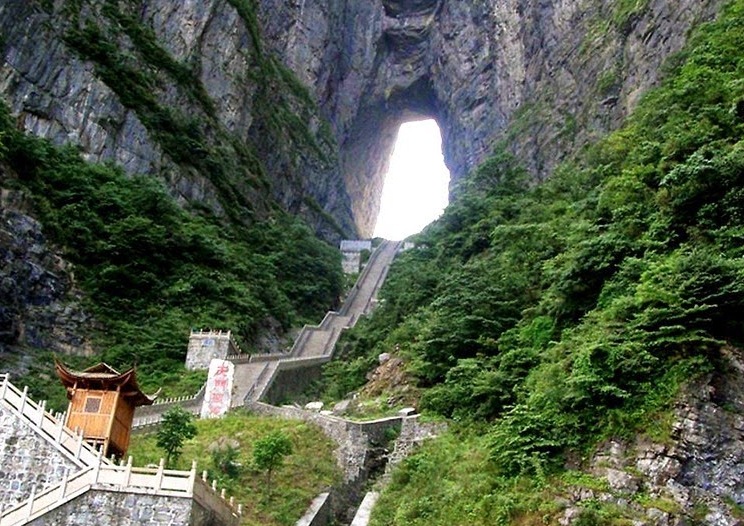
Stepping into Tianmen Shan, located in the majestic Zhangjiajie of China’s Hunan Province, feels like entering a realm of myth and wonder. This mountain, revered as a sacred site, holds deep historical significance dating back to ancient dynasties. The awe-inspiring Gateway to Heaven—a massive natural arch carved by millennia of erosion—stands as both a geographical marvel and a spiritual symbol. Historically, Tianmen Shan has been a site of pilgrimage, with records indicating that as early as the Tang Dynasty (618–907 AD), monks and scholars trekked here, drawn by its mystical allure and views said to connect earth with the heavens.

Architecturally, Tianmen Shan is celebrated for its unique blend of natural beauty and human ingenuity. The 999 stairs, known locally as the Stairway to Heaven, lead visitors through the imposing arch of the mountain. This number holds cultural significance in Chinese numerology, symbolizing eternal life and the infinite nature of the heavens. The nearby Tianmen Cave, a gaping natural arch, is the world's highest naturally formed arch, and its grandeur has inspired numerous cultural and artistic interpretations over the centuries. The mountain also features the Tianmen Temple, originally built during the Tang Dynasty, which stands as a testament to traditional Chinese architecture, offering intricate carvings and serene courtyards.
Culturally, Tianmen Shan is a vibrant tapestry of local traditions and practices. The mountain is part of the larger Zhangjiajie landscape, which served as the inspiration for the floating Hallelujah Mountains in the film "Avatar." Locals celebrate the Tujia Ethnic Minority Festivals, which include lively dances and music, showcasing the region's rich cultural heritage. The Tianmen Mountain Temple Fair, held annually, attracts visitors with its vibrant displays of traditional costumes, storytelling, and religious ceremonies.

When it comes to gastronomy, the region surrounding Tianmen Shan offers a culinary journey that is as rich as its landscape. Visitors can savor the local specialty, suan yu tou, a sour fish head dish that combines local river fish with pickled peppers, offering a spicy and tangy flavor unique to Hunan cuisine. Another local delicacy is tu dou si, shredded potatoes stir-fried with green peppers and vinegar, a simple yet delightful dish that highlights the fresh produce of the region. For those with a sweet tooth, tian mian, a sweet rice cake often served during festivals, provides a taste of local tradition.
Beyond its more famous attractions, Tianmen Shan holds several lesser-known curiosities. The Tianmen Mountain Glass Skywalk—a thrilling glass walkway perched on the edge of the cliff—offers a spine-tingling perspective of the stunning panorama below. Another hidden gem is the Tianmen Fox Fairy Show, a dynamic outdoor performance that narrates a local love story through song and dance, set against the mountain's dramatic backdrop. Additionally, the mountain's flora and fauna are of interest, with rare plant species and unique wildlife inhabiting its diverse ecosystems.
Practical information is vital for those planning a visit to this ethereal site. The best time to experience Tianmen Shan is during the spring (April to June) and autumn (September to November) months, when the weather is mild, and the scenery is at its most captivating. To reach the summit, visitors can take the world’s longest cable car ride from the nearby city of Zhangjiajie, a journey that offers breathtaking views of the lush landscapes below. For the adventurous, the climb up the 999 stairs is an unforgettable endeavor, rewarding with both physical challenge and spiritual reflection.
In planning your visit, remember to wear comfortable shoes and bring layers, as weather conditions can change rapidly at higher altitudes. While exploring, take a moment to absorb the serene ambiance of the Tianmen Temple and the sweeping vistas from the Tianmen Cave. Whether drawn by its historical depth, cultural richness, or natural splendor, Tianmen Shan offers an experience that transcends the ordinary, inviting every traveler to step through the Gateway to Heaven.
