
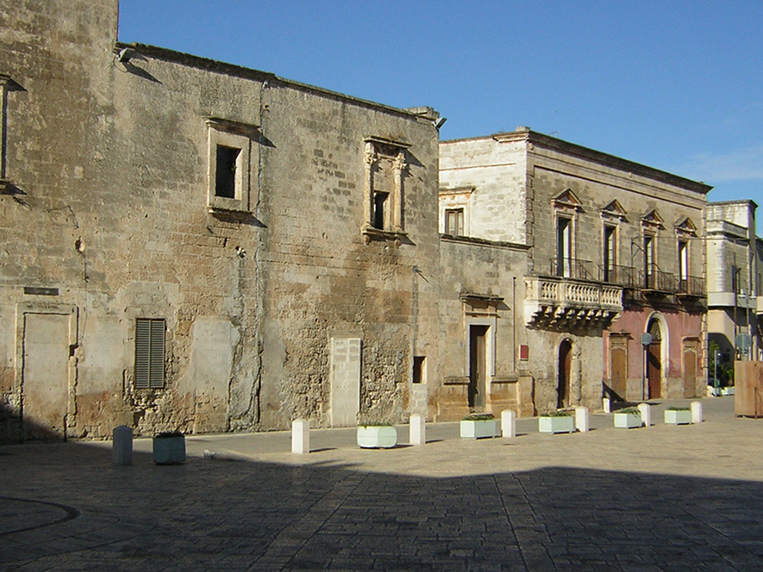

In the heart of Avetrana, a quaint town nestled in the heel of Italy’s boot, stands the imposing Palazzo Torricelli, a structure that tells the story of shifting architectural styles and the passage of time. Dominating Piazza Vittorio Veneto, this palace not only serves as a visual centerpiece but also as a reminder of the town's rich history and cultural significance.
History and Origins
The roots of Palazzo Torricelli can be traced back to the 17th century, a period marked by artistic flourishing and architectural experimentation in Southern Italy. While the exact date of its founding remains elusive, it is widely believed that the palace was constructed in various phases throughout the century, reflecting the evolving styles and tastes of the time. Historical records suggest that Avetrana itself was established as a fortified settlement long before, with influences from the Byzantine and Norman periods.
The town played a strategic role in the region, serving as a vital agricultural hub and a point of transit for goods. Over the centuries, Avetrana has witnessed numerous historical events, including foreign invasions and the rise of local nobility, which have left indelible marks on its architecture and culture. The palace, therefore, is not merely a building; it is a canvas of the town's rich tapestry of history.
Art and Architecture
Architecturally, Palazzo Torricelli is a striking example of the eclectic styles that define many southern Italian palaces. The façade features four prominent windows overlooking the bustling Piazza Vittorio Veneto, each telling its own story through distinct design elements. The first window on the right showcases classical references, with an architrave embellished with triglyphs and metopes adorned with floral motifs. These decorative elements are reminiscent of those found in the staircase of Palazzo Imperiali, illustrating the interconnectedness of artistic traditions in the region.
Further adding to the architectural narrative are the semi-columns that gracefully support the architrave, clearly drawing from classical design principles. The leftmost window, on the other hand, reflects the influence of artisans who were active in the latter half of the 17th century. This blend of styles reveals that the palace is a compilation of different constructions, each contributing to the overall aesthetic and historical significance of the structure.
Local Culture and Traditions
Avetrana is vibrant with local customs and traditions, many of which are celebrated in tandem with the town’s rich agricultural heritage. The Feast of San Rocco, held annually in mid-August, is one of the most significant events. It honors the patron saint of the town with processions, music, and traditional dances, showcasing the community’s devotion and spirit.
In addition to its religious festivities, Avetrana is known for its artisanal crafts, particularly in pottery and textiles. The local artisans often draw inspiration from the historical architecture around them, including Palazzo Torricelli, infusing their work with a sense of place and history. Visitors can immerse themselves in these traditions, gaining insight into the cultural fabric that weaves through everyday life in the town.
Gastronomy
No visit to Avetrana would be complete without indulging in the local gastronomy. The region is celebrated for its robust flavors and fresh ingredients, particularly its olive oil, which is considered some of the finest in Italy. Traditional dishes often feature cicoria (wild chicory), orecchiette pasta, and an array of seafood, reflecting the coastal proximity.
One must-try dish is "Frittura di Pesce," a delightful mix of freshly caught fish, lightly battered and fried to perfection. Pair it with a glass of Primitivo di Manduria, a full-bodied red wine that has been cultivated in the area for centuries, and you’ll experience the true essence of Avetrana’s culinary heritage.
Lesser-Known Curiosities
While many tourists flock to the more famous sites, Palazzo Torricelli holds its own share of lesser-known charms. One intriguing detail is the hidden inscriptions found within the palace's architecture, which some believe are remnants of secret messages left by artisans of the past. These inscriptions, often overlooked, provide fascinating insights into the lives and thoughts of those who built this magnificent structure.
Additionally, the palace's location near the Piazza Vittorio Veneto makes it an ideal spot for people-watching and absorbing the vibrant local life, yet many visitors miss this opportunity to engage with the everyday rhythms of Avetrana.
Practical Visitor Information
The best time to visit Avetrana is during the spring and early fall when the weather is mild, and the town’s festivities are in full swing. To fully appreciate Palazzo Torricelli, take the time to explore the surrounding areas, allowing yourself to get lost in the narrow streets and discover local shops and cafés.
When visiting, don’t forget to look up; the intricate details of the palace’s architecture are best appreciated from different angles. A local guide can provide valuable insights, revealing stories that are often missed by those exploring on their own.
For an enriching experience that captures the essence of Avetrana, consider using the Secret World app to plan a personalized itinerary that allows you to delve deeper into the town's history and culture.


