
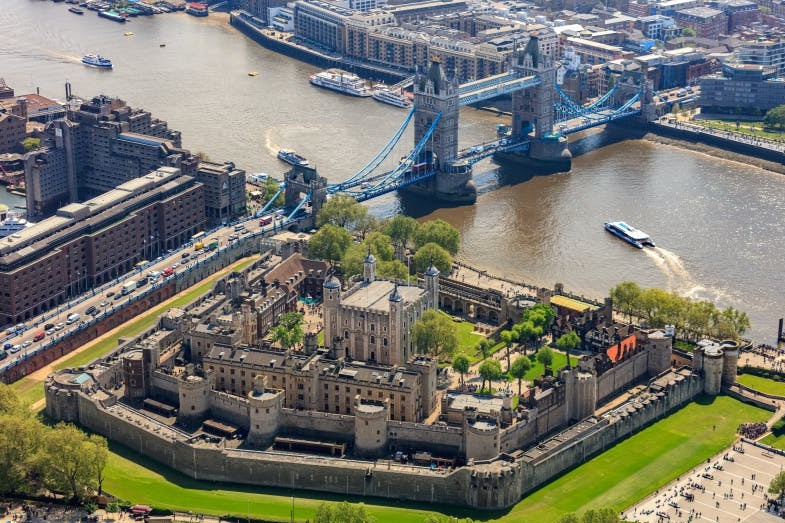

The Tower of London stands as a formidable emblem of British history, casting its shadow over the banks of the River Thames since its founding in 1066 by William the Conqueror. Originally constructed as part of the Norman Conquest to assert control over London, this magnificent fortress has borne witness to nearly a millennium of English history. Over the centuries, it has served various roles, from a royal palace and treasury to a menacing prison and the site of many a tragic execution.
The Tower's architecture is a testament to medieval military engineering. The White Tower, the oldest part of the complex, is a shining example of Norman craftsmanship with its Romanesque style, thick walls, and corner turrets. Inside, visitors can marvel at the Chapel of St John, one of the finest examples of Norman church architecture in England. Throughout its expansion, different architectural styles can be observed, reflecting the various periods of royal occupancy and military necessity.
The Tower of London holds an indelible place in local culture. It is famously home to the Yeoman Warders, or Beefeaters, clad in their distinctive Tudor uniforms. These guardians of the Tower not only act as guides but also as symbols of the monarchy's enduring legacy. Annually, the Ceremony of the Keys is performed—a tradition that has been held every night for over 700 years—symbolizing the secure closure of the fortress.
While the Tower itself may not be a culinary destination, the surrounding area is rich in typical English fare. Visitors can enjoy classic dishes such as fish and chips or indulge in an afternoon tea at nearby establishments. For a more traditional taste, try the hearty London pie and mash or a warming beef stew, both staples of British cuisine.
Among the lesser-known curiosities, the Tower houses the world-famous Crown Jewels, a collection that includes some of the most spectacular diamonds. There’s also the legend of the Tower's ravens; it is said that if the ravens ever leave, the kingdom will fall. To ensure this never happens, a dedicated Ravenmaster tends to these avian residents.
To make the most of your visit, plan to arrive early in the morning or later in the afternoon to avoid the heaviest crowds. Look for the Traitors' Gate, where prisoners entered the Tower, and the haunting Bloody Tower, where the young princes were allegedly murdered. The best time to visit is during the spring or autumn months when the weather is mild, and the gardens within the Tower grounds are in bloom.
Discover the rich tapestry of history and the secrets of the Tower of London with a personalized AI itinerary on the Secret World app.


