
🎄 Win a month in Italy for two — €10,000 · The Secret Italy Prize GO →
← Back

Tramontano Castle

Tramontano Castle — Matera, Italia.

Via del Castello, 75100 Matera MT, Italia ★★★★☆ 469 views
Giovanna Pascoli
Matera
🏆 AI Trip Planner 2026

Get the free app

Discover the best of Matera with Secret World — the AI trip planner with 1M+ destinations. Get personalized itineraries, hidden gems and local tips. Free on iOS & Android.

🧠 AI Itineraries 🎒 Trip Toolkit 🎮 KnowWhere Game 🎧 Audio Guides 📹 Videos
Scan to download iOS / Android
Scan for AppGallery Huawei users

About Tramontano Castle

Tramontano Castle - Matera | Secret World Trip Planner

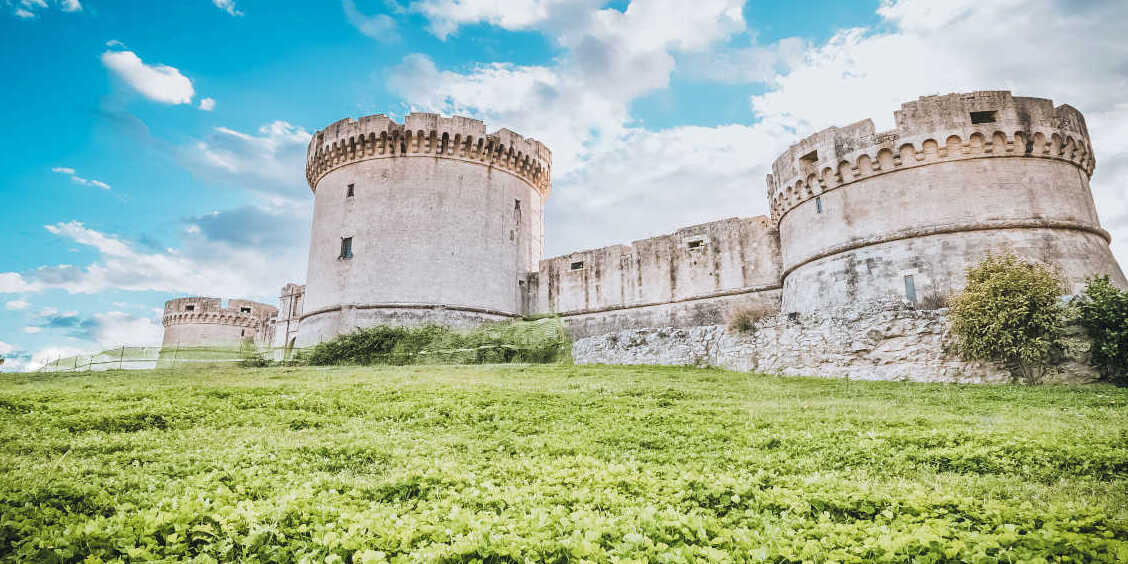
The Tramontano castle is situated on a small hill, called Lapillo hill, overlooking the historical centre of the city of Matera.

In Aragonese style, the castle, with a central male and two round side towers, scalloped and equipped with slits, was built from 1501 by Count Gian Carlo Tramontano, feudal lord of Matera. The new king of Naples, Ferdinand II, had promised the people of Matera not to cede the city to any feudal lord, after it had already freed itself several times from the feudal yoke by paying several ransoms to remain a free city to autonomous regiment, i.e. directly dependent on the Royal Crown. On the other hand, Count Tramontano, who boasted debts towards the Royal Treasury, asked and obtained the County of Matera in 1496.

The Count soon became invulnerable to the people of Matera because as time went by he became full of debts, to which he taxed the population with heavy taxes. Thus began the construction of the castle, which was located on a hill overlooking the city, outside the city walls, with the purpose of control "feudal " of the surrounding land rather than defense of the city itself. It seems that then the construction should have included other defense towers, one of which was found under the central Piazza Vittorio Veneto in Matera along with other hypogeal environments. As many as 25,000 ducats were spent for the construction of the Castle and this burdened the population even more.

So it was that some citizens, tired of the constant abuses, gathered behind a boulder, which from then on was called u pizzon' du mal consigghj, that is the stone of bad advice, and organized the assassination. On 29th December 1514 the Count, as soon as he left the Cathedral, was assassinated in a side street of the Cathedral, which was later eloquently called Via del Riscatto. The castle remained unfinished.

🗺 AI Trip Planner 2026 🎄 Win a month in Italy — €10,000 →

Plan your visit to Matera

Suggested itinerary near Tramontano Castle

MAJ+
500.000+ travelers worldwide
  1. 🌅
    Morning
    Tramontano Castle
    📍 Matera
  2. ☀️
    Afternoon
    Santa Lucia alla Civita in Matera
    📍 0.2 km · Matera
  3. 🌆
    Evening
    Matera | Purgatory Church New
    📍 0.2 km · Matera

Buy Unique Travel Experiences

Powered by Viator

See more on Viator.com

Explore nearby · Matera

Frequently Asked Questions

The castle construction was halted after Count Gian Carlo Tramontano was assassinated on December 29, 1514, just outside Matera's Cathedral. The count had become deeply unpopular due to heavy taxation imposed on citizens to fund the castle's construction, which cost an enormous 25,000 ducats, ultimately leading to his murder by frustrated citizens.
Tramontano Castle features Aragonese style architecture with a distinctive design consisting of a central male tower flanked by two round side towers that are scalloped and equipped with defensive slits. The castle was built starting in 1501 on Lapillo Hill overlooking Matera's historical center.
The castle sits on Lapillo Hill, which overlooks the historical center of Matera and is positioned outside the city walls. Its elevated location was strategically chosen to provide feudal control over the surrounding land rather than to defend the city itself.
Via del Riscatto is the side street near Matera's Cathedral where Count Tramontano was assassinated in 1514, and it was named to eloquently commemorate this event of 'redemption' from his oppressive rule. The street's name reflects how the citizens of Matera, burdened by excessive taxes for the castle's construction, saw his death as a form of liberation.
Count Tramontano built the castle on Lapillo Hill as a symbol of feudal control over the surrounding territory, not for city defense, after obtaining the County of Matera in 1496 despite King Ferdinand II's promise to the people that the city would remain free. The construction served to reinforce his authority and control over the population, who were already weary of feudal rule.
Secret World Hidden places, real stories — plan your trip
Get the app
