
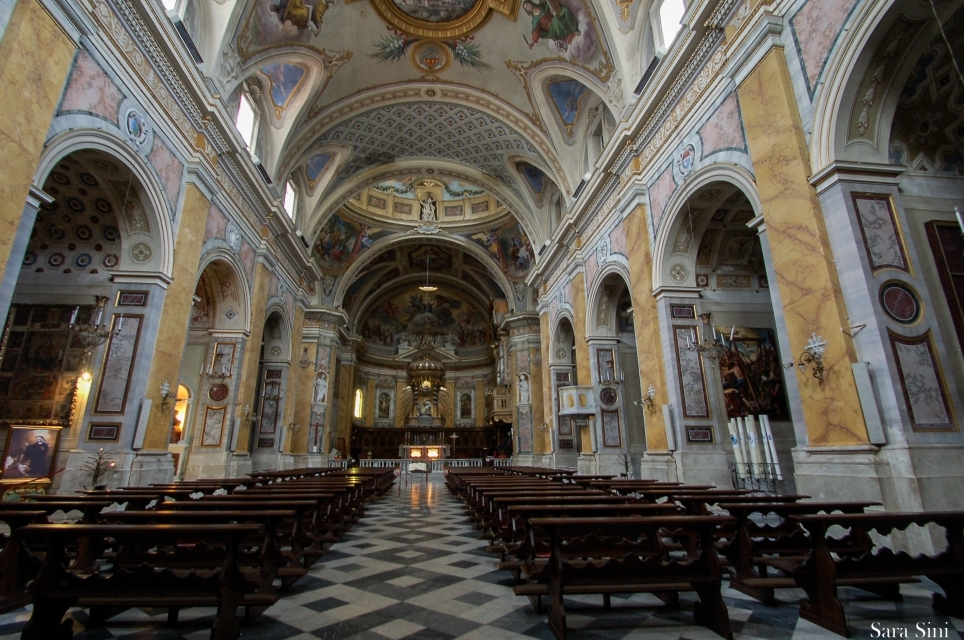

Nestled in the heart of Umbria, the ancient town of Amelia exudes a timeless charm, attracting those who seek to immerse themselves in Italy's rich history and culture. Dominating the town's skyline is the Amelia Cathedral, a remarkable Roman Catholic structure that tells a fascinating story of resilience and transformation.
History and Origins
The history of the Amelia Cathedral traces back to at least the 5th century, when it served as the seat of the Bishop of Amelia. Over the centuries, the cathedral has weathered numerous trials, including sieges and natural disasters. The original structure, built in 872, was destroyed by the troops of Emperor Frederick II in the 13th century. Following this destruction, a Gothic-style cathedral rose in its place, only to succumb to a devastating fire in 1629. The present Baroque version was completed thereafter, with the façade of pink cotto—a local clay material—finalized in the 19th century after a destructive earthquake rocked the region in 1822.
Today, the cathedral's design features a Latin cross groundplan with a single nave, embodying a blend of historical architectural styles that reflect its tumultuous past. The structure stands as a testament to the enduring spirit of the community, having served as a co-cathedral in the Diocese of Terni-Narni-Amelia since 1983.
Art and Architecture
Inside the cathedral, visitors are greeted by a treasure trove of artistic masterpieces. One of the most striking works is the Last Supper, painted by Giovanni Francesco Perini in 1538. This vibrant depiction of the well-known biblical scene captivates with its intricate details and emotional depth. Also noteworthy is the tomb of the Geraldini, crafted by Agostino di Duccio in 1476, which showcases the artist's skill in sculptural design.
The cathedral houses relics of the patron saints of Amelia, Saint Firmina and Saint Olimpiade, further enhancing its spiritual significance. A side chapel contains two Turkish banners, captured during the Battle of Lepanto in 1571, symbolizing both victory and cultural exchange. Additionally, the organ from 1600 fills the cathedral with the resonant sounds of sacred music, creating an atmosphere of reverence.
The campanile, or bell tower, which was erected in 1050, is constructed using fragments of ancient Roman buildings. Its presence links the cathedral to Amelia's Roman roots, enriching the visitor's experience with echoes of the past.
Local Culture and Traditions
Amelia is not only defined by its cathedral but also by its vibrant local culture. The town celebrates several festivals, notably the Palio dei Colombi, held annually in September. This historical event, which features a thrilling race of doves, commemorates the town's storied past and fosters a sense of community among residents. The festival also showcases traditional music, dance, and local crafts, providing visitors with a glimpse into Amelia's rich cultural tapestry.
Another significant tradition is the Festa di San Firmina, held in early July, honoring the town's patron saint with processions and religious ceremonies. These celebrations highlight the deep-rooted faith and communal spirit that characterize Amelia's way of life.
Gastronomy
No visit to Amelia would be complete without indulging in its culinary delights. The region is renowned for its truffles, particularly the prized black truffle of Norcia, found just a short distance away. Local dishes often feature this delicacy, from truffle-infused pastas to savory sauces that elevate traditional recipes.
Another must-try is porchetta, a succulent roast pork seasoned with herbs, which can be found at local markets and festivals. Pair it with a glass of Sagrantino di Montefalco, a robust red wine that beautifully complements the hearty Umbrian cuisine. Visitors should also seek out Olive Ascolane, breaded and fried olives stuffed with meat, a delectable local appetizer.
Lesser-Known Curiosities
While Amelia is often overshadowed by more prominent Umbrian cities, it holds its own collection of hidden gems. One intriguing fact is that Amelia is home to the Roman Walls, which date back to the 3rd century BC and are among the best-preserved ancient fortifications in Italy. These walls offer a stark reminder of the town's strategic importance in antiquity.
Additionally, the town boasts an impressive Etruscan well, a remarkable archaeological feature that dates back to the 6th century BC. It's a fascinating site for those interested in ancient civilizations and provides insight into the region's early history.
Practical Visitor Information
The best time to visit Amelia is during the spring and early fall when the weather is mild, and the town is alive with local festivals. Exploring the cathedral in the early morning light enhances its beauty, and it’s advisable to take a guided tour to fully appreciate the rich history and artwork within.
Visitors should also take the time to stroll through Amelia’s quaint streets, lined with charming shops and cafés. Look for panoramic viewpoints that offer stunning vistas of the Umbrian countryside, where rolling hills meet the horizon.
In conclusion, Amelia and its cathedral offer an enchanting journey through time, art, and culture. For a personalized experience to explore this captivating town, consider using the Secret World app to plan your itinerary.


