
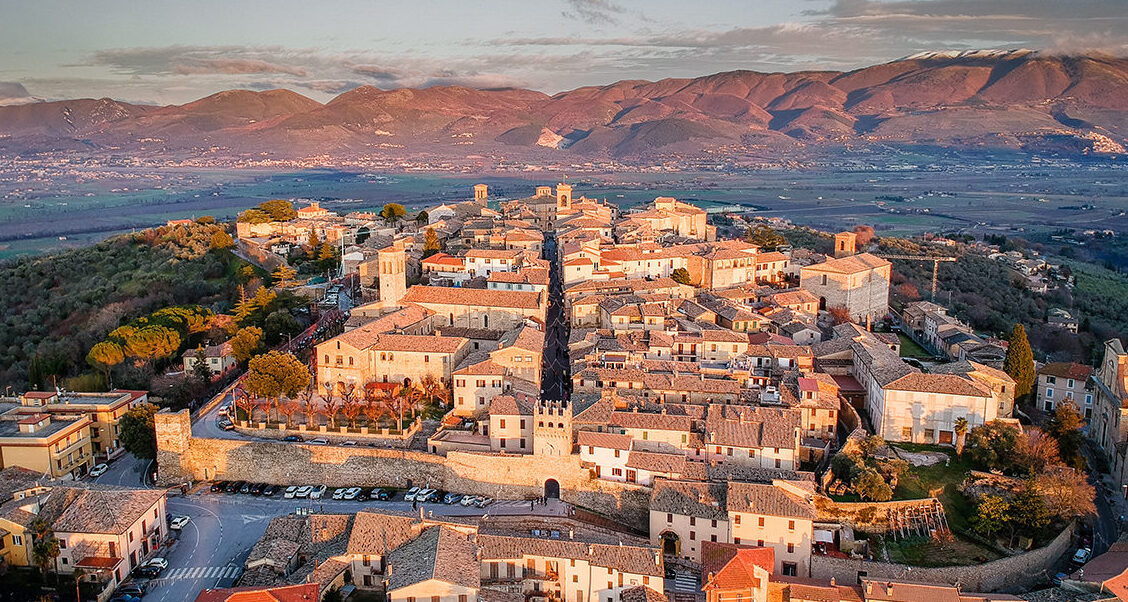

Perched gracefully on a hilltop in the stunning Umbria region of Italy, Montefalco invites travelers into a tapestry of history, art, and culinary delights. With its breathtaking views of the surrounding valleys and vineyards, this small village is not just a destination; it is a living museum that encapsulates centuries of rich heritage.
History and Origins
The roots of Montefalco stretch back to ancient times, flourishing as a significant municipality during the Roman Empire due to its strategic location linking Spoleto and Perugia. The town’s importance continued into the 11th century, where it became a vibrant center of the free communes, a movement characterized by self-governance and cultural independence.
Throughout the 13th and 14th centuries, Montefalco was embroiled in conflicts with nearby communes, particularly because of its allegiance to the Papacy against the Ghibelline lords of Foligno, notably the Trici family. After enduring about fifty years under Foligno’s rule, the town finally reclaimed its autonomy in 1424 through the efforts of Francesco Sforza. This resurgence marked a pivotal moment for Montefalco, leading to the establishment of municipal statutes and a renaissance of art and economy that significantly shaped its historical layout.
Art and Architecture
Montefalco is a treasure trove of artistic expression, renowned for its stunning Renaissance architecture and masterpieces. The town’s layout, characterized by narrow cobblestone streets and medieval structures, culminates at the central Piazza del Comune, where the Church of San Francesco stands as a testament to its artistic heritage. Inside, visitors can marvel at the breathtaking frescoes by Benozzo Gozzoli, who painted the church’s walls during the High Renaissance, capturing scenes that reflect both divine and earthly narratives.
The Museum of San Francesco houses an extensive collection of sacred art, showcasing works that span centuries. The town’s artistic significance is not merely limited to visual arts; it also extends to music and literature, with local traditions celebrating these forms, making Montefalco a key reference point for understanding Umbrian painting.
Local Culture and Traditions
Rich in traditions, Montefalco comes alive throughout the year with various festivals that celebrate its unique cultural identity. The Sagra della Vernaccia, held in early September, is a highlight, honoring the region's celebrated wine, Vernaccia di Montefalco. This festival features local food, traditional music, and, of course, tastings of the exquisite wine that has put Montefalco on the global map of viticulture.
Another significant event is the Festa della Madonna della Strada, taking place in May, where locals come together to celebrate their patron saint with processions and communal feasting. These gatherings provide a window into the warmth of the community, where age-old customs are cherished and passed down through generations.
Gastronomy
No visit to Montefalco would be complete without indulging in its gastronomic delights. The region is famed for its Sagrantino wine, a robust red that perfectly complements the local cuisine. Dishes like strangozzi, a handmade pasta often served with a rich truffle sauce, and porchetta, a savory roasted pork, showcase the flavors of Umbria.
The village is also known for its olive oil, celebrated for its quality and flavor, often drizzled over local breads or used in traditional dishes. Exploring the local markets provides a chance to sample these delicacies, allowing visitors to savor the essence of Montefalco’s culinary heritage.
Lesser-Known Curiosities
While Montefalco is celebrated for its art and wine, there are hidden gems that many travelers overlook. One such curiosity is the Chiesa di San Bartolomeo, a lesser-known church featuring an intriguing medieval altar and a mysterious wooden crucifix said to have healing powers. Additionally, the town's name, which means "Mount of the Falcón," is derived from the ancient practice of falconry, hinting at its historical ties to nobility and aristocracy.
Visitors might also be surprised to learn that Montefalco’s picturesque views played a role in the Italian Renaissance, as artists sought inspiration from the stunning Umbrian landscape, which remains unchanged in its beauty.
Practical Visitor Information
The best time to visit Montefalco is during the spring and early autumn months, when the weather is mild and the vineyards are lush. The wine harvest in October is particularly vibrant, offering visitors an opportunity to partake in grape picking and local celebrations.
For those looking to explore the town, walking tours are highly recommended, allowing for an immersive experience of its history and culture. Pay special attention to the Via Ringhiera, a panoramic walkway that offers breathtaking views of the surrounding countryside.
To fully appreciate the charms of Montefalco, consider staying in one of the rustic agriturismos, where you can enjoy firsthand the local hospitality and cuisine.
As you plan your visit to this enchanting village, consider using the Secret World app to create a personalized itinerary that captures the essence of Montefalco.


