
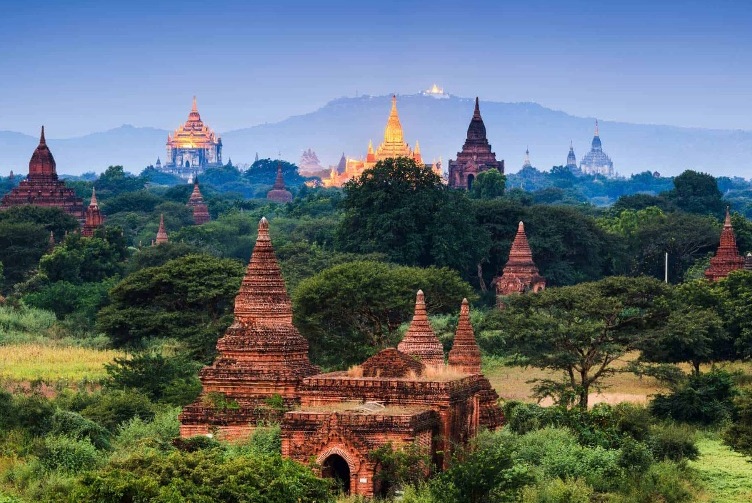

Nestled in the heart of Myanmar's Mandalay Region, Bagan is a mesmerizing tapestry of history, art, and culture, capturing the imaginations of travelers and historians alike. With its sprawling landscapes dotted by thousands of ancient temples, pagodas, and monuments, Bagan is not just a UNESCO World Heritage Site but a living testament to the region's storied past and cultural richness.
The origins of Bagan trace back to the 9th century, when it emerged as the capital of the Pagan Kingdom. This kingdom was pivotal in the unification of the regions that now form modern-day Myanmar. Under the reign of King Anawrahta in the 11th century, Bagan witnessed its golden age. Anawrahta's conversion to Theravada Buddhism marked a significant shift, leading to the construction of over 10,000 religious monuments across the plains. This era of spiritual and architectural flourishing continued until the late 13th century when Mongol invasions led by Kublai Khan contributed to the city's decline.
The architectural style of Bagan is an eclectic blend of Indian and local influences, characterized by soaring spires and intricately carved facades. The Ananda Temple, one of Bagan's most revered structures, stands out with its gilded stupa and exquisite frescoes depicting the life of Buddha. These frescoes not only demonstrate exceptional artistic skill but also provide insights into the religious and cultural ethos of the era. Similarly, the Dhammayangyi Temple, known for its imposing structure and mysterious bricked-up interior, remains a talking point for its architectural perfection and enigma.
Bagan's local culture is deeply intertwined with its religious heritage. The city is a hub of Buddhist traditions and festivals. The Ananda Pagoda Festival, celebrated in January, is a vibrant spectacle that attracts pilgrims from all corners of Myanmar. During this time, the temple courtyards transform into bustling marketplaces, featuring traditional performances, craft stalls, and food vendors. These festivals are not just religious observances but are also crucial in preserving the region's intangible cultural heritage.
No journey to Bagan would be complete without indulging in its gastronomic delights. The local cuisine is a reflection of the region's agricultural abundance and cultural exchanges. Dishes such as laphet thoke (fermented tea leaf salad) and mohinga (a savory fish noodle soup) offer a tantalizing taste of Myanmar's culinary traditions. Coconut-based curries and a variety of rice dishes, often accompanied by a rich array of condiments, further highlight the local palate's diversity.
Beyond the well-trodden paths, Bagan holds countless lesser-known curiosities. One such gem is the practice of traditional lacquerware, an ancient craft that continues to thrive in nearby villages like Myinkaba. Visitors can observe artisans painstakingly applying layers of lacquer and carving intricate designs, a skill passed down through generations. Another intriguing aspect is the presence of murals in lesser-visited temples, where vivid depictions of celestial beings and mythological tales offer a glimpse into the spiritual imagination of the past.
For those planning a visit, the best time to explore Bagan is during the cooler months from November to February, when the weather is pleasant, and the skies are clear. This period is perfect for witnessing the breathtaking sight of hot air balloons gliding over the temple-studded plains at sunrise. When exploring, it is advisable to rent an e-bike or hire a local guide to navigate the vast expanse of Bagan efficiently. Pay special attention to less crowded temples, such as Sulamani and Pyathada, for a more intimate experience.
In essence, Bagan is more than a destination; it is a journey through time and culture. Its ancient monuments, vibrant traditions, and warm hospitality create an experience that lingers long after the visit. Whether you're an aficionado of history, an admirer of art, or a seeker of unique cultures, Bagan offers a narrative that is both compelling and timeless.


