
← Back

Unesco: The Cave of San Michele Arcangelo

SP12c, 3, 84027 Sant'Angelo A Fasanella SA, Italia ★★★★☆ 668 views
Mia Patel
Sant'Angelo A Fasanella
🏆 AI Trip Planner 2026

Get the free app

Discover the best of Sant'Angelo A Fasanella with Secret World — the AI trip planner with 1M+ destinations. Get personalized itineraries, hidden gems and local tips. Free on iOS & Android.

🧠 AI Itineraries 🎒 Trip Toolkit 🎮 KnowWhere Game 🎧 Audio Guides 📹 Videos
Download on the App Store Get it on Google Play
Scan to download Scan to download

Religious places · Sant'Angelo A Fasanella

Unesco: The Cave of San Michele Arcangelo - Sant'Angelo A Fasanella | Secret World Trip Planner

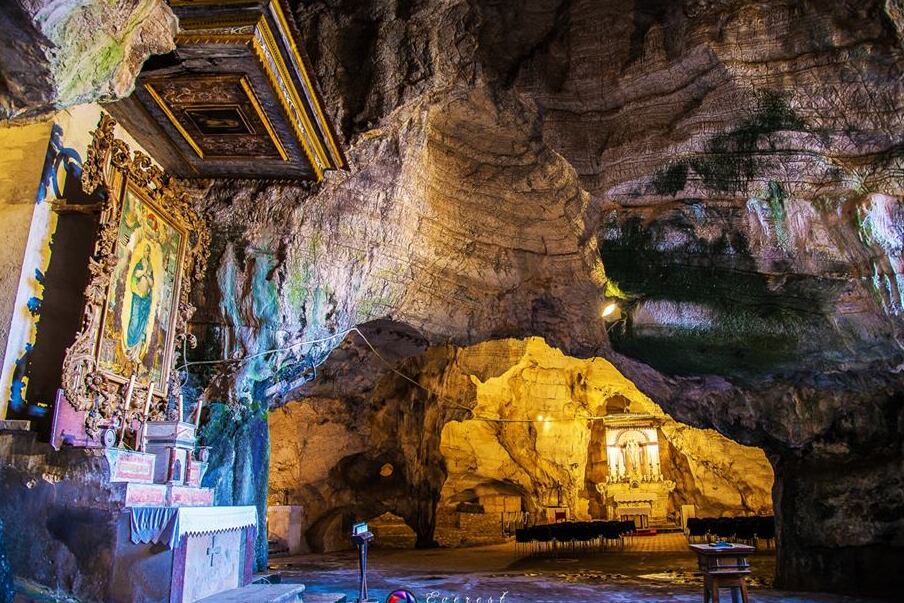
The Cave of St. Michael the Archangel, UNESCO WORLD HERITAGE within the National Park of Cilento and Vallo di Diano, is located at the foot of a rocky wall not far from the town of Sant'Angelo a Fasanella (SA) and represents the symbol of Christian Religiousness of the Alburni Mountains. From historical-archaeological investigations carried out over the years, it is clear that the cave was already used in prehistoric times as a refuge. It is thought that later it became a religious site dedicated to the cult of water and it is easy to suppose that the presence of stalactites and stalagmites inside the cavern were venerated as real sacred icons, probably perceived as realized figures of the same divinities. Several millennia later, the cave became a Christian sanctuary consecrated to St. Michael. This was the fate of the majority of caves used for religious functions. They were generally dedicated to the cult of St. Michael because, according to tradition, this corresponded to the will of the saint, whose first apparition would have happened in a cave. The cult of St. Michael was widespread in Campania and in general in the south of Italy, due to the presence on the territory of the Lombards who came from northern Europe. These, after converting to Christianity, decided to elect St. Michael as their protector. The reason for this choice is perhaps due to the fact that St. Michael the Archangel, the leader of God's militia who had fought against the hordes of Satan, was instinctively associated with Odin, the ancient Norse god protector of warriors. However, in the case of the cave of Sant'Angelo a Fasanella, there is a legend that traces its discovery back to Manfredo, Prince of Fasanella, who saw his hunting falcon enter a crack in the rock, from which came an enchanting melody. And so, returning in search of the falcon with a retinue of servants, the prince discovered the cave. Inside he found an altar, behind which there was a wall on which he recognized the imprint of the wings of the Archangel Michael. It is said that from that moment onwards the cave was dedicated to the saint and became a place of worship and veneration. The silhouettes of the wings painted on the rock are indeed still visible in the sanctuary but they are certainly not the only treasure in the Sanctuary. A valuable fifteenth-century portal, almost certainly made by Francesco Sicignano, a well-known Cilento sculptor of the time, is the entrance to the Sanctuary. The portal has decorated capitals and the sculpted figures of a lion and a lioness in neo-Romanesque style. Once inside, on the right you can see a well covered with Neapolitan ceramics of the seventeenth century and in front of it the coat of arms of the Caracciolo family carved on stone. The glance inside is very suggestive. The Sanctuary looks like a work of art created jointly by the

Unesco: The Cave of San Michele Arcangelo - Sant'Angelo A Fasanella | Secret World Trip Planner
🗺 AI Trip Planner

Plan your visit to Sant'Angelo A Fasanella

Suggested itinerary near Unesco: The Cave of San Michele Arcangelo

MAJ+
500.000+ travelers worldwide
  1. 🌅
    Morning
    Unesco: The Cave of San Michele Arcangelo
    📍 Sant'Angelo A Fasanella
  2. ☀️
    Afternoon
    The Naturalistic Museum of Alburni
    📍 4.3 km · Sant'Angelo A Fasanella
  3. 🌆
    Evening
    Cilento | Caves of Castelcivita
    📍 9.6 km · Sant'Angelo A Fasanella

Buy Unique Travel Experiences

Powered by Viator

See more on Viator.com

Explore nearby · Sant'Angelo A Fasanella

Frequently Asked Questions

The Cave of San Michele Arcangelo is located at the foot of a rocky wall near the town of Sant'Angelo a Fasanella in the province of Salerno (SA), within the UNESCO World Heritage National Park of Cilento and Vallo di Diano. This strategic location in the Alburni Mountains makes it easily accessible for visitors interested in exploring this sacred site.
The cave has a remarkably long history, first being used as a prehistoric refuge and later becoming a religious site dedicated to water worship where stalactites and stalagmites were venerated as sacred icons. According to legend, Prince Manfredo of Fasanella discovered the cave after his hunting falcon entered a crack in the rock and emitted an enchanting melody, leading to the cave's identification as a Christian sanctuary dedicated to St. Michael the Archangel.
According to Christian tradition, Saint Michael the Archangel, known as the leader of God's militia against Satan, appeared in a cave, which led to many caves being consecrated to his name. The cult of St. Michael was particularly widespread in Campania and southern Italy due to the Lombards from northern Europe who, after converting to Christianity, adopted St. Michael as their protector, possibly because his warrior role resonated with their Norse god Odin.
Inside the cave, visitors can observe remarkable stalactites and stalagmites that were historically venerated as sacred icons by ancient worshippers, as well as an altar that reflects its role as a Christian sanctuary. The natural geological formations combined with the spiritual significance of the site create a unique experience that blends natural beauty with religious history.
The Cave of San Michele Arcangelo is designated as a UNESCO World Heritage site because it represents an outstanding symbol of Christian religiousness in the Alburni Mountains and demonstrates the remarkable continuity of sacred use from prehistoric times through the Christian era. Its inclusion in the National Park of Cilento and Vallo di Diano recognizes its cultural, historical, and archaeological significance to humanity.
