
← Back

Unesco | Valley of the Temples of Agrigento

92100 Agrigento AG, Italia ★★★★☆ 411 views
Samara Lionel
92100 Agrigento AG
🏆 AI Trip Planner 2026

Get the free app

Discover the best of 92100 Agrigento AG with Secret World — the AI trip planner with 1M+ destinations. Get personalized itineraries, hidden gems and local tips. Free on iOS & Android.

🧠 AI Itineraries 🎒 Trip Toolkit 🎮 KnowWhere Game 🎧 Audio Guides 📹 Videos
Scan to download iOS / Android
Scan for AppGallery Huawei users

About Unesco | Valley of the Temples of Agrigento

Unesco | Valley of the Temples of Agrigento - 92100 Agrigento AG | Secret World Trip Planner

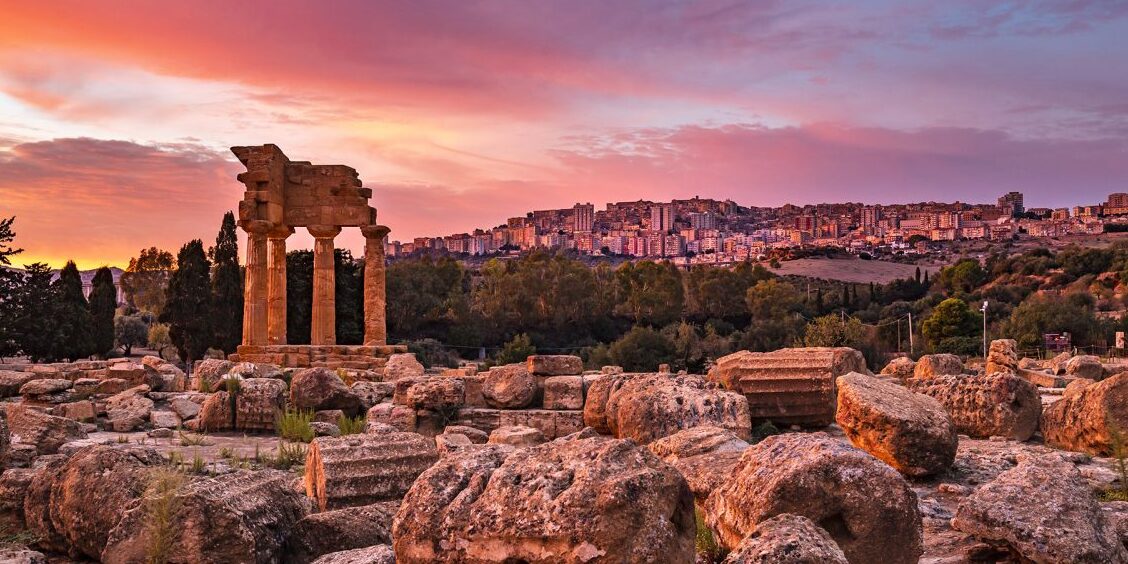
The magical Valley of the Temples, declared a UNESCO World Heritage Site since 1997, is certainly the highest and most characteristic testimony of Magna Graecia in Sicily. The valley is housed in an archaeological park considered the largest in the world, including 1,300 hectares of land. The birth of the polis agrigentina is linked to the development of the polis Gela: the city, in fact, was founded in 581 BC by some inhabitants of Gela, originally from the islands of Rhodes and Crete, with the name Ἀκράγας (Akragas), from the river of the same name that bathes the territory. It was one of the main cities of the ancient world, an important urban centre both economically and politically.

The settlement was protected in the sixth century by a defensive system, consisting of a circuit of walls that exploited the topographical characteristics of the place, consisting of the plateau on the side of hills that dominated the coast and of which the "valley of the temples" it occupied the southern edge and did not constitute the acropolis, located instead further upstream, in correspondence with the medieval nucleus of the current city.

The military expansionism of Akragas had particular impulse at the time of the tyrant Terone (488-473 B.C.) and the victory over the Carthaginians. A period of rivalry with Syracuse followed. The great temples, built in the 5th century, testify to the prosperity of the city.

After the sacking by the Carthaginians, in 406 B.C., followed a period of decadence of the city, which however was rebuilt. From 262 B.C. Agrigento entered the Roman dominion, remaining however an important city. Starting from the VII century the city became impoverished and depopulated and the urban centre was reduced to the only hill of the acropolis, thus abandoning both the urban area and the area of the temples.

🗺 AI Trip Planner

Plan your visit to 92100 Agrigento AG

Suggested itinerary near Unesco | Valley of the Temples of Agrigento

MAJ+
500.000+ travelers worldwide
  1. 🌅
    Morning
    Unesco | Valley of the Temples of Agrigento
    📍 92100 Agrigento AG
  2. ☀️
    Afternoon
    Agrigento | Temple of Concordia
    📍 0.6 km · 92100 Agrigento AG
  3. 🌆
    Evening
    Agrigento | The Temple of Juno
    📍 1.3 km · 92100 Agrigento AG

Buy Unique Travel Experiences

Powered by Viator

See more on Viator.com

Explore nearby · 92100 Agrigento AG

Frequently Asked Questions

The Valley of the Temples was declared a UNESCO World Heritage Site in 1997, recognizing it as the highest and most characteristic testimony of Magna Graecia in Sicily. This designation protects the archaeological park, which spans 1,300 hectares and is considered the largest in the world.
Agrigento, originally named Ἀκράγας (Akragas), was founded in 581 BC by inhabitants of Gela who originated from the islands of Rhodes and Crete. The city was named after the river Akragas that flows through the territory and quickly became one of the main cities of the ancient world, both economically and politically important.
The great temples in the Valley were built during the 5th century BC, serving as testimony to Agrigento's prosperity and power, particularly under the tyrant Theron (488-473 BC) and following the city's victory over the Carthaginians. These magnificent structures represent the peak of the city's military expansion and economic success during ancient times.
The archaeological park housing the Valley of the Temples encompasses 1,300 hectares of land and is considered the largest archaeological park in the world. This vast area includes not only the famous temples on the southern edge but also the defensive wall system and the acropolis area further upstream where the medieval city was later built.
After the Carthaginian sacking in 406 BC, Agrigento entered a period of decadence but was eventually rebuilt and later incorporated into Roman dominion from 262 BC onwards, remaining an important city. However, from the 7th century onwards, the city became increasingly impoverished and depopulated, with the urban center shrinking to only the acropolis hill while the temple valley area was abandoned.
