
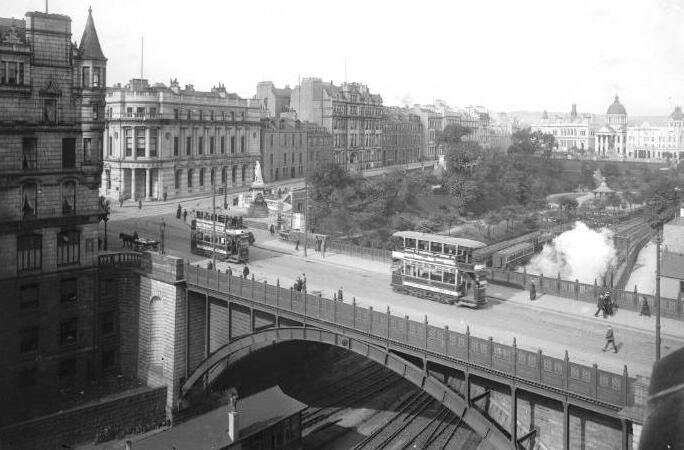

As you stroll through the bustling streets of Aberdeen, where the North Sea breeze carries whispers of ancient tales, you encounter a magnificent feat of engineering: the Union Bridge. Nestled at the heart of this Scottish city, Union Bridge is not just a crossing but a testament to human ingenuity and ambition. With its claim as the largest single-span granite arch in the world, this architectural marvel invites onlookers to pause and ponder the stories it holds.

The history of Union Bridge is deeply intertwined with the growth of Aberdeen itself. Constructed in the early 19th century, the bridge was completed in 1805 under the watchful eye of engineer Thomas Fletcher. It was built to connect the city’s bustling Union Street with the emerging areas to the west, facilitating economic expansion. Union Street, designed by architect Charles Abercrombie, became the backbone of Aberdeen’s transformation into a vibrant urban center, and Union Bridge played a pivotal role in this evolution. The bridge is not merely a structure but a symbol of Aberdeen’s transition from a medieval market town to the "Granite City" renowned for its distinctive grey stone architecture.
Speaking of architecture, Union Bridge is a masterpiece of the neoclassical style, characterized by its clean lines and robust form. The bridge spans approximately 130 feet, crafted from locally quarried granite, which gives it both strength and an enduring beauty. This granite, also used in the construction of notable edifices like Marischal College, has come to define the aesthetic of Aberdeen. As you stand atop the bridge, look closely at the intricate stonework, a testament to the skilled craftsmen of the time. The bridge’s understated elegance complements its practical purpose, making it a beloved landmark for locals and visitors alike.

Aberdeen’s cultural vibrancy is reflected in the life that unfolds around Union Bridge. The city is known for its rich traditions, including the annual Aberdeen International Youth Festival, which brings together performers from across the globe. While the festival itself may not take place on the bridge, the spirit of creativity and cultural exchange it fosters is palpable in the surrounding streets. Local traditions are also celebrated during Aberdeen’s popular festivals such as the Winter Festival, where Union Street is illuminated with festive lights, casting a magical glow on the bridge and creating a scene straight out of a storybook.
No exploration of Aberdeen would be complete without indulging in its gastronomic delights. While Union Bridge does not host eateries directly upon its span, the area surrounding it is dotted with establishments offering traditional Scottish fare. Sample a hearty serving of Cullen skink, a creamy smoked haddock soup, or try the locally sourced Aberdeen Angus beef, renowned for its rich flavor. For a sweet treat, Aberdeen’s famed rowies, or buttery rolls, provide the perfect accompaniment to a steaming cup of coffee as you take in the city’s views from the bridge.
Union Bridge also holds a few lesser-known curiosities that add layers to its story. For instance, the bridge was once the site of a peculiar historical event in 1842 when Queen Victoria crossed it during her visit to Aberdeen. This marked a significant moment, as it was during this visit that she fell in love with Scotland. Additionally, beneath the bridge lies the Denburn Valley, an area that once hosted a railway line and is now a peaceful green space, hinting at the city’s industrial past and its ongoing evolution.
For those planning to visit Union Bridge, the best time is during the late spring to early autumn months when the weather is mild, and the city is alive with activity. While the bridge can be admired at any time of day, consider visiting during the evening when the city lights create a picturesque ambiance. As you walk across the bridge, take note of the views to the north, where the spires of St. Nicholas Kirk rise against the sky, offering a snapshot of Aberdeen’s historical tapestry.
In conclusion, Union Bridge is more than a mere crossing over the Denburn—it is a conduit to Aberdeen’s past, present, and future. Whether you are a history enthusiast, an architecture aficionado, or a curious traveler, this iconic structure promises a glimpse into the heart of a city that has long stood resilient against the test of time.


