
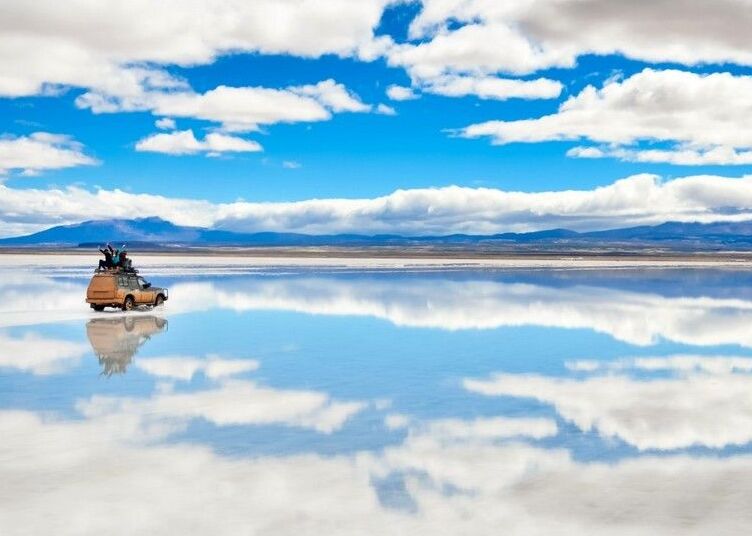

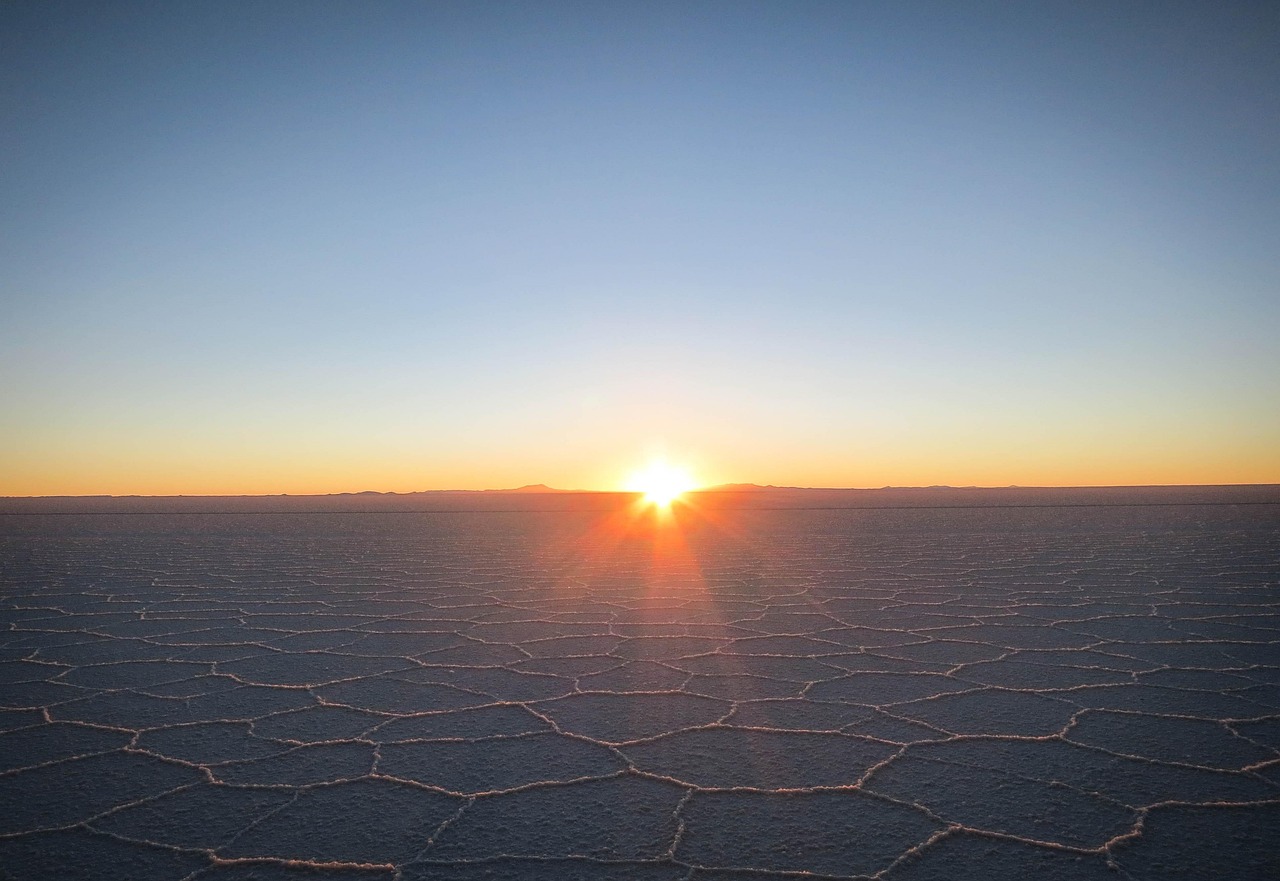
There is a place hidden among the unimaginable heights of Bolivia that seduces any traveler, a place so special and out of this world that it leads to madness: it is the Salar de Uyuni, known to be the largest salty expanse on Earth. This vast white desert, stretching over 10,582 square kilometers, is an otherworldly spectacle that disorients and captivates in equal measure.
History and Origins
The history of Salar de Uyuni is as rich and layered as the salt itself. Approximately 40,000 years ago, this region was part of a colossal prehistoric lake known as Lake Minchin. As the climate shifted and the lake gradually dried up, the expansive salt flats we see today emerged, along with the smaller Lakes Poopò and Uru Uru. The process transformed the landscape, leaving behind a mineral-rich crust that is now the largest salt flat in the world.
Throughout history, the Aymara and Quechua peoples have inhabited the region, relying on the salt flats for trade and sustenance. The salt was an essential resource for preserving food, and local communities continue to harvest it. Additionally, the Inca Empire revered this area, weaving tales of the Ojos del Salar or “Eyes of the Salt Desert.” According to legend, these treacherous puddles, invisible to the naked eye due to intense reflections, could swallow entire caravans whole.
Art and Architecture
While the Salar de Uyuni itself is a natural marvel, the surrounding region is dotted with unique architectural styles that reflect the local culture. The nearby town of Uyuni features a blend of colonial and indigenous influences, with adobe structures that speak to the area's history. Visitors can explore the Train Cemetery on the outskirts of Uyuni, where rusting locomotives from the late 19th century stand as relics of Bolivia’s mining boom.
Artists have long been inspired by the stark beauty of the salt flats. Photographers flock here to capture the surreal landscape, particularly during the rainy season, when a thin layer of water transforms the Salar into a mirror reflecting the sky. This phenomenon creates an ethereal backdrop for creative expression, showcasing the artistic significance of this unique environment.
Local Culture and Traditions
The culture surrounding Salar de Uyuni is a tapestry of indigenous traditions and modern influences. Festivals play a vital role in the local calendar, with celebrations such as Carnaval and the Fiesta de la Virgen de los Remedios attracting both locals and tourists. During these events, vibrant parades, traditional music, and colorful costumes fill the streets, offering a glimpse into the rich cultural heritage of the region.
Local customs are deeply intertwined with the land. The Aymara people celebrate the Pachamama (Mother Earth) through rituals that honor the natural world. These practices reflect a profound respect for the environment and underscore the cultural importance of the Salar as more than just a tourist destination.
Gastronomy
The culinary scene in this high-altitude region is both unique and flavorful. Traditional dishes often incorporate local ingredients, with quinoa and potatoes being staples. One must-try dish is salteña, a savory pastry filled with meat, vegetables, and spices, perfect for a quick bite while exploring Uyuni.
For those adventurous enough to sample local beverages, chicha—a fermented drink made from corn—provides a taste of the region's traditions. Additionally, many local eateries serve warm sopa de maní, a hearty peanut soup that is comforting in the chilly highlands.
Lesser-Known Curiosities
Beyond its breathtaking vistas, Salar de Uyuni is home to fascinating quirks. One striking feature is the “Isla Incahuasi,” a rocky island covered in towering cacti that soar up to 10 meters high. This unique ecosystem offers a stark contrast to the surrounding salt flats, and climbing to its summit provides panoramic views of the Salar.
Moreover, the Salar is also a vital source of lithium, a key component in modern batteries. This has led to increasing interest and investment in the region, as countries race to secure lithium supplies for electric vehicles and renewable energy technologies.
Practical Visitor Information
The best time to visit Salar de Uyuni largely depends on what you wish to experience. The dry season, from May to October, offers clear skies and stunning vistas, ideal for photography. Conversely, the rainy season from November to March transforms the Salar into a vast mirror, creating a surreal landscape that draws photographers and adventurers alike.
When planning your visit, consider taking a guided tour to explore not only the Salar but also the surrounding attractions, such as the Laguna Colorada, a striking red lagoon teeming with flamingos. Be sure to pack layers, as temperatures can fluctuate dramatically between day and night.
To fully embrace the magic of this extraordinary destination, consider using the Secret World app to curate a personalized itinerary that highlights your interests.


