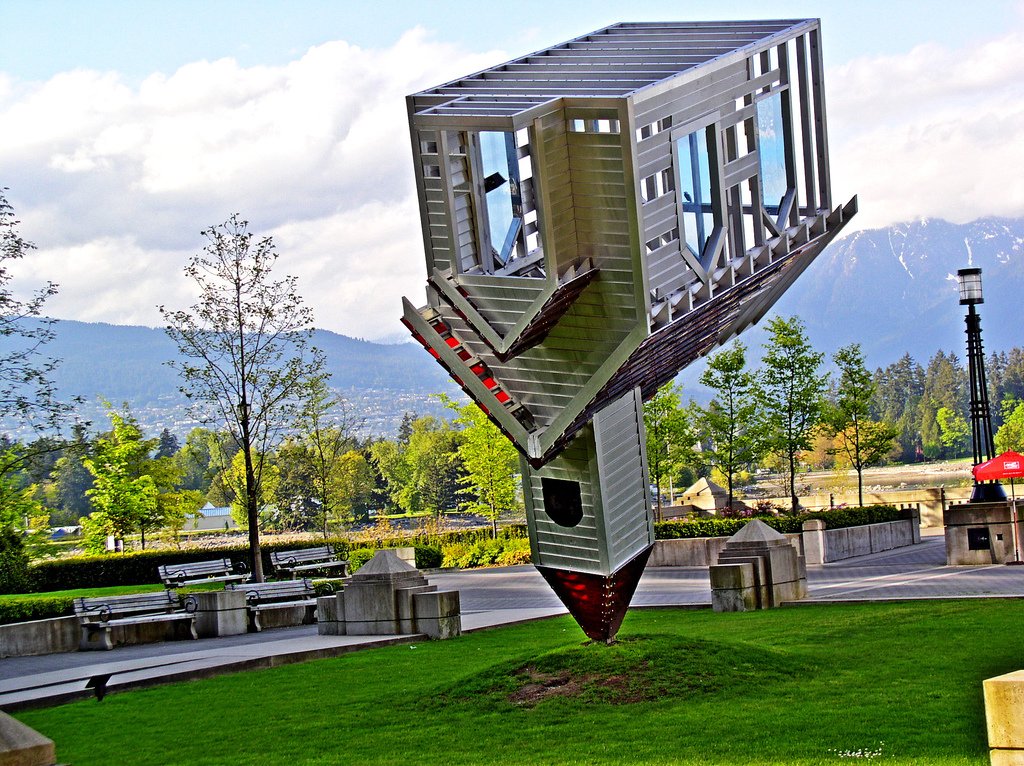
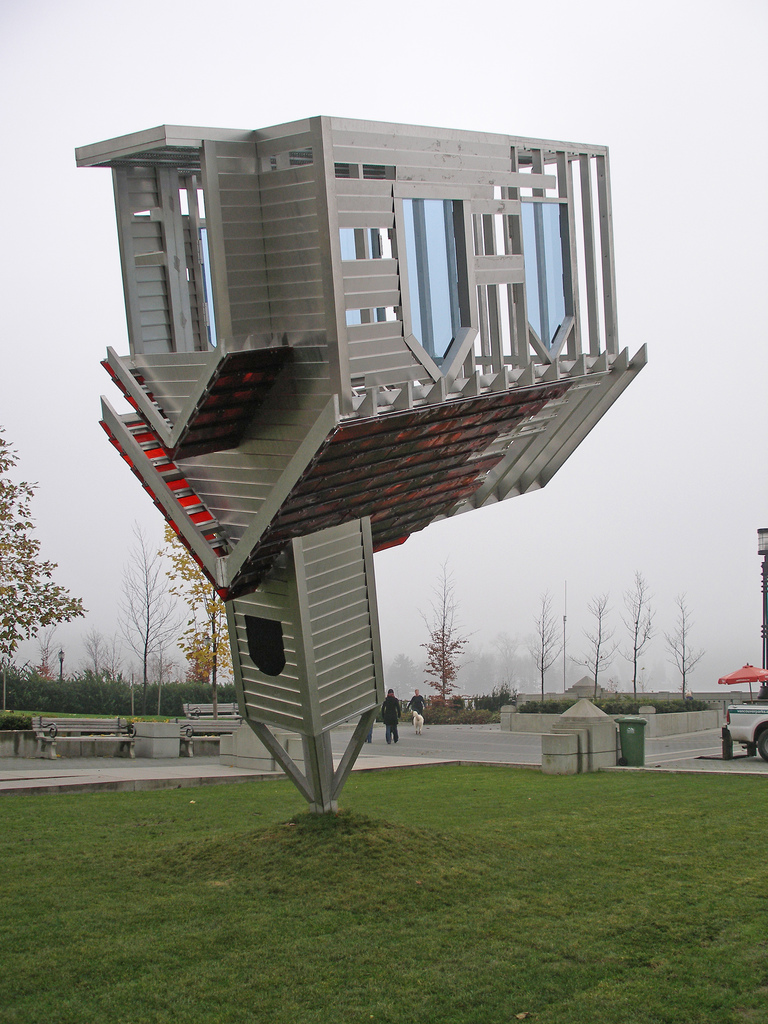

In the heart of Vancouver, amidst the verdant embrace of Harbour Green Park, stands a provocative testament to the interplay of art and societal critique: Device to Root Out Evil. Created by renowned artist Dennis Oppenheim, this striking sculpture flips the conventional notion of a church on its head—literally. With its 25-foot structure thrusting the steeple into the earth and the base elevated skyward, Oppenheim invites viewers to ponder the duality of faith and morality in contemporary life.
### History and Origins
Vancouver’s art scene, rich in diversity and innovation, has roots that stretch back to the city’s founding in the mid-19th century. Initially a small sawmill town, Vancouver rapidly evolved into a cultural hub through the 20th century, particularly in the post-Expo 86 era when public art began to flourish. This period saw the emergence of significant installations that transformed the cityscape, each piece resonating with the community’s identity.
Oppenheim, a pioneering figure in conceptualism since the late 1960s, was known for his ability to challenge viewers' perceptions. Originally conceived as Church for display on Church Street in New York City, the artwork's title was later changed to Device to Root Out Evil. This shift not only reflects Oppenheim's penchant for irony but also his desire to provoke thought about the nature of evil within institutional structures. His representation of the United States at the 1997 Venice Biennale solidified his status in the art world.
### Art and Architecture
The architectural style of Oppenheim's sculpture draws heavily on New England ecclesiastical design, yet it subverts traditional forms. By presenting a church upside-down, Oppenheim evokes a sense of disorientation, forcing viewers to confront their preconceptions about faith and morality. The stark contrast between the familiar image of a church and its distorted presentation elicits a range of emotions, from humor to discomfort.
Vancouver’s Vancouver Biennale, which hosted the sculpture from 2005 to 2007, played a significant role in promoting contemporary art and engaging the public in discourse about societal issues. The Biennale is known for its commitment to placing large-scale installations in public spaces, inviting the community to interact with art in their daily lives. Oppenheim’s work, awarded the Lifetime Achievement Award by the Biennale organization in 2007, remains one of its most iconic installations.
### Local Culture and Traditions
Vancouver is a melting pot of cultures, with a rich tapestry of traditions that reflect its Indigenous heritage and immigrant communities. Festivals such as the Vancouver International Film Festival and the Vancouver Folk Music Festival celebrate artistic expression and cultural diversity. Local customs often center around the city’s natural beauty, with outdoor activities and communal gatherings in parks and along the waterfront.
The presence of Indigenous art is also significant, with various installations and galleries showcasing the works of local First Nations artists. This cultural blend enhances the experience of viewing Oppenheim's piece, as it sits within a context of ongoing dialogues about identity, history, and place.
### Gastronomy
No visit to Vancouver is complete without indulging in its vibrant culinary scene, which reflects the city’s multicultural character. The Eastside is particularly known for its eclectic mix of food offerings. Must-try dishes include Dumplings from the local Chinese community, fresh Sushi from Japanese restaurants, and the iconic Nanaimo Bar, a layered dessert named after the city of Nanaimo on Vancouver Island.
Additionally, the city’s burgeoning craft beer scene boasts many breweries, such as Brassneck Brewery, where you can sample local brews that pair perfectly with the diverse food landscape. The emphasis on local produce and sustainability is evident in many restaurants, making every meal a celebration of the region's rich agricultural heritage.
### Lesser-Known Curiosities
While Device to Root Out Evil is a well-known artwork, many visitors may not realize the story behind its creation. Oppenheim’s choice of a church as a subject was not just random; it reflects a deep-seated critique of organized religion and its historical role in various societal issues. The sculpture also sparked debates during its exhibition about the appropriateness of art in public spaces, particularly when it challenges deeply held beliefs.
Another intriguing aspect is the sculpture's temporary nature; it was not meant to be a permanent fixture in Vancouver, yet its impact has been enduring. Many locals and visitors alike find themselves drawn to its thought-provoking presence, often engaging in discussions about its meaning long after they’ve left the park.
### Practical Visitor Information
The best time to visit Vancouver is during the summer months, from June to September, when the weather is warm and the city comes alive with activities. Harbour Green Park is easily accessible via public transit, and the surrounding areas offer beautiful views of the waterfront and North Shore Mountains.
Visitors should take a moment to sit on the benches near the sculpture, allowing time for reflection and observation. Don’t forget to explore the nearby attractions, such as the Vancouver Art Gallery and the vibrant Coal Harbour area, which provide additional layers of artistic and cultural experiences.
As you explore the fascinating interplay of art and society in Vancouver, consider using the Secret World app to craft a personalized itinerary that captures your unique interests.
