
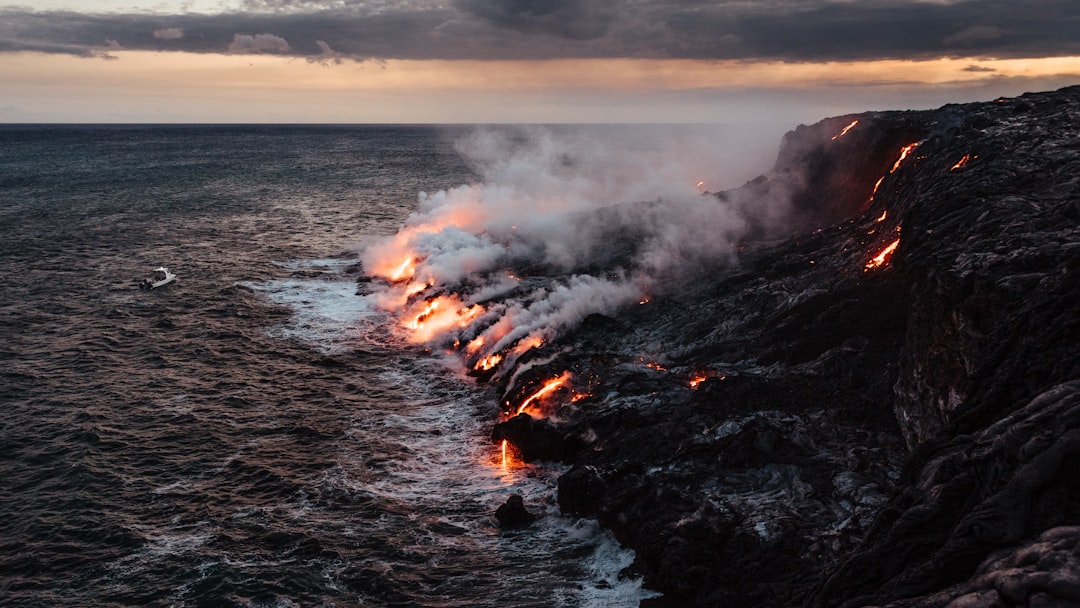

At dawn, when the fog still envelops the slopes of Mount Karisimbi, the highest peak in Rwanda at 4,507 meters, Volcanoes National Park presents itself as a landscape suspended between the visible and the invisible. The volcanic cones of the Virunga chain slowly emerge from the white blanket, outlining dark shapes against a sky that shifts from pearl gray to intense orange in just a few minutes. It is in these moments, even before entering the forest, that the park reveals its essential nature: a geologically alive territory, shaped by eruptions and the silent pressure of overlapping ecosystems.
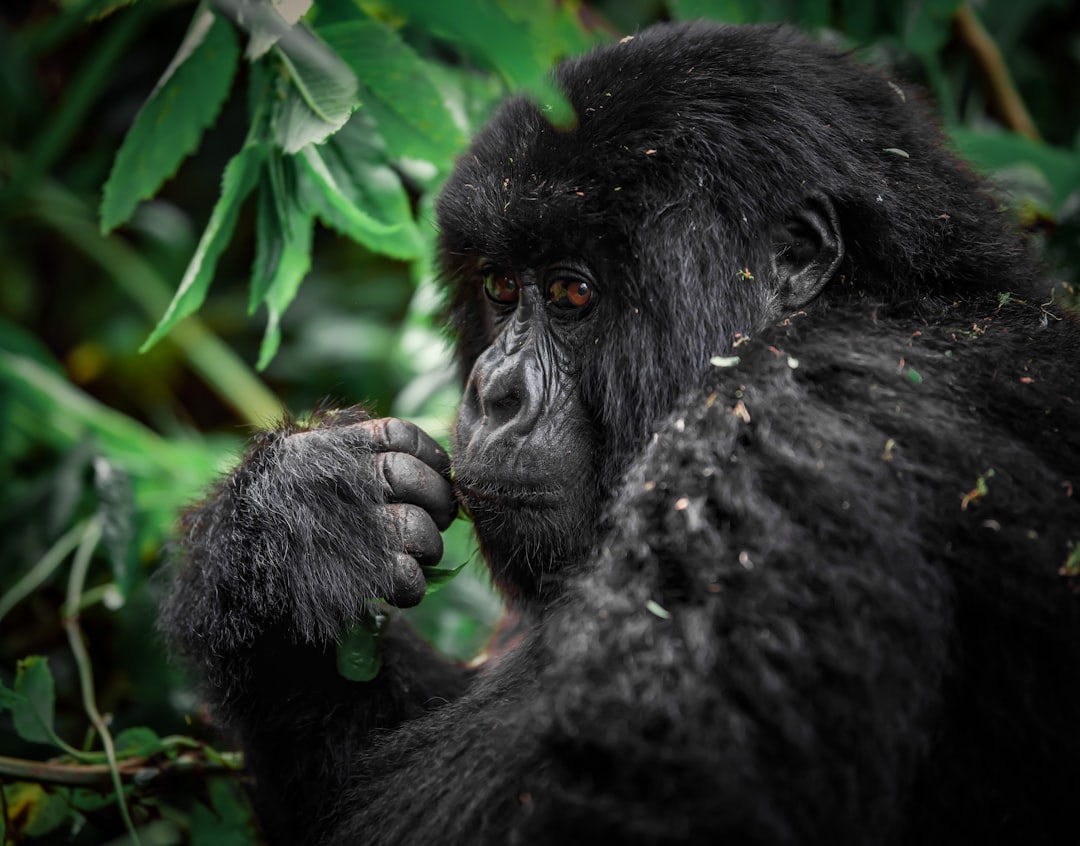
The park is located in the northern province of Rwanda, near the city of Musanze, and is part of a larger transboundary system that includes portions of Uganda and the Democratic Republic of Congo. Established in 1925, it is one of the oldest national parks in Africa. Here lives one of the most monitored populations of mountain gorillas (Gorilla beringei beringei) in the world: according to the latest data from conservation organizations, the total population of mountain gorillas exceeds 1,000 individuals, distributed between the forests of Virunga and the Bwindi forest in Uganda.
The Light and Colors of the Volcanic Forest

Entering the forest in the early hours of the morning means crossing layers of color that change with altitude. At the edges of the park, bright green and geometrically precise tea fields dominate, contrasting with the darker and more chaotic green of the natural vegetation just beyond the official boundary. Ascending through the bamboo zones — one of the characteristic vegetation bands at this altitude — the light filters differently: the tall culms, reaching up to 10-15 meters, create vertical corridors where the sun's rays draw golden stripes on the moist ground.
In the late afternoon, when trekkers return, the volcanoes take on shades of purple and blue. Bisoke, with its summit crater that hosts a lake, often stands out against clouds illuminated in pink. Those who stop to observe this moment from the park access area, near the visitor center, can see how the slanting light enhances the irregularities of the lava terrain, making visible the ancient flows that have shaped these landscapes over millennia.
The trekking experience and permits
The trekking for gorilla watching requires an official permit issued by the Rwanda Development Board. The cost of the permit is currently 1,500 US dollars per person, an amount that directly contributes to conservation programs and local communities. Groups are limited to 8 people per gorilla family per day, and the maximum time allowed in the presence of the animals is one hour.
The duration of the trekking varies considerably: it can last from two to six hours depending on where the gorillas are located that day. The terrain is uneven, often wet, and requires a good basic physical condition. The park guides and trackers, many of whom come from local communities and have detailed knowledge of the area, precede the group and communicate via radio with those monitoring the movements of the animals from early morning.
What to Observe on Site

During the trek, even before encountering the gorillas, it is possible to observe a series of details that tell the story of the ecosystem. The nests built by the gorillas in the trees or on the ground — structures made of branches and leaves that are abandoned every day — are often visible along the path. The footprints in the mud, the partially eaten wild nettle plants, the broken branches: every sign is a readable trace for those who know how to look.
Mountain gorillas are distinguished from lowland gorillas by their longer and denser fur, an adaptation to the lower temperatures at high altitudes. Observing a family group — with the silverback male, females, and young — in the context of the bamboo forest is a visually very different experience from any artificial setting: the animals move, feed, and interact completely independently of human presence.
Practical tips for the visit
The best time to visit the park coincides with the dry seasons, generally June-September and December-February, when the trails are less slippery and visibility in the forest is better. It is still possible to go trekking year-round. Permits should be booked well in advance through the official Rwanda Development Board website, especially for the high season months: it is common for available spots to fill up months in advance.
The recommended equipment includes waterproof boots with good grip, gloves to protect against the wild nettles present along the trails, and layered clothing to manage temperature variations between the base and higher altitudes. Musanze is about two and a half hours by car from Kigali on paved roads, and many visitors choose to stay in the area to be ready for the morning departure, which typically occurs around 7:00 from the park's briefing center.


