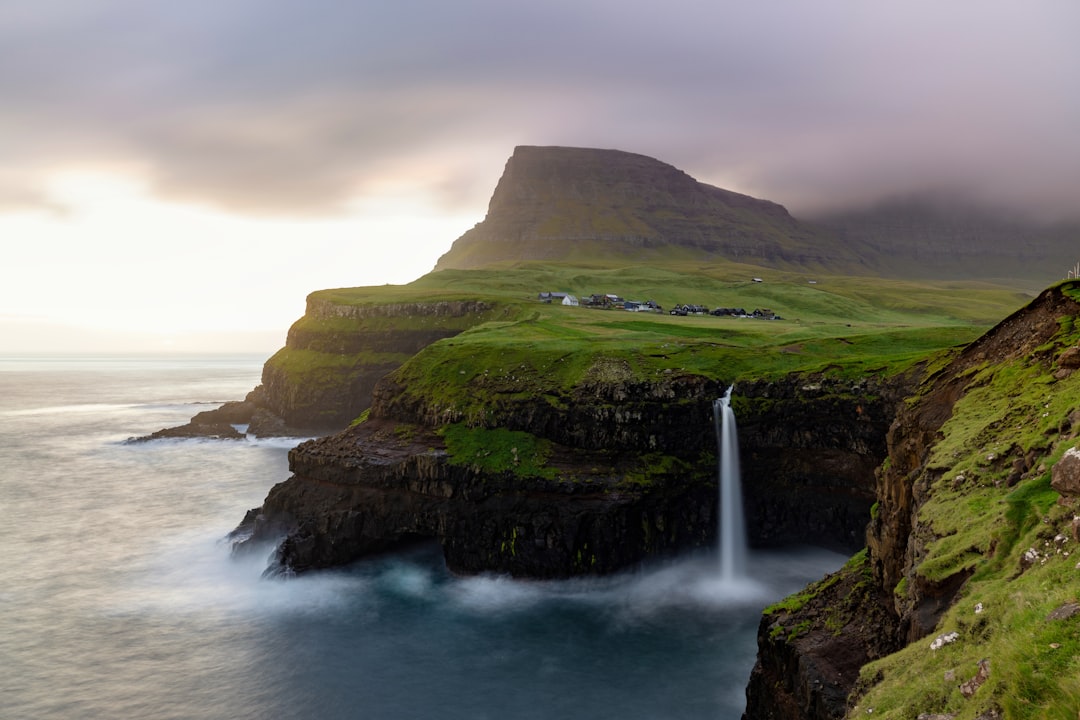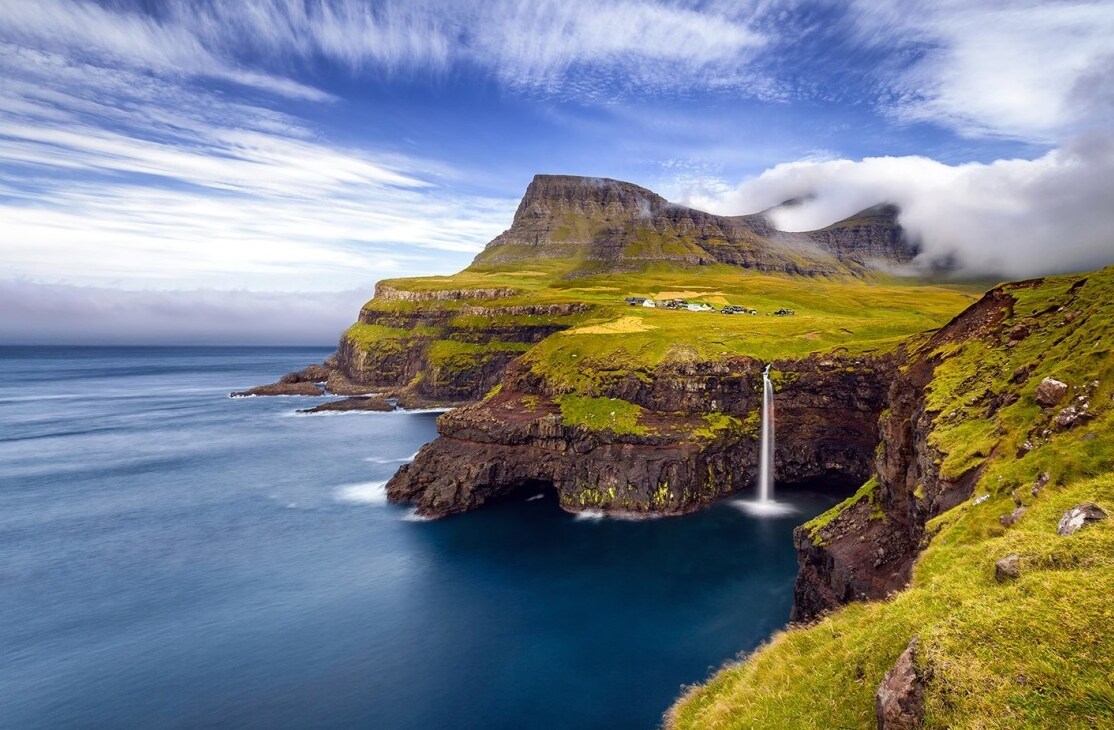

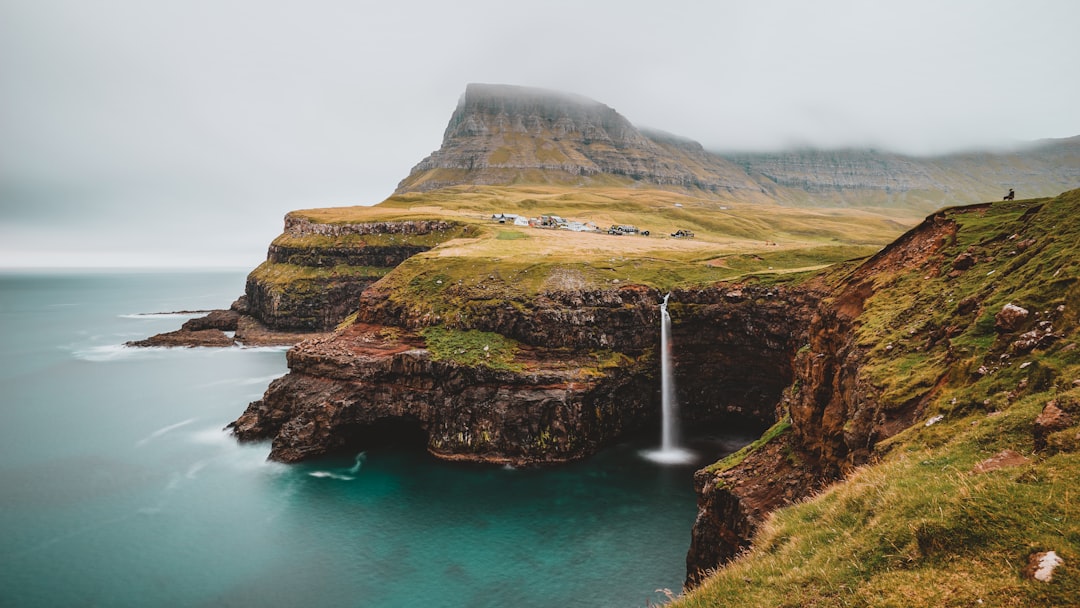
Nestled within the breathtaking landscapes of the Faroe Islands, the village of Gásadalur is a hidden gem that offers both mesmerizing views and a rich historical tapestry. Home to the stunning Múlafossur Waterfall, this pastoral village, surrounded by towering mountains and verdant fields, was virtually unknown until the early 21st century. The waterfall, cascading dramatically into the Atlantic Ocean, is a sight that seems lifted from the pages of a fairy tale, making it a must-visit for those exploring these rugged islands.
### History and Origins Gásadalur is one of the most isolated villages in the Faroe Islands, with origins dating back to the Viking Age. Although the exact date of its founding remains uncertain, the village has been inhabited since at least the 16th century. Historically, it was primarily a farming community, relying on sheep farming and fishing for sustenance. The village remained largely inaccessible until the construction of a tunnel in 2004, which dramatically changed its fortunes. Before this, the only way to reach Gásadalur was via a hiking trail or a perilous boat ride, limiting its population to fewer than 20 residents as of 2002.
### Art and Architecture The architectural style of Gásadalur is typical of traditional Faroe Islands villages, characterized by grass-roofed houses built from local materials. The charming structures blend seamlessly into their lush surroundings, creating a picturesque scene that captivates visitors. Múlafossur Waterfall itself is an artistic marvel, with its waters plunging 30 meters into the ocean below. The interplay of the waterfall, the sea, and the surrounding cliffs has inspired numerous photographers and artists who seek to capture the dramatic beauty of this untouched landscape.
### Local Culture and Traditions In terms of culture, Gásadalur embodies the essence of Faroese life. The villagers maintain traditional customs that date back centuries, including the practice of grindadráp, or whale hunting, a practice that has faced criticism but remains a part of the local culture. The Faroe Islands celebrate various festivals that reflect their rich heritage, including Ólavsøka, the national holiday held on July 29, which features traditional music, dancing, and local foods. The community spirit in Gásadalur is palpable, especially during these gatherings, where locals come together to celebrate their shared identity.
### Gastronomy The culinary scene in Gásadalur is deeply intertwined with its geographic setting. Traditional dishes often include fermented lamb, locally caught fish, and *skerpikjøt* (wind-dried mutton), all of which showcase the islanders' resourcefulness. A local delicacy called ræst kjøt (fermented meat) is also popular, reflecting the preservation methods utilized by the Faroese throughout history. Visitors should not miss the chance to taste skyr, a thick dairy product akin to yogurt, which is often served with berries. For those seeking a true taste of the region, a visit to a local restaurant or café is a must.
### Lesser-known Curiosities While many flock to Múlafossur Waterfall, few know that it is not the only waterfall in Gásadalur. The village is home to several smaller cascades that are equally enchanting but less frequented by tourists. Additionally, the tunnel that connects Gásadalur to the rest of the Faroe Islands is a marvel of engineering, featuring a blend of natural beauty and human ingenuity. The tunnel is about 1.4 kilometers long and offers stunning views of the surrounding landscapes. As you traverse the tunnel, take a moment to appreciate the transformation it has brought to this once-isolated village.
### Practical Visitor Information The best time to visit Gásadalur is during the late spring and summer months (May to August), when the weather is milder and the days are longer. The peak tourist season draws crowds, so visiting in early September can offer a quieter experience. When planning your trip, be sure to wear sturdy footwear for hiking and explore the many trails that wind through the stunning landscapes. Look for opportunities to engage with locals, who are often eager to share their stories and insights about life in this enchanting village.
In conclusion, the village of Gásadalur and the majestic Múlafossur Waterfall provide a captivating glimpse into the beauty and culture of the Faroe Islands. With its rich history, stunning natural scenery, and vibrant local traditions, Gásadalur is a destination that should not be missed. For a personalized journey through this hidden gem, consider using the Secret World app to craft your unique itinerary.