
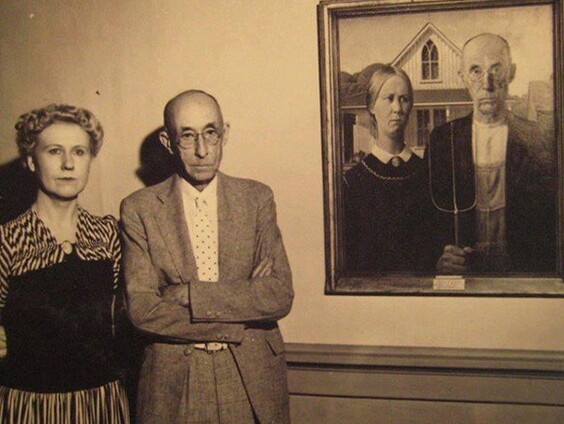

In the heart of Chicago, the legacy of Grant Wood's iconic painting, American Gothic, resonates far beyond its canvas. This masterpiece, created in 1930, encapsulates the spirit of American life, particularly the complexities of rural Midwestern existence. The painting’s roots trace back to a seemingly innocuous moment in Eldon, Iowa, where Wood was inspired by a quaint white house adorned in the Carpenter Gothic style. This moment sparked a creative journey that would forever alter the landscape of American art.
History and Origins
The Carpenter Gothic style, characterized by its intricate wooden details and gothic arches, flourished in the late 19th century, primarily in the Midwest. It arose from the need for affordable, yet aesthetically pleasing homes, often utilizing local materials and craftsmanship. While the architectural style gained popularity across the United States, Wood's depiction in American Gothic serves as a reminder of the stark realities of rural life during the Great Depression. This period marked a significant shift in American society, where traditional roles became both a source of pride and critique.
In the years leading up to Wood’s painting, America was grappling with rapid industrialization and urbanization. The 1930s brought economic turmoil, leading to a renewed interest in agrarian values and the preservation of traditional lifestyles. By choosing his sister Nan Wood and his dentist Dr. Byron McKeeby as models, Wood not only captured the essence of Midwestern life but also highlighted the gender roles that defined the era. Nan's colonial dress and Dr. McKeeby's farmer attire evoke a sense of nostalgia while simultaneously challenging viewers to reflect on the changing dynamics of American society.
Art and Architecture
The American Gothic house itself, now a historic site, embodies the architectural beauty that inspired Wood. Its steep rooflines and pointed arches reflect the Gothic Revival movement, which sought to imbue American homes with a sense of European elegance. The house, located at 300 E. 3rd St., Eldon, is often overshadowed by the painting, yet it stands as a testament to the artistic vision that sparked Wood's creativity.
In addition to American Gothic, Wood's portfolio includes other notable works such as Daughters of Revolution and The Midnight Ride of Paul Revere, which similarly explore themes of American identity and rural life. His meticulous attention to detail and ability to capture the essence of his subjects have solidified his status as a pivotal figure in American Regionalism, a movement that sought to depict everyday life across the United States.
Local Culture and Traditions
Eldon, Iowa, where the inspiration for American Gothic was born, celebrates its connection to Wood with annual events that honor his legacy. The Grant Wood Art Festival, typically held in June, showcases local artists, crafts, and performances, fostering a sense of community while paying homage to Wood's contributions. Visitors can engage with traditional Midwestern customs, from storytelling sessions to folk music performances, creating an immersive cultural experience.
Moreover, the painting's influence extends to various cultural expressions within Chicago itself. As a city rich in artistic endeavors, Chicago hosts numerous exhibitions and discussions on Wood’s work, reflecting its importance in American art history. The interplay between the city’s urban vibrancy and rural roots offers a dynamic backdrop for understanding the multifaceted nature of the Midwest.
Gastronomy
While in Chicago, visitors should indulge in local cuisine that resonates with the heartland's agricultural heritage. Deep-dish pizza is an iconic staple that reflects the city's culinary identity, while dishes such as Italian beef sandwiches and Chicago-style hot dogs highlight the city's diverse cultural influences. For a taste of traditional Midwestern fare, seek out restaurants that serve corn-fed beef, potato pancakes, and apple pie, all of which embody the agricultural richness of the region.
The city’s thriving food scene also embraces farm-to-table dining, connecting diners with local producers. Many establishments prioritize seasonal ingredients, echoing the agricultural roots that inspired Wood’s artwork.
Lesser-Known Curiosities
Beyond the well-trodden path of American Gothic, there are fascinating stories woven into Wood's life and work. For instance, Wood was deeply influenced by the Art Institute of Chicago, where he studied and later taught. His connection to the city is often overlooked, yet it profoundly shaped his artistic vision.
Additionally, there is a lesser-known anecdote surrounding the painting's title. The term "Gothic" not only refers to the architectural style but also evokes a sense of mystery and emotion, inviting viewers to explore deeper narratives of American life. The stark expressions of the models and the bleakness of the rural setting suggest themes of resilience and hardship, prompting ongoing debates about the true meaning behind the artwork.
Practical Visitor Information
For those wishing to explore the legacy of American Gothic and Grant Wood, the best time to visit is during the spring and summer months when festivals and events are abundant. Early June is particularly vibrant with the Grant Wood Art Festival in Eldon, allowing visitors to fully immerse themselves in the local culture.
In Chicago, art lovers can visit the Art Institute of Chicago, where Wood's works are often featured in exhibitions. Additionally, take time to explore neighborhoods that echo the spirit of the Midwest, such as Lincoln Park and Wicker Park, where art, food, and culture converge.
For a tailored experience that captures the essence of both Chicago and Grant Wood's legacy, consider using the Secret World app to plan your personalized AI itinerary.


