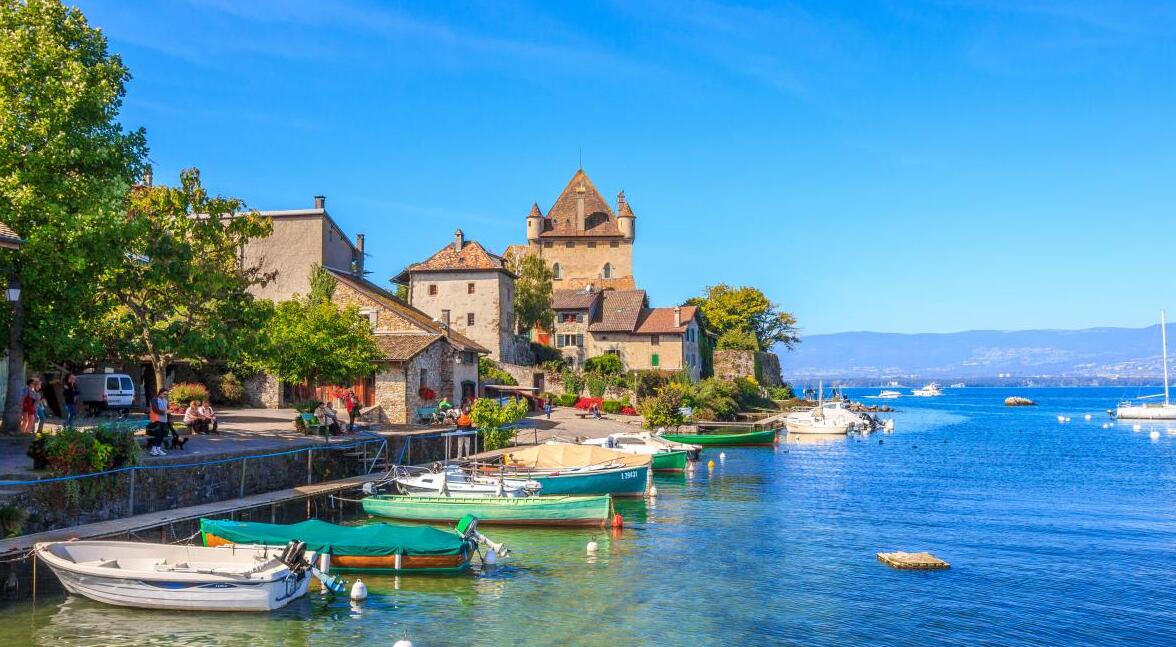

Nestled on the shores of Lake Geneva, Yvoire is a village where history, color, and tranquility collide in a symphony of medieval charm and floral splendor. Often dubbed the "Pearl of Lake Geneva," this picturesque town in southeastern France beckons travelers with its cobblestone streets and flower-adorned facades, offering a journey back in time.
### History and Origins The story of Yvoire begins in the early 14th century when Count Amadeus V of Savoy recognized its strategic location on Lake Geneva. He fortified the village, constructing ramparts and a castle to protect it from invaders. These medieval defenses were crucial during the Savoyard Wars. Although the original castle was damaged in the 16th century, its remaining tower still dominates the skyline, a testament to Yvoire’s storied past. Before its transformation into a fortified village, Yvoire was primarily a fishing community, thriving on the abundant resources of the lake.
### Art and Architecture The architecture of Yvoire is a delightful blend of medieval stonework and vibrant floral displays. Walking through the village, you’ll encounter half-timbered houses with wooden balconies overflowing with geraniums and petunias. These charming edifices reflect an architectural style that has been carefully preserved and celebrated. Noteworthy is the Church of St. Pancras, with its distinctive bulbous spire covered in shimmering fish scales—a nod to the village's ancient fishing roots. While Yvoire is not known for grand art collections, the village itself is a living canvas, where every street corner seems to frame a perfect picture.
### Local Culture and Traditions Yvoire's inhabitants take great pride in their floral displays, having earned multiple awards in the "Villes et Villages Fleuris" competition. This passion culminates each summer in the Fête des Fleurs, a festival celebrating the town’s floral heritage. Moreover, the village has a rich tradition of craftsmanship; local artisans continue to produce handmade goods, from pottery to textiles, that reflect Yvoire’s cultural heritage.
### Gastronomy The culinary scene in Yvoire is as rich as its history. Given its lakeside position, fish dishes are a staple, with perch fillets being a particular favorite, often served with a buttery lemon sauce. Savoyard cuisine also plays a key role, with hearty offerings like tartiflette and raclette tantalizing visitors’ taste buds. For a sweet finish, try the canelés, a caramelized custard pastry, paired with local wines from the nearby Savoie region.
### Lesser-known Curiosities While Yvoire's floral displays and medieval streets are well-known, few visitors realize that the village was once a center for boat-building. The Nernier shipyard, located just a stone's throw away, was pivotal in crafting the wooden boats that plied the waters of Lake Geneva. Additionally, the Garden of Five Senses was once the site of a medieval kitchen garden, later transformed into the sensory wonderland it is today.
### Practical Visitor Information Summer is undoubtedly the best time to visit Yvoire, when the flowers are in full bloom and the lake shimmers under the sun. However, spring and early autumn offer a quieter charm with fewer crowds. As you explore, keep an eye out for the town's secret passageways and hidden courtyards that offer a glimpse into the lives of those who once walked these ancient streets. Remember to wear comfortable shoes, as the cobblestones can be uneven.
For a journey where history, nature, and culture intertwine, plan your visit to Yvoire with the Secret World app for a tailored itinerary.
