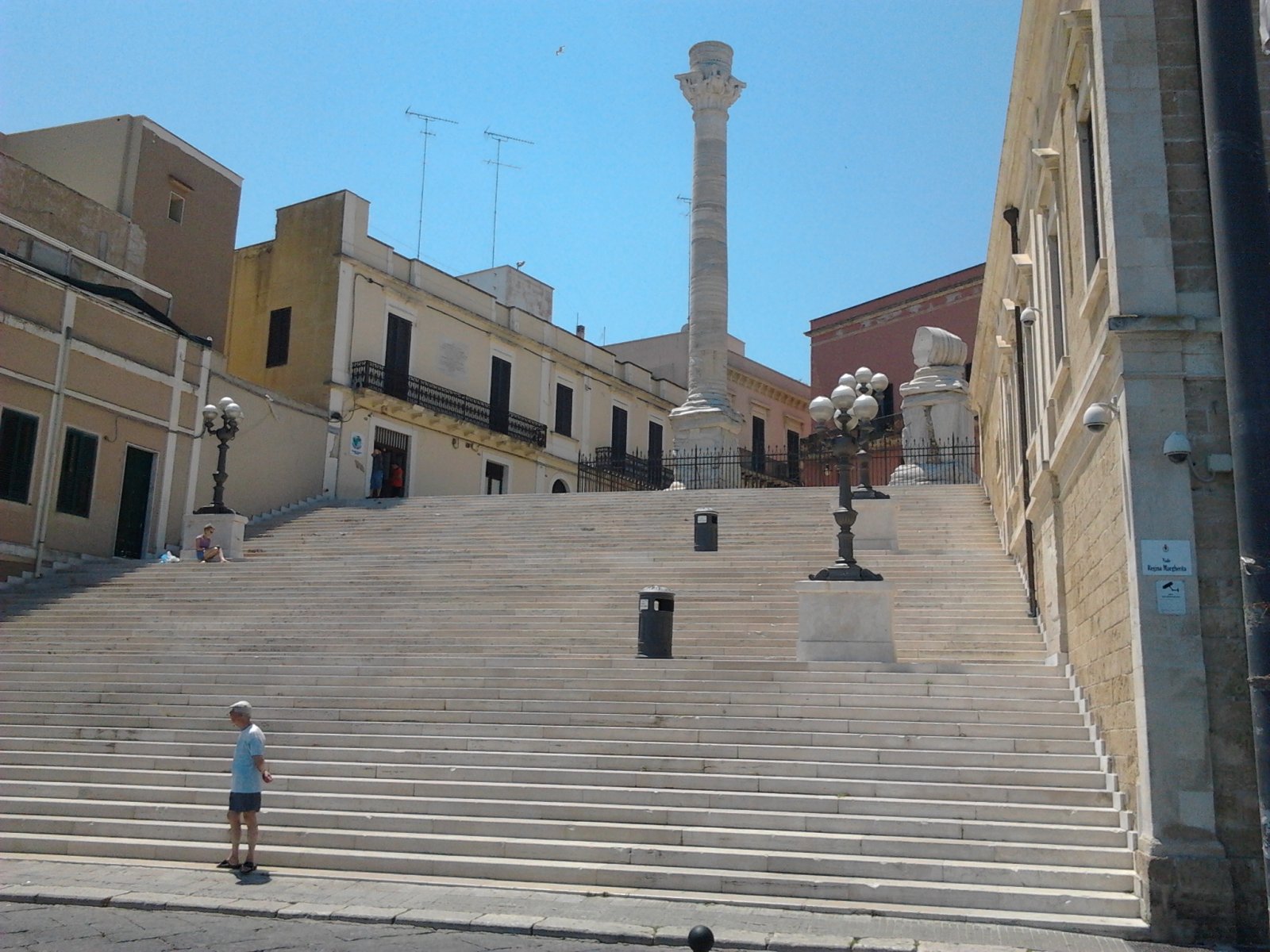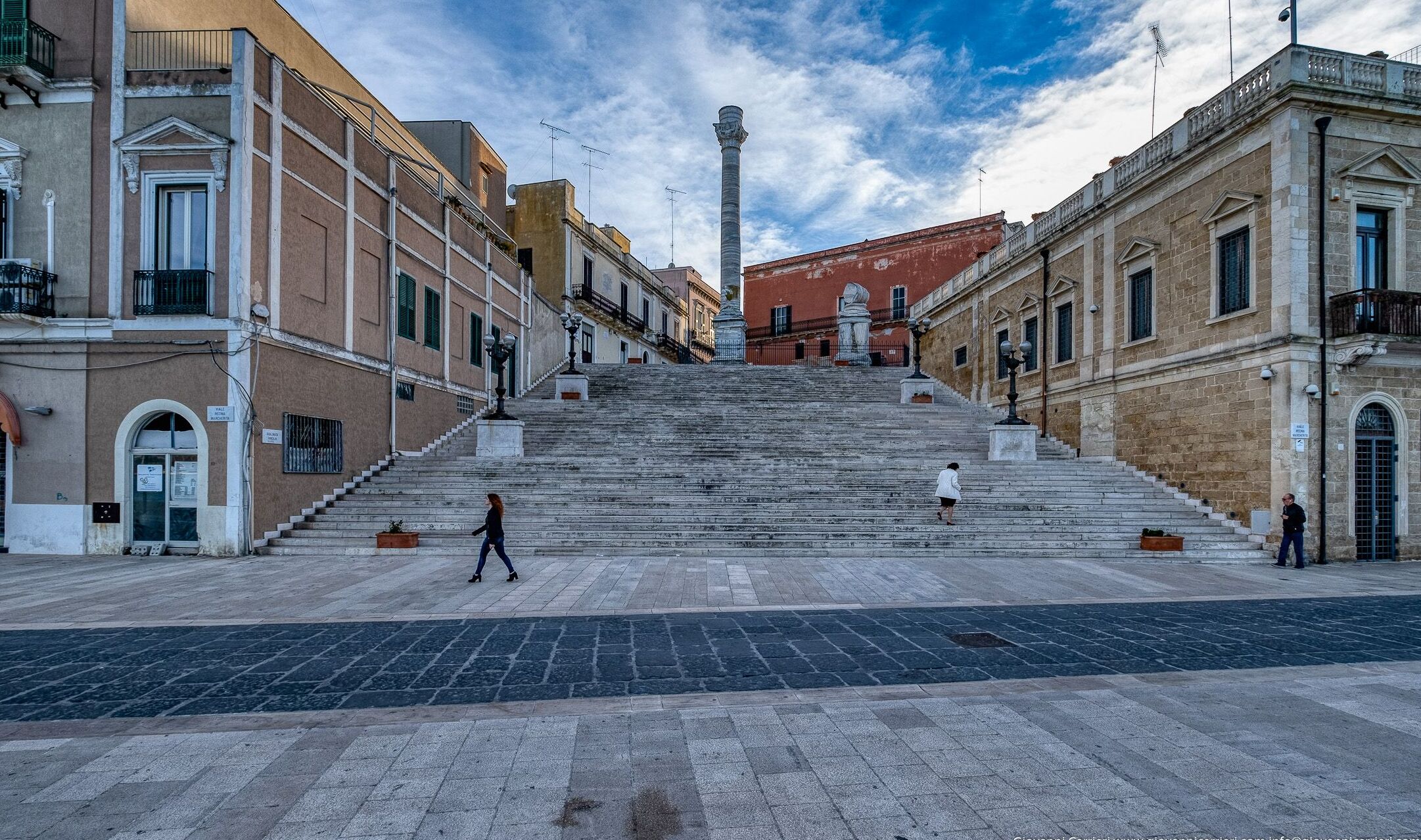

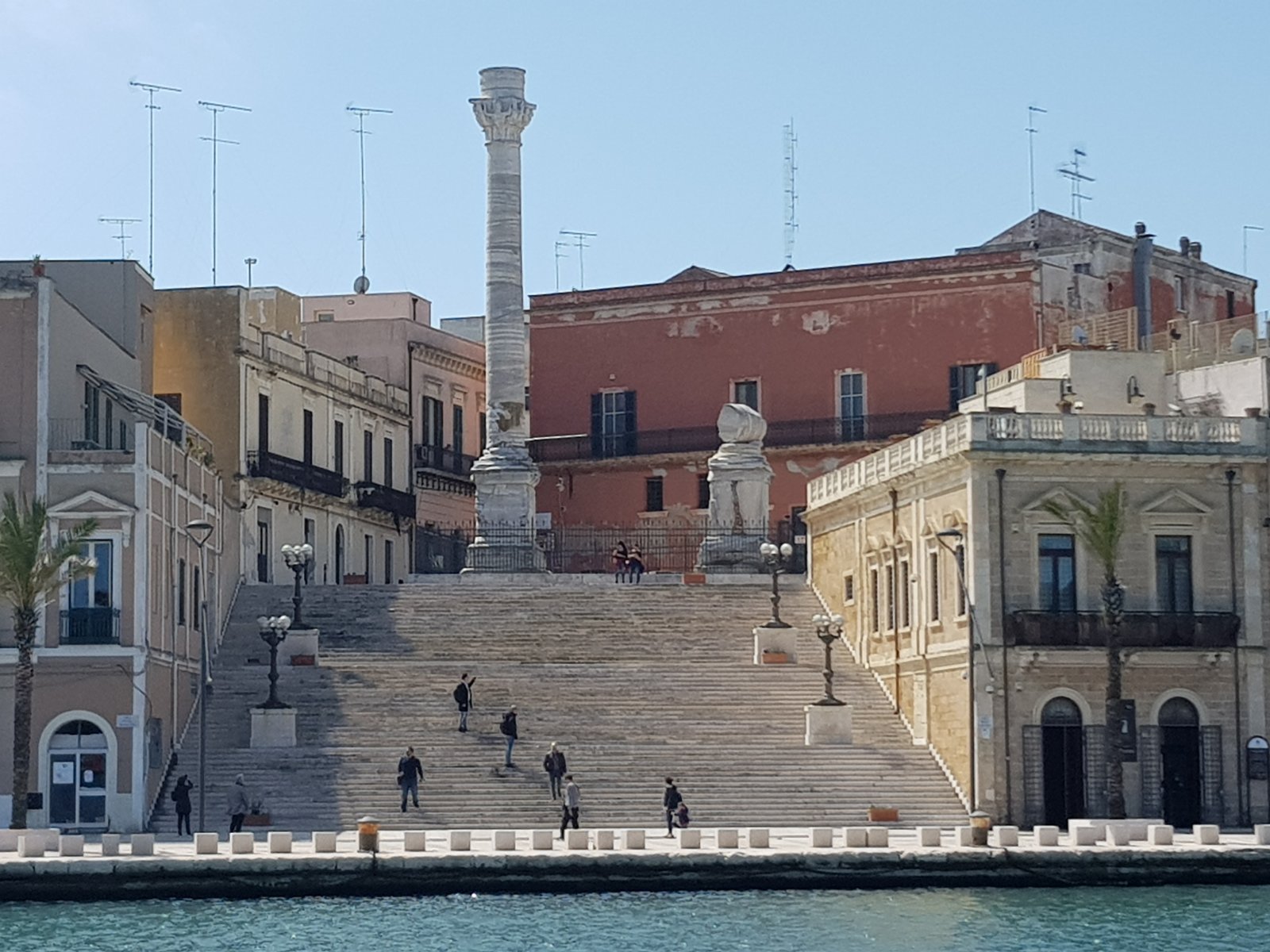
At the southern edge of Italy, the ancient port city of Brindisi unfolds a vivid tapestry of history, art, and culture. Nestled along the Appian Way, the Colonne di Brindisi beckon travelers to ascend their 52 steps, leading to a moment where ancient history converges with breathtaking views of the Adriatic Sea.
### History and Origins
The origins of Brindisi date back to the 8th century BC, believed to have been founded by the Messapians, an ancient Italic tribe. Its strategic position made it a vital port for trade and military endeavors, particularly during the Roman Empire. The city served as the terminal of the legendary Appian Way, which connected Rome to the southern regions of Italy.
In 19 BC, Brindisi gained even more prominence when Virgil, the famed Roman poet, is said to have died here. Returning from Greece with Mark Antony and Augustus, it was in Brindisi that his life came to a close, adding a layer of literary significance to this already historical city. The columns, now a symbol of Brindisi, were erected to commemorate the city's role as a gateway to the East, standing proudly as a testament to its storied past.
### Art and Architecture
The standing column of Brindisi, soaring to 19 meters, is a remarkable example of Roman architecture. Crafted from exquisite African marble, it is adorned with intricate carvings featuring pairs of tritons and depictions of the gods Jupiter, Neptune, Pallas, and Mars. The craftsmanship reflects the advanced techniques of ancient Roman builders, whose legacy continues to inspire awe.
Originally, there were two columns, but one tragically collapsed in 1528. Its remnants were relocated to Lecce, where they now support a statue of the city's patron saint in Piazza Sant'Oronzo. The base of the remaining column, measuring 2.65 meters, is a reminder of the grandeur that once stood at the entrance to the harbor. As visitors pause to admire the architectural marvel, they are invited to reflect on the ingenuity of the Romans who constructed such enduring monuments.
### Local Culture and Traditions
Brindisi's culture is a vibrant blend of its rich history and its Mediterranean lifestyle. The city celebrates numerous festivals throughout the year, each steeped in tradition. One of the most significant is the Festa di San Teodoro, held in November, honoring the city's patron saint with a colorful procession and traditional music.
In addition to religious celebrations, the Sagra del Pesce during the summer months showcases the local gastronomy, where fresh seafood is the star of the show. Locals and visitors alike gather to share in the communal spirit, enjoying traditional dishes while listening to live music.
### Gastronomy
The culinary scene in Brindisi is a reflection of its coastal heritage, with an emphasis on fresh, local ingredients. Orecchiette, a type of pasta shaped like little ears, is often served with broccoli rabe and anchovies, capturing the essence of the region's flavors. Seafood dishes, such as grilled octopus and sea urchins, are staples that highlight the city's maritime bounty.
Wine enthusiasts will appreciate the local varietals, particularly Negroamaro and Primitivo, which pair beautifully with the region's hearty dishes. Be sure to indulge in a glass of Puglian rosé, a refreshing complement to a warm afternoon spent overlooking the harbor.
### Lesser-known Curiosities
One intriguing fact that often escapes the notice of tourists is the Roman amphitheater hidden beneath the streets of Brindisi, a remnant of the city's entertainment culture during Roman times. Additionally, the Castle of Charles V, built in the 16th century, lies just a short walk from the columns, offering a glimpse into the defensive architecture of the period.
Another hidden gem is the Palazzo Granafei-Nervegna, a striking example of Renaissance architecture that houses a museum where visitors can view artifacts from Brindisi's rich past. These lesser-known sites provide a deeper understanding of the city's historical significance and cultural heritage.
### Practical Visitor Information
The best time to visit Brindisi is during the spring and early autumn months, from April to June and September to October. The weather is pleasant, making it ideal for exploring the city’s outdoor attractions.
When visiting the Colonne di Brindisi, take a moment to enjoy the panoramic views of the harbor, a scene that has inspired countless artists and writers throughout history. Make sure to wear comfortable shoes for the climb and bring a camera to capture the stunning vistas.
Whether you’re savoring local delicacies or exploring ancient ruins, Brindisi offers a wealth of experiences that connect the past with the present. For a tailored exploration of this captivating city, consider using the Secret World app to plan your personalized itinerary.