
← Back

The Norman Castle of Mesagne

Via Castello, 72023 Mesagne BR, Italia ★★★★☆ 387 views
Sharma Kapoor
Mesagne
🏆 AI Trip Planner 2026

Get the free app

Discover the best of Mesagne with Secret World — the AI trip planner with 1M+ destinations. Get personalized itineraries, hidden gems and local tips. Free on iOS & Android.

🧠 AI Itineraries 🎒 Trip Toolkit 🎮 KnowWhere Game 🎧 Audio Guides 📹 Videos
Scan to download iOS / Android
Scan for AppGallery Huawei users

About The Norman Castle of Mesagne

The Norman Castle of Mesagne - Mesagne | Secret World Trip Planner

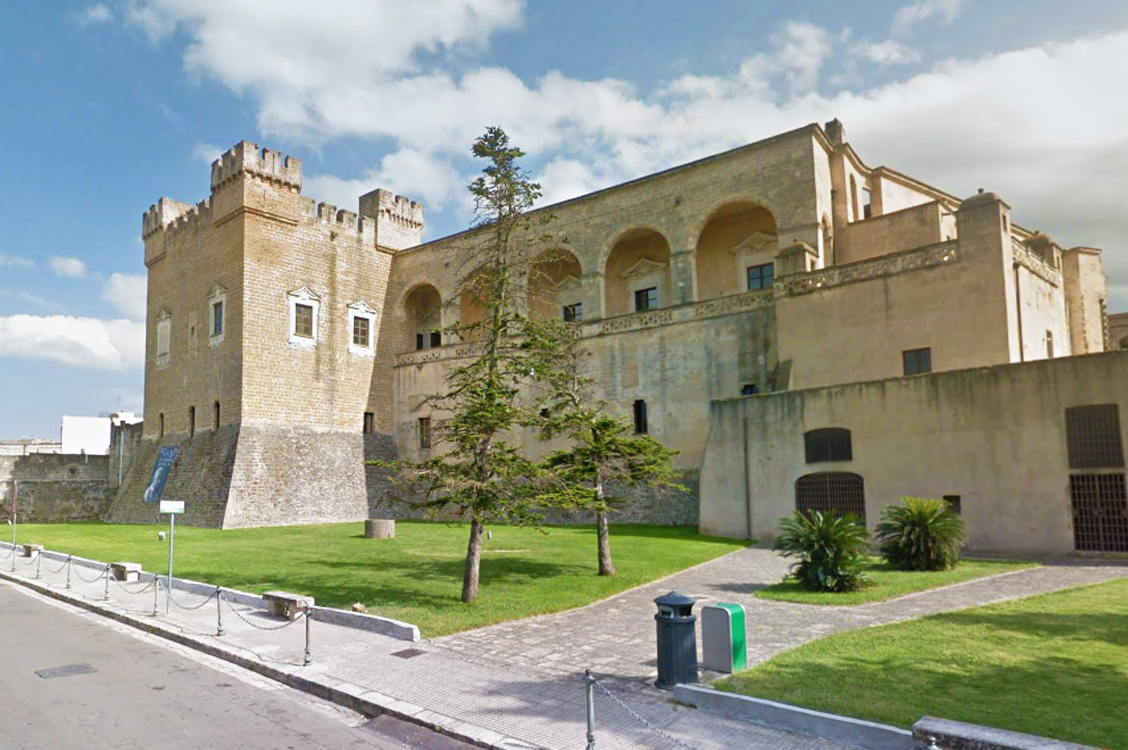
For centuries the castle has been the gravitational centre around which the social, political and economic life of the city revolves. The site was probably the scene of the construction of a first fortified structure already in Norman times, after Robert Guiscard was awarded the title of Duke of Apulia, Calabria and Sicily. Traces of a pre-existing castle can be found in historical sources, on the occasion of a reconstruction that took place in the thirteenth century at the behest of Frederick II. At that time, the city of Mesagne was equipped with a mighty wall with a deep moat and numerous defensive turrets. Destroyed in the same century by the Saracen troops in the pay of Manfredi of Swabia, the castle, now in poor condition, was razed to the ground in the fifteenth century. In its place, Giannantonio Orsini del Balzo had the large quadrangular tower built, which you can still admire today. The structure was equipped with a large moat and made accessible by a drawbridge. The entrance was protected by loopholes and embrasures placed on the crowning. Tradition has it that, on top of the tower, there was another smaller one, demolished in the eighteenth century because of the damage suffered after an earthquake. Over the centuries, other buildings were added to this older structure, becoming the prestigious residence of the feudal lords of the city. Among the illustrious people who chose it as their home, Giovanni Antonio Albricci and the De Angelis family, who obtained the property in 1973, built the splendid Baroque portal. It became municipal property and today houses the Civic Archaeological Museum.

🗺 AI Trip Planner

Plan your visit to Mesagne

Suggested itinerary near The Norman Castle of Mesagne

MAJ+
500.000+ travelers worldwide
  1. 🌅
    Morning
    The Norman Castle of Mesagne
    📍 Mesagne
  2. ☀️
    Afternoon
    Church of S. Anna - Mesagne
    📍 0 km · Mesagne
  3. 🌆
    Evening
    Hypogeum Oil Mill - Guarini Palace
    📍 0.2 km · Mesagne

Buy Unique Travel Experiences

Powered by Viator

See more on Viator.com

Explore nearby · Mesagne

Frequently Asked Questions

The castle's origins trace back to Norman times when Robert Guiscard was awarded the title of Duke of Apulia, Calabria and Sicily. It was reconstructed in the thirteenth century under Frederick II with impressive walls and defensive turrets, but was later destroyed by Saracen troops and razed in the fifteenth century. Giannantonio Orsini del Balzo then built the distinctive quadrangular tower that still stands today.
The main attraction is the impressive quadrangular tower built in the fifteenth century, featuring a large moat and drawbridge entrance with protective loopholes and embrasures. The castle also showcases a splendid Baroque portal built by the De Angelis family, and it now houses the Civic Archaeological Museum with exhibits related to the region's history.
Originally, there was a smaller tower on top of the main quadrangular tower, but it was demolished in the eighteenth century due to severe damage sustained from an earthquake. This architectural modification changed the castle's distinctive silhouette permanently.
Several illustrious feudal lords made the castle their home over the centuries, including Giovanni Antonio Albricci and the De Angelis family, who obtained the property in 1973 and added the ornate Baroque portal. These prominent families elevated the castle into a prestigious aristocratic residence that reflected their status and wealth.
Yes, the castle became municipal property and today functions as a cultural institution, housing the Civic Archaeological Museum. This makes it an accessible destination for visitors interested in exploring the region's medieval history and archaeological artifacts in an authentic historic setting.
