
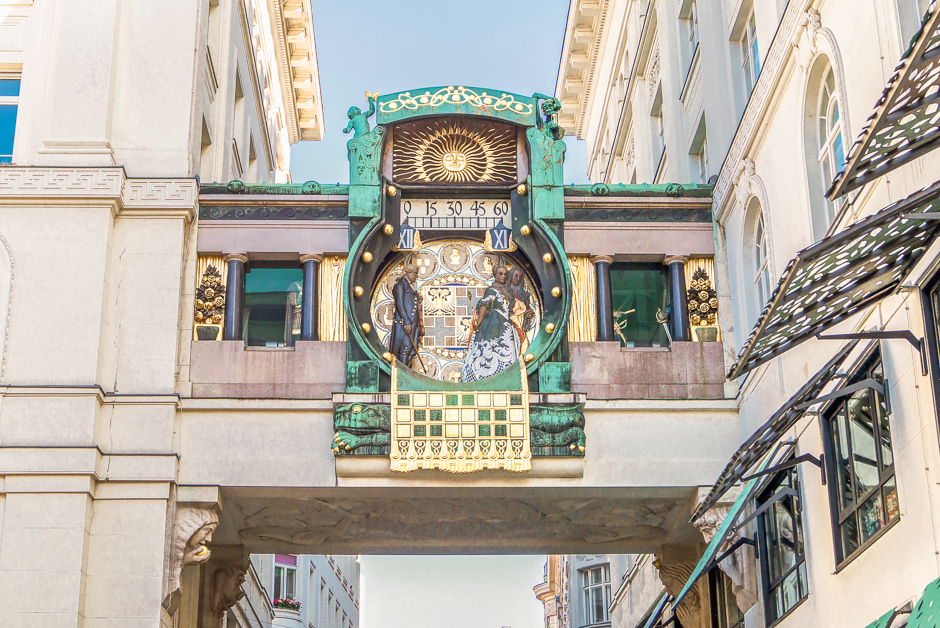

In the heart of Vienna, where history and artistry intertwine, stands the Anchor Clock—a vibrant emblem of the city’s rich past. Nestled on a small bridge between the two sections of the Anker-Hof building at Hohe Markt, this clock is not just a timepiece but a theatrical display of Vienna's illustrious history. Designed by the renowned Art Nouveau painter Franz Matsch, the clock features twelve copper figures that represent significant personalities from Vienna's past, all of whom pass across the bridge every twelve hours. At noon, a splendid parade unfolds, accompanied by melodies that echo the grandeur of the city, showcasing figures such as Empress Maria Theresia and composer Joseph Haydn.
The Anchor Clock was inaugurated in 1914, but its story is deeply rooted in the history of Vienna. The Anker-Hof building itself dates back to the late 19th century, a time when Vienna was a cultural hub at the heart of the Austro-Hungarian Empire. This period saw the city flourish in art and architecture, setting the stage for the clock's creation. The clock symbolizes not only the passage of time but also the enduring legacy of the personalities who shaped Vienna.
Architecturally, the Anchor Clock is a stunning example of Art Nouveau design. The clock’s facade is adorned with intricate details, vibrant colors, and flowing lines that are characteristic of the movement. The bridge it rests upon connects the two wings of the Anker-Hof, creating a picturesque scene that attracts locals and tourists alike. The craftsmanship involved in the figures and the clock mechanism is a testament to the skill of early 20th-century artisans.
The cultural significance of the Anchor Clock extends beyond its artistic beauty. It is a focal point for local customs and traditions, particularly during public celebrations. The clock is often a gathering point for festivals, and locals take pride in its role as a historical landmark. One such event is the annual Vienna Festival, where music and art converge in the streets, with the Anchor Clock serving as a backdrop for performances and community activities.
When visiting the Anchor Clock, one cannot overlook the culinary delights that surround the area. Vienna is famed for its rich gastronomy, with local specialties like Wiener Schnitzel, a breaded veal cutlet, and Sachertorte, a decadent chocolate cake, available in nearby cafes. The Hohe Markt square is home to several establishments where visitors can indulge in these iconic dishes while enjoying a view of the clock. Pair your meal with a glass of Grüner Veltliner, a white wine that is a hallmark of Austrian viticulture, for a truly local experience.
For those seeking to uncover the lesser-known curiosities of the Anchor Clock, one might be surprised to learn that the clock was initially met with skepticism. Critics questioned whether such a grandiose timepiece was necessary in the bustling life of Vienna, yet it has since become an integral part of the city's identity. Additionally, the clock's music is composed of various classical pieces, which change with the seasons—an aspect that many visitors overlook.
The best time to visit the Anchor Clock is undoubtedly at noon when the figures come to life in a delightful spectacle. Arriving a bit earlier allows you to secure a good spot for viewing, as it attracts crowds eager to witness this unique performance. Be sure to check the schedule for special events or seasonal performances that may coincide with your visit.
As you stand in the bustling Hohe Markt, absorbing the sights and sounds of Vienna, take a moment to appreciate the stories that the Anchor Clock tells. It serves as a reminder of the city’s history while bridging the past with the present.
For a personalized experience exploring Wien, consider using the Secret World app to craft your unique itinerary.


