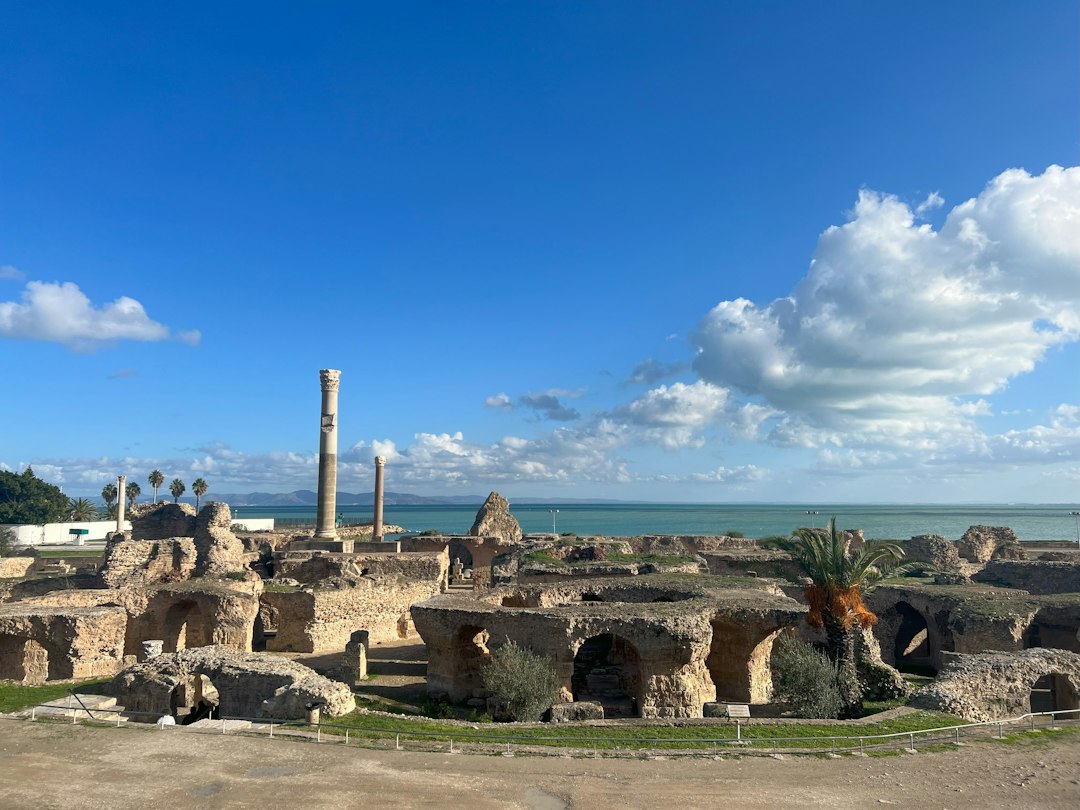

Eight columns of gray granite still rise today towards the Mediterranean sky, silent witnesses of what was the largest thermal complex ever built by the Romans outside the Italian peninsula. The Antonine Baths in Carthage do not announce themselves with flashy signs: they reveal themselves slowly, as one descends towards the Tunisian coast, and the blue sea in the background transforms every photograph into something almost unreal.
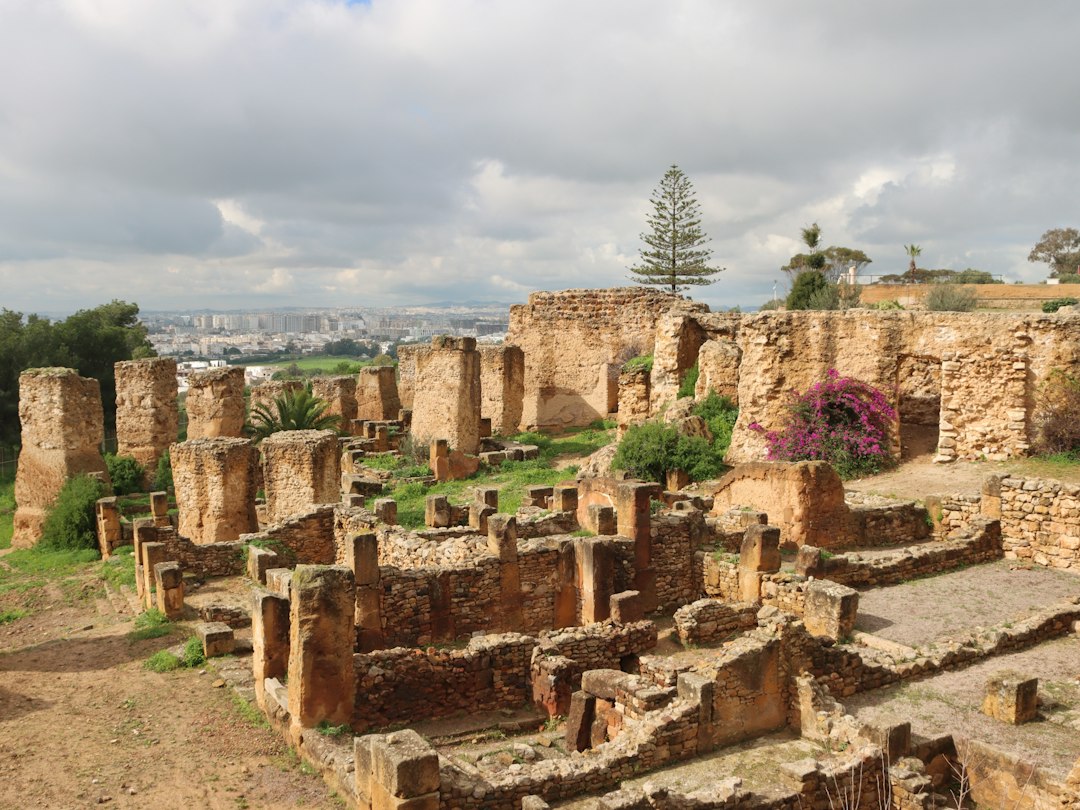
Built in the 2nd century AD under Emperor Antoninus Pius — whose name they still bear today — these baths represent one of the most ambitious architectural projects of the entire Roman imperial era. Carthage, already the capital of the Punic empire founded by the Phoenicians, had become under Rome the third largest city of the empire, and deserved a thermal facility worthy of its rank.
The breathtaking dimensions
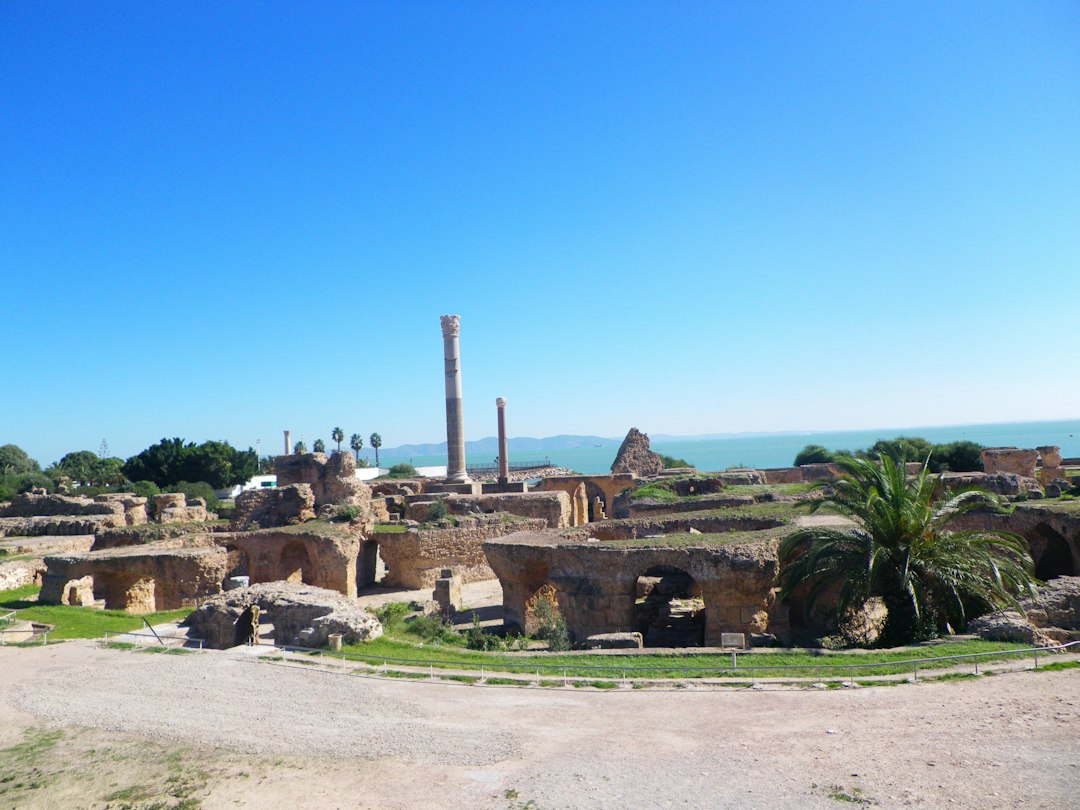
Walking among the foundations of the Baths of Antoninus means understanding, concretely, what it means to build on an imperial scale. The complex originally covered an area of about 3.5 hectares, with rooms that reached heights of over 30 meters. The surviving columns, about 15 meters tall, give only a partial idea of how majestic the structure was in its entirety: the main hall was probably twice as high.
What is seen today on the surface is actually the level of the original undergrounds — the service rooms where hot water and steam circulated through a hypocaust system. The true bathing rooms were located on the upper floor, which has collapsed over the centuries. This detail completely changes the perception of the space: what seems already imposing was, in reality, only the base.
The historical context of Roman Carthage
Carthage was destroyed by the Romans in 146 BC at the end of the Third Punic War, but was then refounded as a Roman colony about a century later, under Julius Caesar and then Augustus. It quickly became the capital of the province of Africa Proconsularis and a leading cultural center: here lived and wrote Tertullian, one of the fathers of Christian theology, and here Augustine of Hippo received part of his intellectual training.
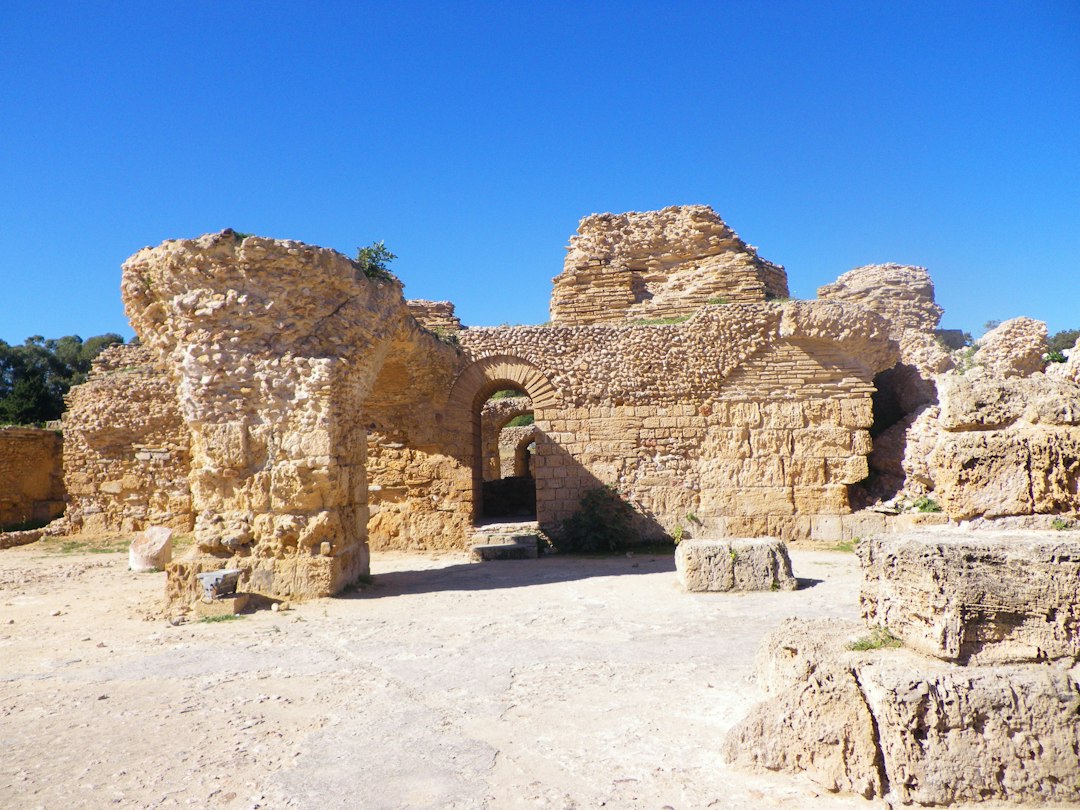
The baths were probably built between 145 and 162 AD, a period of great prosperity for the city. The archaeological site of Carthage, of which the baths are a part, has been recognized as a UNESCO World Heritage Site since 1979, and also includes the Phoenician tophet, the Punic port, and the Roman villas of the Byrsa hill.
What to observe during the visit
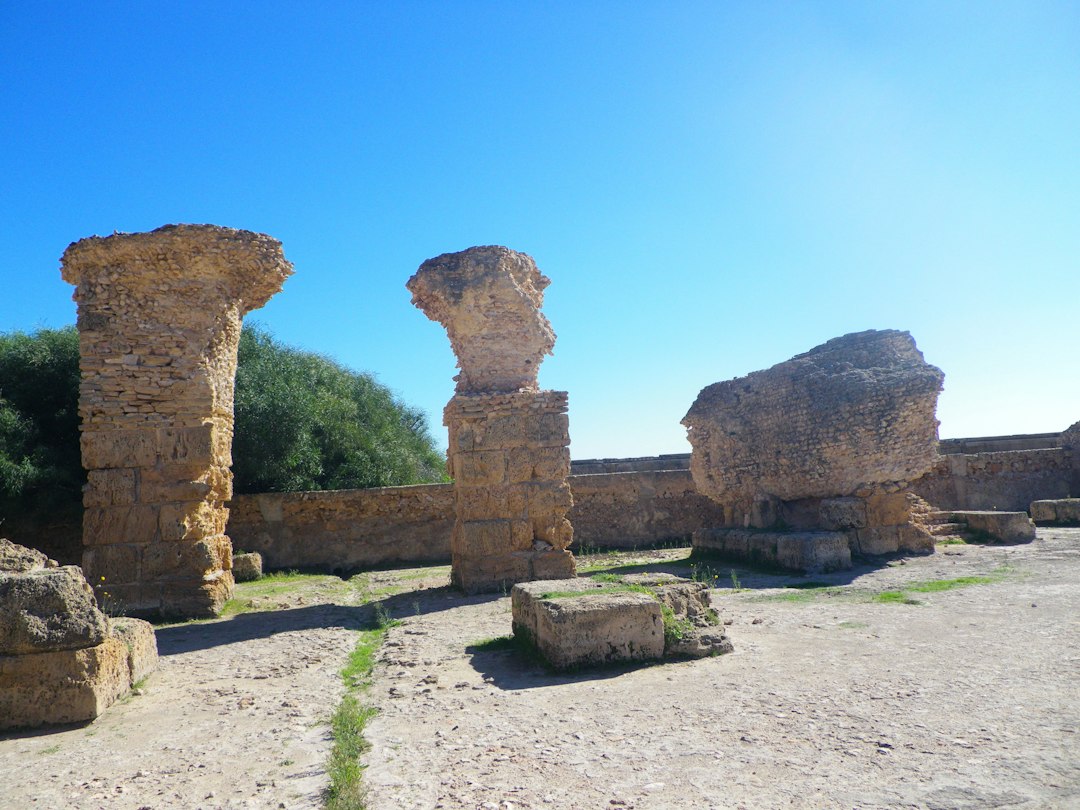
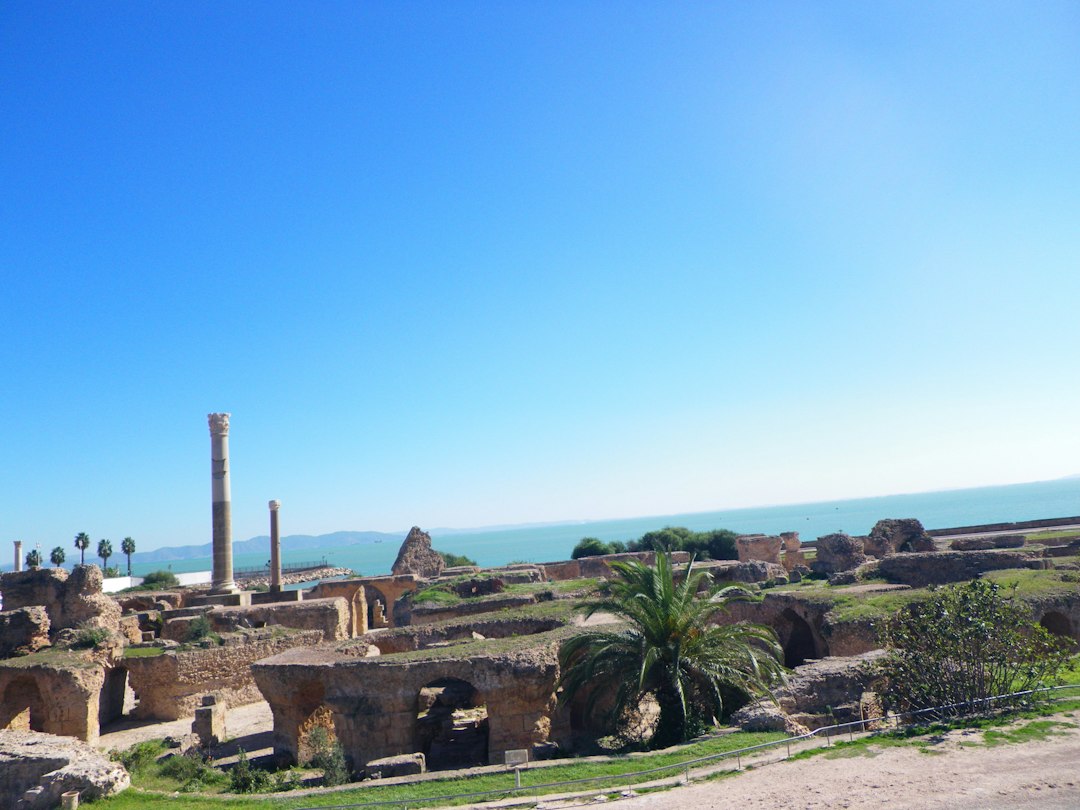
In addition to the columns and the foundations, it is worth pausing to observe the architectural details still readable in the walls of the undergrounds: the channels for the passage of water, the niches where statues were probably placed, and the Roman bricks arranged with a regularity that still amazes today. In some places, the remains of the marble cladding that once covered the walls are clearly visible.
The location of the complex is extraordinary in itself: overlooking the Gulf of Tunis, with a view that on clear days extends to the distant hills. It is easy to imagine the Roman citizens who, after a hot bath, enjoyed the sea breeze from these terraces. Today, that same breeze accompanies visitors as they walk among the ruins.
Practical tips for the visit
The site is located in the Antonine neighborhood, in the modern city of Carthage, reachable in about 20 minutes from downtown Tunis by TGM train from the La Goulette station. The most convenient stop is Carthage Hannibal, from which the baths are just a few minutes' walk downhill towards the sea. The entrance ticket to the archaeological site, which includes several areas, costs around 8-12 Tunisian dinars, but it is advisable to check the updated rates at the entrance.
The best time to visit is in the early morning, both to avoid the intense heat of the summer months and to enjoy the slanting light that enhances the textures of the architectural remains. Allow at least an hour and a half for the baths alone, and consider combining the visit with the nearby National Museum of Carthage on the Byrsa hill, which houses high-quality Punic and Roman artifacts, including the remains of the Priestess's sarcophagus.