← Back

Archaeological Area of Mount Adranone

Adragna, 92017 Sambuca di Sicilia AG, Italia ★★★★☆ 190 views
Elisabetta Porter
Adragna
🏆 AI Trip Planner 2026

Get the free app

Discover the best of Adragna with Secret World — the AI trip planner with 1M+ destinations. Get personalized itineraries, hidden gems and local tips. Free on iOS & Android.

🧠 AI Itineraries 🎒 Trip Toolkit 🎮 KnowWhere Game 🎧 Audio Guides 📹 Videos
Scan to download iOS / Android
Scan for AppGallery Huawei users

About Archaeological Area of Mount Adranone

Archaeological Area of Mount Adranone - Adragna | Secret World Trip Planner

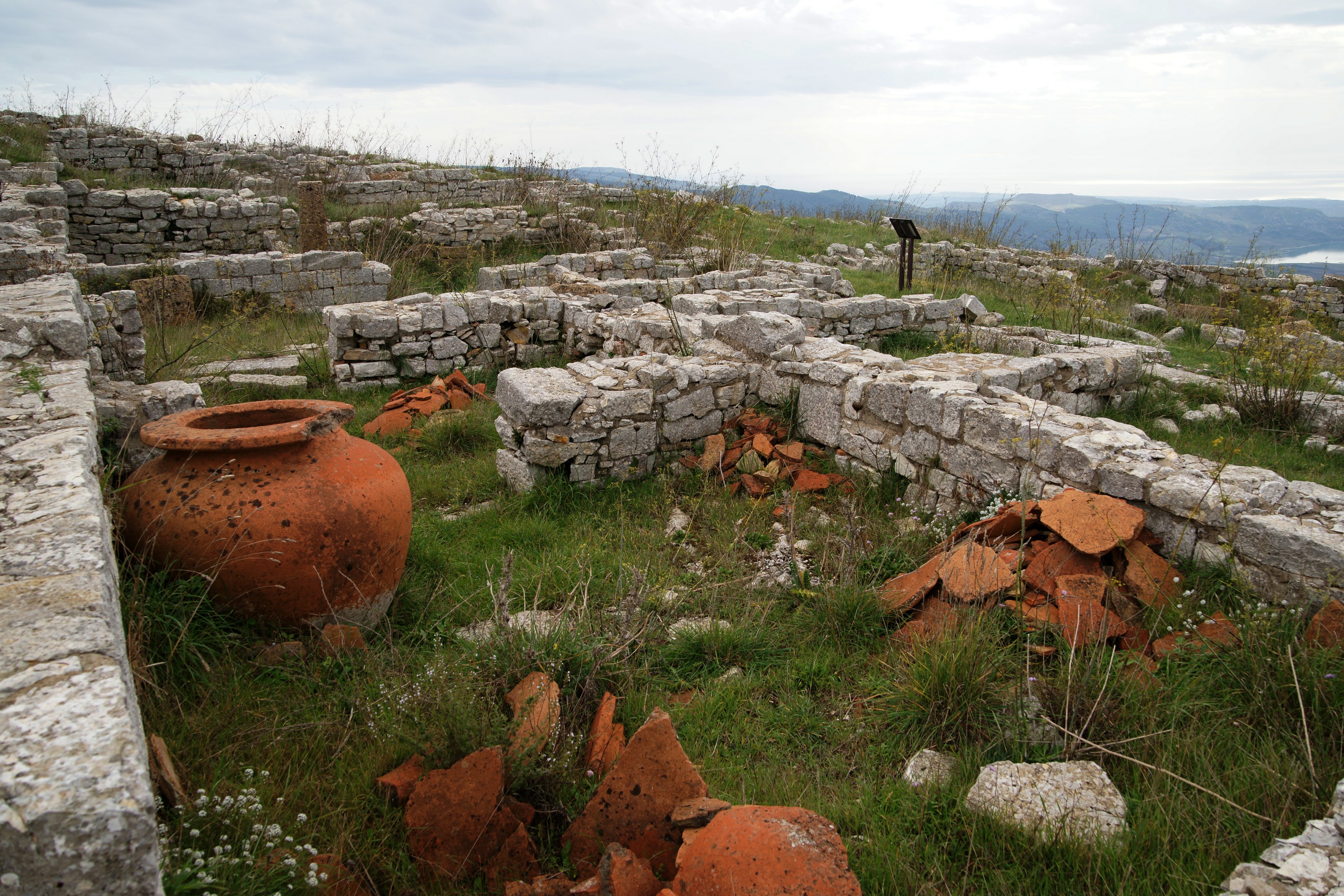
On high ground a short distance from Sambuca di Sicilia, there remain the imposing ruins of a center, which lived between the 8th and 3rd centuries B.C. in an area between the area of Sican and Elymian-Punic influence. From the contact with such different cultures descends the complex physiognomy of this site, which, thanks to its eminent position, also held an important strategic value both in the most archaic phase in relation to the route of the Selinuntia odòs, the road that, connecting Selinunte with Akragas, allowed the Selinuntine penetration, and in the Hellenistic age, when it became, probably, the stronghold of that system of strongholds built by Carthage to defend the borders of its own eparchy in Sicily. It has been proposed that the site be identified with the Adranon mentioned by Diodorus in connection with the First Punic War, which the Romans tried in vain to conquer: evidence of frequentation, however, stops at the 3rd century BC. The vast archaeological area extends over the terraces of the high ground from the southern slopes where the necropolis was, with different types of burial: hypogeic chamber tombs, including the so-called Queen's Tomb, referable to the 6th-5th century B.C. phase, and chest tombs, covered with marl blocks datable to the 4th century B.C. In defense of the settlement, a mighty wall was erected from the 6th cent. B.C. onward, which underwent several building phases related to the history of the center: the monumental remains of the South Gate and the North Gate, flanked by turrets, are in light. At the foot of the Acropolis was a sacred area with a rectangular, bipartite building: the presence of two betyli reveals its belonging to the Punic religious matrix. The same connotation has the tripartite temple erected on the top of the Acropolis, with the central hypetral compartment, whose plan undergoes changes during the long life of the site, apparently also in relation to the establishment of the cult of Baal-Hammon and Tanit in the areas of Carthaginian influence. To the south in the extra-urban area around the middle of the fourth century B.C. the grandiose complex intended for workshops, craft and agricultural activities was built. In the extra-urban area near the South Gate the structures of a small Hellenistic sanctuary dedicated to Demeter and Kore remain.

Archaeological Area of Mount Adranone - Adragna | Secret World Trip Planner

The site, known since the late 1800s, has been systematically investigated since the late 1960s by Prof. E. De Miro and Dr. G. Fiorentini for the Soprintendenza BB.CC.AA. of Agrigento. The archaeological area, state-owned, can be visited, while in Sambuca di Sicilia the antiquarium "Monte Adranone" has been set up.
Archaeological Area of Mount Adranone - Adragna | Secret World Trip Planner
🗺 AI Trip Planner

Plan your visit to Adragna

Suggested itinerary near Archaeological Area of Mount Adranone

MAJ+
500.000+ travelers worldwide
  1. 🌅
    Morning
    Archaeological Area of Mount Adranone
    📍 Adragna
  2. ☀️
    Afternoon
    Burgio, the town of bells
    📍 16.6 km · Adragna
  3. 🌆
    Evening
    Museum of Mummies
    📍 16.7 km · Adragna

Buy Unique Travel Experiences

Powered by Viator

See more on Viator.com

Explore nearby · Adragna

Frequently Asked Questions

Mount Adranone is located on high ground just a short distance from Sambuca di Sicilia in Sicily. The site sits on elevated terraces, making it easily accessible as a day trip from the town, though you should check locally for the most current access routes and any guided tour options available.
The site was inhabited between the 8th and 3rd centuries B.C., serving as an important center influenced by Sican, Elymian, and Punic cultures. The site likely represents the Adranon mentioned by Diodorus in connection with the First Punic War, where Romans attempted but failed to conquer it.
Visitors can explore imposing defensive walls dating from the 6th century B.C. with monumental South and North Gates flanked by turrets, a sacred Punic area with a rectangular bipartite building containing betyli, and a tripartite temple on the Acropolis dedicated to Baal-Hammon and Tanit. The necropolis features various burial types including the notable Queen's Tomb from the 6th-5th century B.C.
The site showcases a unique blend of architectural styles reflecting Sican, Elymian, and Punic influences, including distinctive Punic religious structures with betyli and a temple with a central hypetral compartment. The multi-phase defensive wall system and monumental gates demonstrate its strategic importance as both a stronghold along the Selinuntia road and as a Carthaginian border fortress.
The extensive necropolis on the southern slopes contains two main burial types: hypogeic chamber tombs from the 6th-5th century B.C., including the famous Queen's Tomb, and chest tombs covered with marl blocks from the 4th century B.C. These different burial practices reflect the site's evolution across several centuries and cultural influences.
