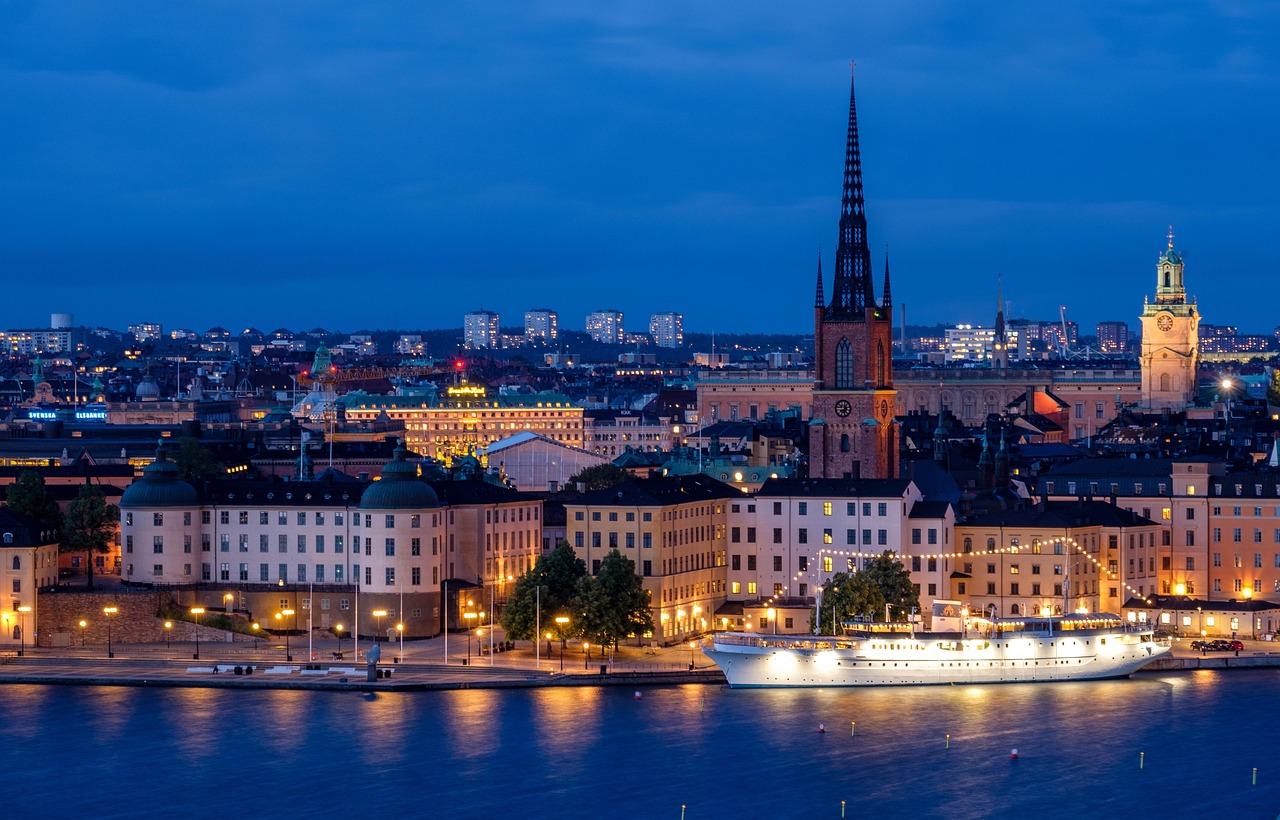
Nestled at Gustav Adolfs Torg in central Stockholm, the Arvfursten Palace (Arvfurstens palats) stands as a testament to the rich tapestry of Swedish history and culture. Designed by the renowned architect Erik Palmstedt, construction of the palace began in 1783 and concluded in 1794, originally serving as the private residence of Princess Sophia Albertina, a significant figure in Swedish nobility. The building was declared a historical monument in 1935, later undergoing restoration by Ivar Tengbom from 1948 to 1952. Since 1906, it has hosted the Ministry for Foreign Affairs, underscoring its continued relevance in the heart of Sweden's political landscape.
The palace elegantly faces Gustav Adolfs torg, with the majestic Royal Swedish Opera directly across the square. This central location is not only picturesque but also strategically significant; nearby stands Sager Palace, the official residence of the Prime Minister, and Rosenbad, the government's office, adding to the historical weight of the area. To the south, Norrbro connects the palace to the Riksdag on Helgeandsholmen, leading visitors toward the historic Stockholm Old Town and the Royal Palace.
### History and Origins The Arvfursten Palace has its roots deeply embedded in the late 18th century, a period marked by an awakening of neoclassical architecture in Sweden. Princess Sophia Albertina, daughter of King Frederick I, commissioned the palace as a residence that would reflect both her status and the evolving architectural style of the time. The design by Erik Palmstedt, who was significantly influenced by the classical trends of his era, features a refined façade adorned with columns and intricate detailing that evoke a sense of grandeur.
The palace's significance extends beyond its architectural beauty. After the death of Princess Sophia Albertina, it transitioned into state use, particularly as the seat for the Ministry for Foreign Affairs. This shift marked its evolution from a personal residence to a vital hub for Swedish diplomacy, shaping the course of the nation’s international relations.
### Art and Architecture The architectural style of Arvfursten Palace is a quintessential example of neoclassicism, characterized by its symmetry and use of classical elements. The façade features grand pilasters and balustrades, while the interior boasts elegant rooms that reflect royal sophistication. Notably, the Hall of Mirrors showcases a collection of ornate candelabras and paintings that tell stories of Sweden's rich heritage.
Within the palace, one can find artworks that echo the themes of loyalty and patriotism. The palace also features decor that is distinctly Swedish, with craftsmanship that reflects the local artisanship of the time, making it a significant artistic site in Stockholm.
### Local Culture and Traditions The area surrounding Arvfursten Palace is vibrant with local customs and traditions. One of the most notable events is Midsummer, celebrated annually with traditional dances, music, and the decoration of maypoles. This festival, deeply rooted in Swedish culture, brings together locals and visitors alike, showcasing the communal spirit and the beauty of Swedish summer.
Additionally, the palace's location near the Royal Swedish Opera means that cultural performances are a common sight, allowing visitors to immerse themselves in Sweden's artistic legacy. The intertwining of politics, art, and community here creates a unique cultural landscape.
### Gastronomy When visiting Arvfursten Palace, indulge in the local gastronomy that reflects Sweden's culinary heritage. Nearby, you can find traditional dishes such as herring, served in various marinades, and köttbullar (Swedish meatballs), a staple that has gained international fame. Pair these with a glass of lingonberry juice or a traditional Swedish fika—coffee served with pastries—to truly savor the local flavors.
### Lesser-Known Curiosities Despite its prominence, there are lesser-known facts about Arvfursten Palace that intrigue curious visitors. For instance, the palace was once rumored to have hosted clandestine meetings between diplomats during tense political periods, making it a silent witness to pivotal moments in Swedish history. Additionally, the palace’s gardens, often overlooked, harbor a variety of native plants and flowers that reflect the botanical diversity of Sweden.
Furthermore, the palace is said to be haunted by the spirit of Princess Sophia Albertina, adding a layer of mystique to its already rich history.
### Practical Visitor Information The best time to visit Arvfursten Palace is during the late spring and summer months (May to August), when the gardens are in full bloom and the city is alive with outdoor events. While the palace itself is not usually open for public tours, the surrounding area is rich with sights to see and experiences to enjoy.
For a well-rounded visit, take a stroll across Gustav Adolfs torg, admire the architecture of the Royal Swedish Opera, and explore the nearby Stockholm Old Town. Be sure to carry a camera, as picturesque views abound.
To enhance your experience, consider downloading the Secret World app, which can help you create a personalized itinerary to explore the gems of Stockholm, including the historic Arvfursten Palace.