
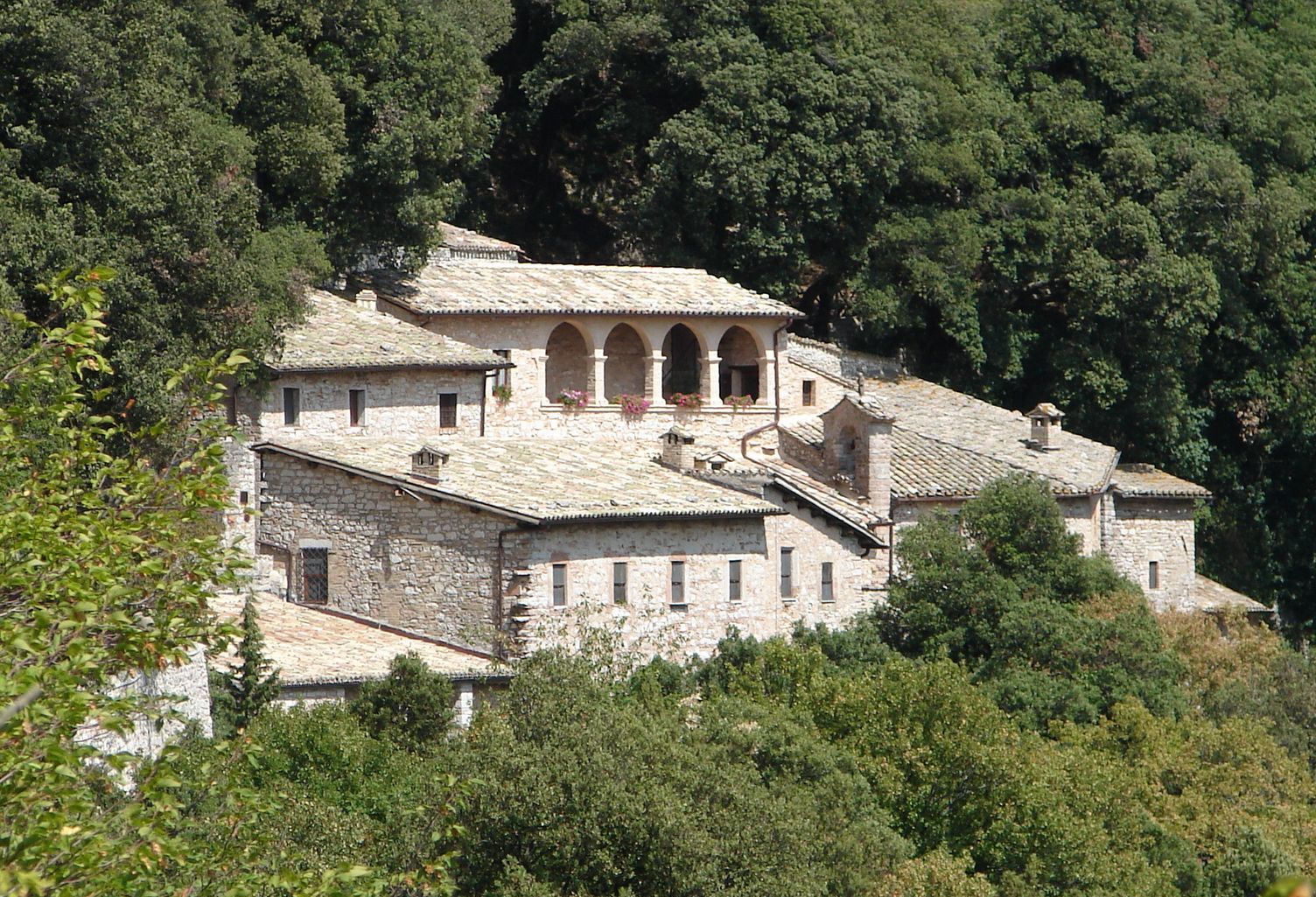

Nestled on the slopes of Subasio Mountain, the Eremo delle Carceri is a serene gem that captures the essence of Assisi's spiritual heritage. This secluded hermitage is intricately linked to St. Francis of Assisi, who sought refuge here to commune with nature and God. The site’s history dates back to 1215 when the Benedictines gifted this sacred space to St. Francis, allowing him to build a life devoted to prayer and simplicity. Over the years, it has been expanded, notably by Bernardino da Siena in the 1400s, evolving into a place of pilgrimage for those seeking solace and inspiration.
As you approach the Eremo, a serene atmosphere envelops you, with the sounds of rustling leaves and distant birdsong guiding your steps. The entrance opens into a quaint triangular courtyard featuring a well, which legend holds was miraculously filled with water by St. Francis himself. This courtyard serves as a tranquil gathering spot for reflection, with the surrounding stone walls echoing centuries of prayers and whispers.
The architecture of the Eremo is a testament to its spiritual significance. The simple yet powerful design harmonizes with the natural landscape, featuring rough-hewn stones and wooden beams that speak to its humble beginnings. Inside, you'll find various chapels adorned with beautiful frescoes, most notably the work of Bartolomeo di Giovanni, showcasing scenes from the life of St. Francis. These artworks encapsulate the deep connection between the divine and nature that St. Francis championed.
Local culture in Assisi is profoundly influenced by its historical figures, particularly St. Francis. The locals celebrate various traditions that highlight their rich heritage, including the Feast of St. Francis on October 4th, when the entire town comes alive with processions, music, and communal meals. The Eremo delle Carceri itself is often a focal point during this festival, as pilgrims and visitors make their way to this sacred site to pay homage to the beloved saint.
Gastronomically, the region is well-known for its rich local fare that reflects the flavors of the Umbria region. Traditional dishes such as Strangozzi, a handmade pasta, and Porchetta, a succulent roasted pork, showcase the agricultural bounty of the area. Pair these with a glass of Sagrantino, a robust local red wine, for an authentic taste of the region’s culinary heritage. Many local eateries serve seasonal dishes that pay homage to the simplicity and humility that St. Francis championed.
As you explore the Eremo, keep an eye out for lesser-known curiosities. For instance, the hermitage is home to various wildlife, and the surrounding woods are often filled with deer, rabbits, and an array of bird species. Many visitors overlook the walking trails that lead from the Eremo to hidden grottos and scenic overlooks. These paths provide a perfect opportunity for contemplation, allowing you to immerse yourself fully in the meditative ambiance that St. Francis cherished.
The best time to visit the Eremo delle Carceri is during the spring and early fall when the weather is mild, and the surrounding landscape is vibrant with flowers and foliage. Early morning visits offer the tranquility of solitude, where you can enjoy the peace of the hermitage before it fills with other travelers. When exploring, take your time to wander through the various chapels, reflect on the life of St. Francis, and soak in the breathtaking views of the Spoleto Plain from the backyard's parapet.
In conclusion, the Eremo delle Carceri is more than just a historical site; it is a living testament to the spiritual journey of St. Francis and the rich cultural tapestry of Assisi. To truly appreciate its beauty and significance, consider planning your visit with personalized insights. Utilize the Secret World app to craft your ideal itinerary and uncover the hidden gems of this enchanting area.


