
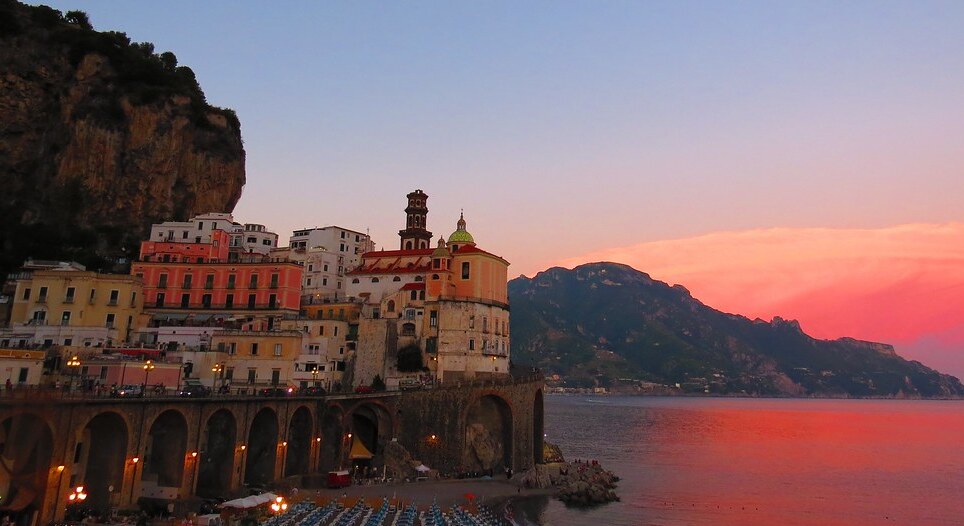

Nestled along Italy's mesmerizing Amalfi Coast, Atrani is a jewel that shines with quaint authenticity and breathtaking vistas. Its charm is further amplified by a spectacular bridge that seamlessly connects this sleepy fishing village to the bustling city of Amalfi. This panoramic marvel is not just a physical link but a symbolic passage between the past and present, offering glimpses into the region's rich tapestry of history, art, and culture.
Dating back to the Roman Empire, Atrani was founded as a haven for maritime activities, benefiting from its strategic position along the Mediterranean. It flourished during the Middle Ages as part of the powerful Maritime Republic of Amalfi. This era saw Atrani as a vibrant hub of trade, where merchants from across the Mediterranean exchanged goods and ideas. In fact, the town's central piazza, Piazza Umberto I, served as a crucial meeting point for traders and travelers alike. While the village's prominence has waned over centuries, its historical significance remains etched in the cobblestones and ancient edifices that line its narrow streets.
Atrani's architecture is a testament to its storied past, with a blend of medieval and Baroque influences. The Church of San Salvatore de' Birecto, dating back to the 10th century, is a must-see. Its Romanesque bell tower and Byzantine bronze doors, originally cast in Constantinople, are exquisite examples of the artistry of the time. The church was historically significant as the place where the Dukes of Amalfi were crowned, a tradition that underscored the town's importance in the region’s political landscape.
Local culture in Atrani is deeply rooted in traditions that have been passed down through generations. One of the most vibrant displays of this heritage is the annual festival of Madonna del Carmine, celebrated every July. This event fills the streets with colorful processions, music, and fireworks, as locals honor the patron saint with fervor and devotion. Visitors are welcomed to join in the festivities, offering a rare glimpse into the community's heartfelt customs.
No visit to Atrani would be complete without indulging in its culinary delights. The region's cuisine is a celebration of the sea and sun-kissed ingredients. Fresh seafood, such as anchovies and octopus, are staples on local menus, often paired with the famous Amalfi lemons in dishes like spaghetti alle vongole or insalata di mare. Don't miss trying sfogliatella, a delightful pastry filled with sweet ricotta, which pairs perfectly with a glass of limoncello made from locally harvested lemons.
Beyond the well-trodden paths lies a world of lesser-known curiosities. Atrani is one of Italy's smallest municipalities, spanning just 0.12 square kilometers. This compact size contributes to its charm, as every corner of the village seems to whisper stories of the past. A hidden gem is the Grotta dei Santi, a small cave adorned with ancient frescoes that few visitors venture to see. These artworks, though faded by time, offer a hauntingly beautiful glimpse into the early Christian era.
For those planning a visit, the best time to explore Atrani is during the spring or early autumn months. This period offers mild weather, fewer crowds, and the opportunity to witness the village in its most authentic form. When navigating the town, take the time to wander its labyrinthine alleyways; each turn reveals stunning views of the Tyrrhenian Sea and the cascading clusters of pastel-colored houses.
As you stand on the bridge that spans Atrani and Amalfi, take a moment to absorb the panoramic splendor that stretches before you. This view, a blend of azure waters, rugged cliffs, and timeless architecture, captures the essence of the Amalfi Coast—where every journey is both a step back in time and a leap into a landscape of unparalleled beauty.


