
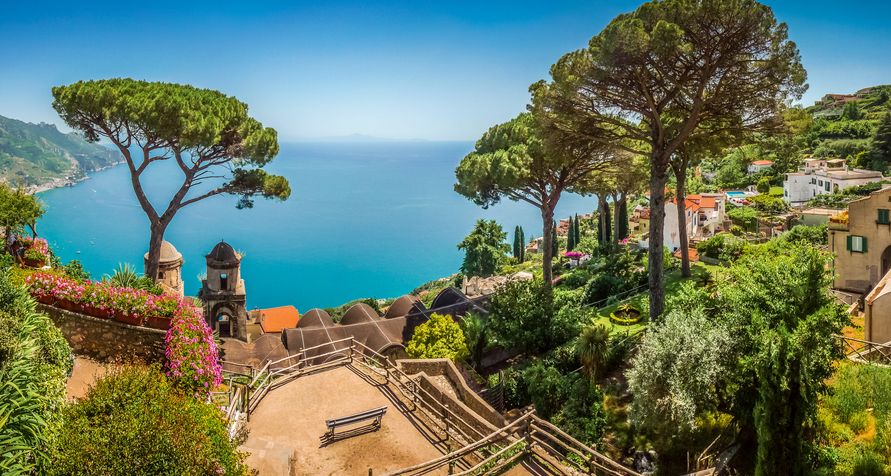

Perched high between the sky and the earth on the stunning Amalfi Coast, Ravello is a town that seems to float in a dream. With coordinates at 40.6491886, 14.6117112, this charming Italian hamlet offers a breathtaking blend of history, art, and scenic vistas, making it a perennial favorite for those seeking both relaxation and inspiration.
The origins of Ravello trace back to the 5th century, nestled in the aftermath of the fall of the Western Roman Empire. As a refuge from barbarian invasions, its high vantage point provided both security and serenity. By the 11th century, Ravello had grown into a prosperous town, gaining prominence under the Duchy of Amalfi. The town thrived on its maritime trade, with wool and textiles being among its most prized exports, a legacy that echoes in its rich cultural fabric today.
Ravello's architectural landscape is a testament to its historical affluence and artistic inclinations. The Villa Rufolo, with its Moorish influences and vibrant gardens, served as an inspiration for Richard Wagner's 'Parsifal'. The Villa Cimbrone, renowned for its spectacular 'Terrace of Infinity', offers panoramic views that have captivated artists and writers alike. The Cathedral of Ravello, dating back to 1086, stands as a monument to the town's medieval glory, housing the beautiful pulpit of Niccolò di Bartolomeo.

Cultural life in Ravello is rich and varied, with traditions deeply rooted in its past. The Ravello Festival, an annual event celebrating music and the arts, is a testament to the town's enduring cultural significance. Held since 1953, it draws global talent and audiences to its open-air concerts, set against the backdrop of the Tyrrhenian Sea.
Gastronomy in Ravello is a delightful journey through Campanian flavors. The area is famed for its lemons, leading to the creation of the iconic limoncello liqueur. Local dishes often feature fresh seafood, hand-made pasta, and seasonal vegetables, with dishes like scialatielli ai frutti di mare offering a taste of the sea. Don't miss the sfogliatella, a sweet pastry that encapsulates the essence of Neapolitan baking.
For those seeking the less-trodden paths, Ravello holds intriguing secrets. The town's winding alleys hide artisan workshops where crafts have been passed down through generations. The Chiesa di San Giovanni del Toro, though often overlooked, houses exquisite frescoes and provides a peaceful retreat from the bustling piazzas.
When planning a visit, the best time to experience Ravello is during the late spring or early autumn, when the weather is mild and the crowds thinner. Comfortable footwear is recommended for exploring its steep, cobblestone streets. Visitors should take the time to enjoy a leisurely stroll through the gardens of Villa Cimbrone, especially at sunset.
To uncover the magic of Ravello in all its dimensions, plan your visit with Secret World for a personalized AI itinerary.


