
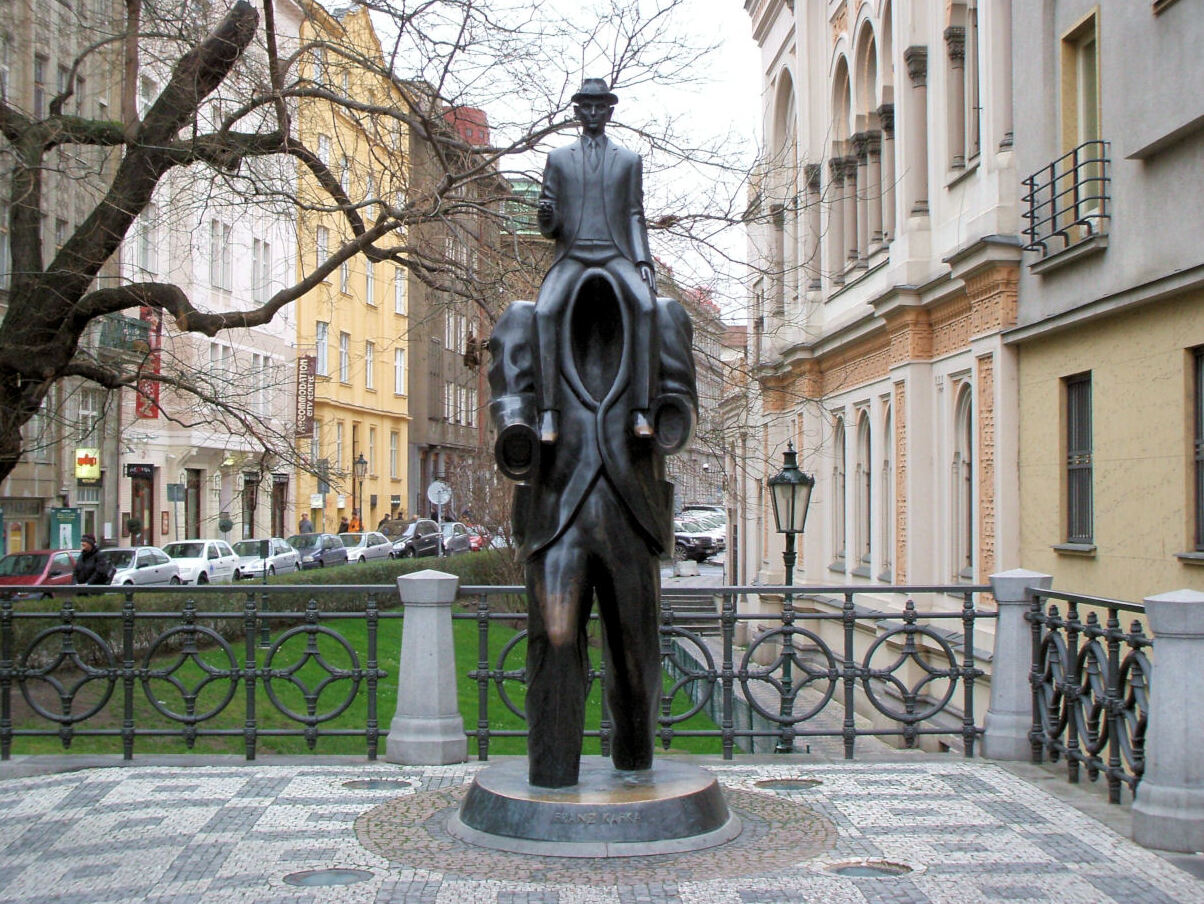

Nestled in the heart of Prague’s Jewish Quarter, a striking metal statue captures the essence of Franz Kafka’s literary genius and the tumultuous spirit of the city. Created by sculptor Jaroslav Rona, this evocative piece of art, inspired by Kafka's early short story “Description of a Struggle,” features the author himself precariously perched on the shoulders of a headless man. This curious imagery resonates deeply with the themes of identity and alienation that permeate Kafka’s work, inviting viewers to reflect on their own place within the bustling streets of Prague.
Prague’s Jewish Quarter, or Josefov, has a rich and complex history that dates back to the 13th century. Established by King Otakar II, the area became a designated space for Jewish communities, who were often marginalized and restricted in their movements throughout the city. Over the centuries, the quarter has witnessed a series of significant events, including the Austro-Hungarian Empire’s tolerance towards Jewish culture and the devastating impact of the Holocaust, which saw the near destruction of Prague’s Jewish population and heritage. Today, the quarter is a poignant reminder of resilience, housing several synagogues, the Jewish Museum, and the hauntingly beautiful Old Jewish Cemetery, which is one of the oldest surviving Jewish burial grounds in Europe.
The art and architecture of the Jewish Quarter reflect a blend of historical styles and cultural influences. The Spanish Synagogue, located adjacent to Rona’s statue, showcases Moorish Revival architecture with its intricate tile work and grand arches. Built in 1868, it serves as a testament to the flourishing Jewish community of the 19th century. The juxtaposition of Rona’s contemporary statue with the historical synagogues highlights the ongoing dialogue between the past and present in Prague. Kafka’s own former residence, now a museum dedicated to his life and works, further enriches the artistic landscape of the area, drawing literary enthusiasts from around the world.
Local culture in Prague is steeped in rich traditions and vibrant customs that celebrate its diverse heritage. One of the most notable events is the annual Jewish Cultural Festival, which showcases music, dance, and art from Jewish artists. This festival not only honors the Jewish community’s contributions to the city but also serves as a platform for dialogue and understanding among different cultures. The Prague Spring International Music Festival is another highlight, drawing classical music lovers to experience world-renowned performances amidst the city’s stunning architecture.
When exploring the culinary offerings of the Jewish Quarter, visitors will encounter a delightful fusion of flavors. Traditional dishes such as brisket, matzo ball soup, and cholent are beloved staples, often enjoyed during Jewish holidays. The area is also home to Kosher restaurants, where the culinary arts thrive, showcasing not only Jewish dishes but also Czech classics. Don’t miss the chance to try trdelník, a sweet pastry rolled in sugar and nuts, often served warm with a filling of your choice—an irresistible treat that has become a symbol of Prague’s street food scene.
For those looking to uncover lesser-known curiosities, the statue itself offers a fascinating narrative. Many tourists may overlook the significance of Kafka’s work in understanding the struggles of modern life, but this statue serves as a reminder of the writer’s profound influence on literature and philosophy. Nearby, hidden alleyways may lead you to the Klementinum, a stunning historic complex that houses a library filled with ancient texts and a baroque astronomical tower. The views from the top are breathtaking, providing a panoramic vista of the city’s rooftops.
The best time to visit Prague’s Jewish Quarter is during the spring and fall, when the weather is mild and the streets are less crowded. Early mornings offer a serene atmosphere, perfect for reflection and exploration before the hustle of tourists begins. As you wander through the quarter, take time to appreciate the intricate details of the architecture and the haunting stories etched into the very fabric of the buildings.
When planning your visit, consider taking a guided tour to gain deeper insights into the history and significance of the area. Look for local art galleries that showcase contemporary works inspired by Kafka and Jewish heritage, or participate in a cooking class to learn how to prepare traditional Czech-Jewish dishes.
As you navigate the rich tapestry of Prague, let the story of Kafka and the spirit of the Jewish Quarter inspire your journey. For a personalized itinerary that captures the essence of your travels, consider using the Secret World app to plan your exploration.


