
← Back

Basilica of San Salvatore

Piazza Mario Salmi,1, 06049 Spoleto PG, Italia ★★★★☆ 549 views
Sonia Malone
Spoleto
🏆 AI Trip Planner 2026

Get the free app

Discover the best of Spoleto with Secret World — the AI trip planner with 1M+ destinations. Get personalized itineraries, hidden gems and local tips. Free on iOS & Android.

🧠 AI Itineraries 🎒 Trip Toolkit 🎮 KnowWhere Game 🎧 Audio Guides 📹 Videos
Download on the App Store Get it on Google Play
Scan to download Scan to download

Historical Sites · Spoleto

Basilica of San Salvatore - Spoleto | Secret World Trip Planner

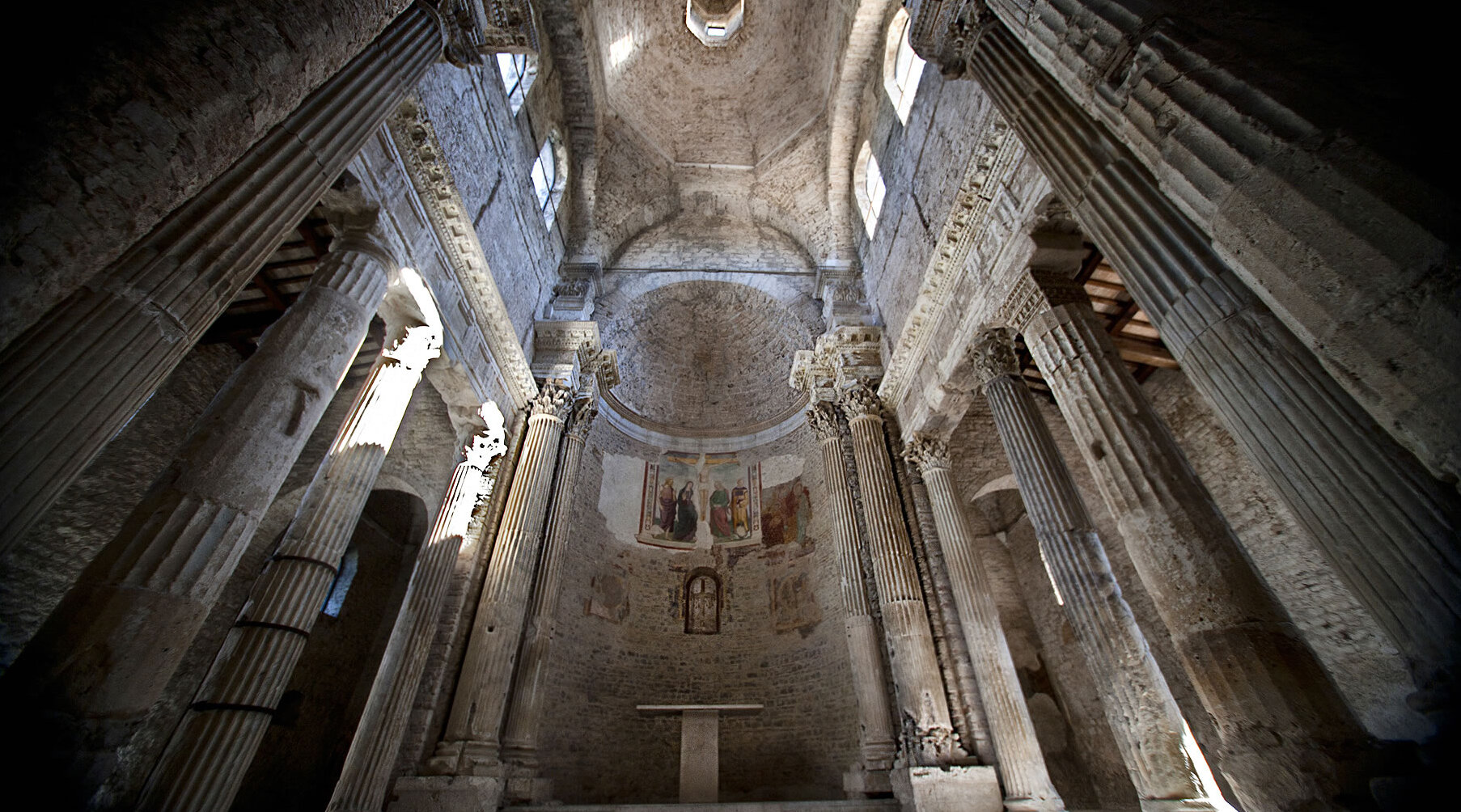
The Basilica of San Salvatore, according to the great historian Sordini from Spoleto, represents the major monument of Spoleto in antiquity. Probably of funerary origin, it was initially dedicated to the martyrs Concordio and Senzia, united not only because they were buried in nearby places, but also because both were attributed thaumaturgical virtues. The sudden healings, that initially the people of Spoleto recognized to Senzia, later were connected to the salubrious water that flowed abundantly from the Ciciano Hill. In a Benedictine document of 815 the basilica results entitled to San Salvatore, a change most probably to be attributed to the intervention of the Lombard dukes. Later, it is cited as Monasterium Sancti Concordii. In the sixteenth century on the inside walls of the apse were made some frescoes that recalled the cult of the Crucifix, from which derived the new name of Church of the Crucifix.Since the twentieth century, finally, after extensive restoration work, the Basilica has definitely taken the current title of San Salvatore. The building has three naves, with a tripartite presbytery that, in the central area, is covered by a vaulted structure on an octagonal base, modified in the type of lantern in the post-Renaissance period. At the sides of the apse there are two ambulatories, also apsidal, originally service rooms for liturgical functions, according to the Eastern-Syriac architectural tradition, and today real open chapels. The two ambulatories, since they exceed the length of the main apse which is externally rectilinear, create an arched connecting structure that gives rise, at the back, to a particular façade effect. All that remains of the interior decoration are the stuccoes on the counter-façade and some elements of the pictorial apparatus in the apse. Here, on the bottom of the central niche, is painted a gemmated cross from whose arms hang chains with the A and the Ω, flanked by false marble frames enclosing clipei, similar to that depicted between the two angels in the cell of the Temple on the Clitunno. The church presents a consistent reuse of spolia, or ancient material, of different origins, such as columns, bases, capitals, frames; some of these were reworked, such as the architectural reliefs of the facade, the frame in the presbytery and the nuts at the impost of the dome. During the last restorations carried out at the end of the last century, it emerged that many of the sculpted elements were worked on blocks of the classical age, such as the sill of the left window (which has the inscription "AVO MATRI") and the architrave of the main portal (part of a frame used for the first time as the threshold of a Roman sepulchral monument of the first century AD, the cast of which can be seen at the Fondazione Cassa di Risparmio di Spoleto, which financed the work). Since 25 June 2011 the church has been part of the UNESCO World Heritage Site as part of the serial site "The Lombards in Italy. The places of power (568-774 AD)".

Basilica of San Salvatore - Spoleto | Secret World Trip Planner
🗺 AI Trip Planner

Plan your visit to Spoleto

Suggested itinerary near Basilica of San Salvatore

MAJ+
500.000+ travelers worldwide
  1. 🌅
    Morning
    Basilica of San Salvatore
    📍 Spoleto
  2. ☀️
    Afternoon
    Spoleto | The Basilica of San Salvatore
    📍 0 km · Spoleto
  3. 🌆
    Evening
    Umbria | Spoleto is a marvellous city
    📍 0.5 km · Spoleto

Buy Unique Travel Experiences

Powered by Viator

See more on Viator.com

Explore nearby · Spoleto

Frequently Asked Questions

The Basilica of San Salvatore is considered the major monument of ancient Spoleto and was probably originally built as a funerary structure dedicated to martyrs Concordio and Senzia. The basilica underwent several name changes throughout history—from its original dedication to the two martyrs, to San Salvatore in 815 (likely due to Lombard influence), to the Church of the Crucifix in the sixteenth century after frescoes were added, before finally being renamed San Salvatore again following twentieth-century restoration work.
The basilica features three naves with a distinctive tripartite presbytery, with the central area covered by a vaulted octagonal structure that was modified into a lantern shape during the post-Renaissance period. It also includes two apsidal ambulatories on either side of the main apse that follow Eastern-Syriac architectural traditions, creating a unique arched connecting structure that produces a distinctive façade effect at the back of the building.
The interior features stuccoes on the counter-façade and a gemmated (jeweled) cross painted in the central niche of the apse, from which hang chains bearing the Alpha and Omega symbols. The side ambulatories function as open chapels and display false marble frames and clipei (circular medallions), offering visitors insight into early Christian artistic traditions and the basilica's rich decorative heritage.
Both martyrs Concordio and Senzia were buried in nearby locations and were believed to possess thaumaturgical (healing) virtues that were revered by the people of Spoleto. The sudden healings initially attributed to Senzia were later associated with the salubrious water flowing from the nearby Ciciano Hill, making the basilica an important pilgrimage site for those seeking miraculous cures.
The basilica is best visited after the twentieth-century restoration work, which has preserved its architectural integrity and decorative elements including the frescoes and stuccoes. Visiting during daylight hours will allow you to best appreciate the distinctive octagonal vault structure, the gemmated cross in the apse, and the unique façade created by the apsidal ambulatories on either side of the main structure.
