
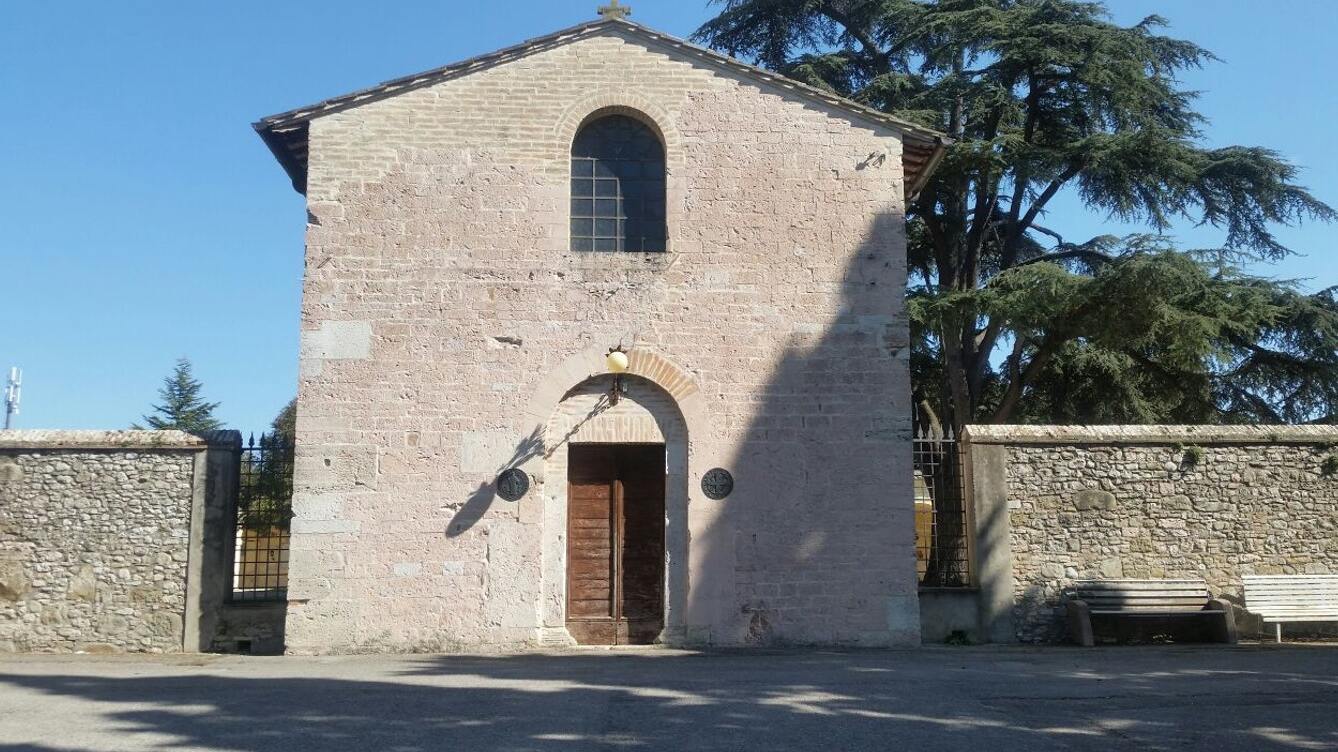

Nestled in the serene landscape of Bastia Umbra, the Church of San Paolo of Abbadesse stands as a testament to centuries of history and spirituality. Originally built between the XI and XII centuries, this Romanesque church was part of a Benedictine monastery, under the jurisdiction of the Bishop of Assisi. The church’s historical significance is intertwined with the life of San Francesco of Assisi, who, in 1212, famously provided refuge to Santa Chiara of Assisi. Her family, often violent in their attempts to reclaim her, prompted this extraordinary act of protection.
The Church of San Paolo has witnessed the ebb and flow of time, its stones steeped in stories of devotion and resilience. After the monastery was destroyed in 1389, the church underwent various transformations, yet it retained its spiritual essence. Today, it finds itself adjacent to the municipal cemetery, a serene backdrop that enhances its historical gravitas.
Architecturally, the church is a stunning example of Romanesque style. Its gabled façade features a single entrance portal topped by a lancet window, while a humble belfry with a solitary bell completes the exterior. The semicircular apse, adorned with half-columns and arches, boasts a mullioned window crowned with a relief depicting two doves — symbols of peace and purity. Entering the church, visitors are greeted by a single nave, where wooden roof beams soar overhead, adding warmth to the sacred space.
Inside, the walls whisper tales of the past, showcasing remnants of frescoes from the Perugia school that depict a Madonna and Child flanked by San Paolo and San Benedetto. These fragments are not merely decorations; they represent an artistic lineage that connects the church to the broader narrative of medieval art in Umbria. As you explore, take note of the traces of walled doors — hints of the once-thriving monastery that stood alongside this sacred space.
As you delve deeper into Bastia Umbra, the local culture reveals itself through its vibrant customs and traditions. The community takes pride in its rich history, celebrating various festivals throughout the year. One of the most notable is the Festa di San Francesco, held in October, where residents honor the legacy of their patron saint with processions, music, and communal feasts. This festival is not just a religious observance; it’s a celebration of local identity and unity.
No exploration of Bastia Umbra would be complete without indulging in its culinary delights. The region is renowned for its Umbrian cuisine, characterized by hearty flavors and fresh ingredients. Typical local foods include tortino al testo, a savory flatbread often filled with local cheeses and greens, and strascinati, a type of pasta served with rich sauces like cacciatore or truffle. Don’t forget to pair your meal with a glass of Sagrantino di Montefalco, a robust red wine that embodies the essence of the Umbrian terroir.
While many tourists flock to more prominent sites, the Church of San Paolo of Abbadesse holds lesser-known curiosities that make it a hidden gem. For instance, the column in the apse, to which Santa Chiara famously clung, serves as a poignant reminder of her struggle against familial constraints. This small yet significant detail is easily overlooked but adds a layer of depth to the visitor's experience. Additionally, the church's peaceful surroundings often provide a serene escape from the bustling tourist trails, allowing for quiet reflection.
For those planning a visit, the best time to explore Bastia Umbra and the Church of San Paolo is during the spring and early autumn months when the weather is mild, and the landscape is lush. Early mornings or late afternoons are ideal for witnessing the soft glow of sunlight illuminating the church’s façade. Be sure to take your time wandering around the site, soaking in the tranquil atmosphere and contemplating the stories behind its ancient walls.
As you embark on your journey to discover the hidden treasures of Bastia Umbra, consider using the Secret World app to create a personalized itinerary.


