
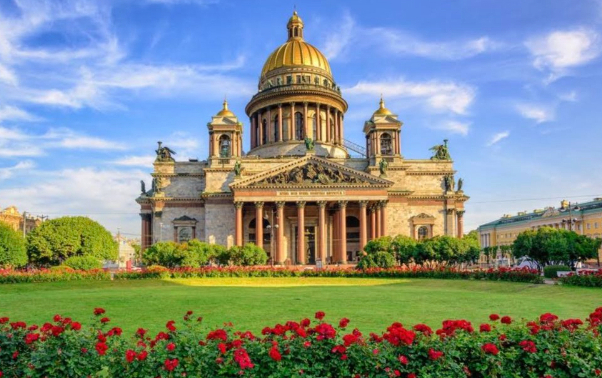

St. Isaac's Cathedral stands as a testament to the grandeur and resilience of St. Petersburg, a city steeped in history and culture. Dominating the skyline with its majestic golden dome, the cathedral draws visitors not just for its architectural splendor but also for its profound historical significance.
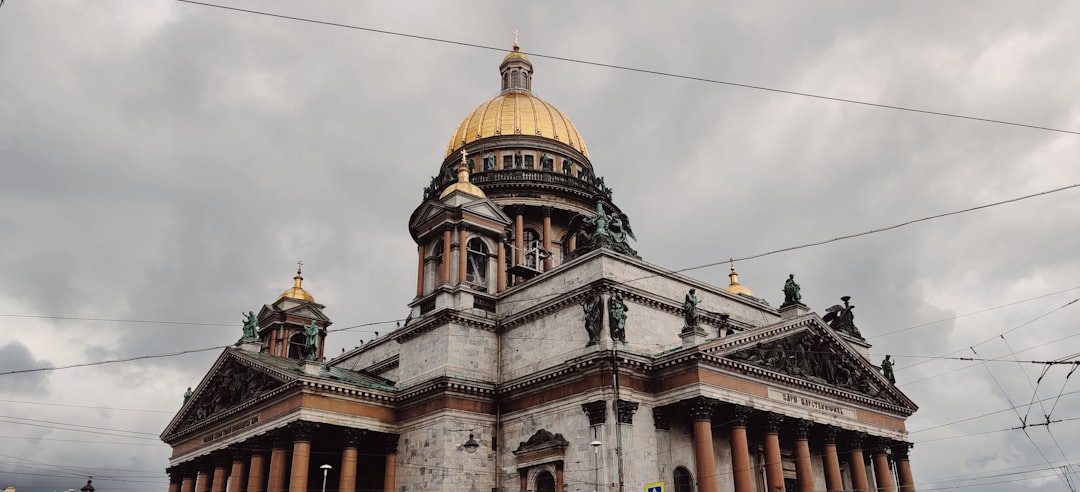
The history of St. Isaac's Cathedral dates back to 1710, when Peter the Great envisioned a grand church to honor St. Isaac of Dalmatia, the patron saint of Peter's birth. The original wooden structure was replaced by a stone edifice designed by Giovanni Battista Franco, but it was the Italian architect Augustus Montferrand who left an indelible mark on the cathedral. His design, completed in 1858, is a stunning example of Russian Neoclassical architecture, characterized by its massive scale and intricate details. With its dome rising to 101.5 meters, it was the largest cathedral in Russia for over a century.
The architectural splendor of St. Isaac's Cathedral is evident in its façade, adorned with 112 columns crafted from Ural marble and stunning bronze doors. The interior is a sanctuary of artistic brilliance, featuring over 40 types of marble and a breathtaking collection of mosaics. The grand altar is embellished with intricate artwork, while the magnificent dome is decorated with a vast mosaic of Christ in Glory, capturing the essence of Byzantine artistry. The cathedral's golden dome, famously visible from various vantage points across the city, reflects the sunlight, creating a beacon of faith and beauty.

In addition to its architectural marvels, St. Isaac's Cathedral holds a significant place in the cultural life of St. Petersburg. Local customs and traditions are deeply intertwined with the cathedral’s history. Throughout the years, it has been a site for major events, from royal ceremonies to commemorative services for significant historical moments. The cathedral has also hosted various concerts and cultural events, further solidifying its role as a central hub in the community.
St. Petersburg is renowned for its rich gastronomy, and local culinary traditions often find their way to the area surrounding the cathedral. Visitors can indulge in traditional Russian dishes like borscht, a hearty beet soup that embodies the flavors of the region, or blini, thin pancakes typically served with caviar or sour cream. The nearby Gastronom 1, a historic food hall, offers an array of local delicacies, providing the perfect opportunity to sample traditional fare after exploring the cathedral.
For those who venture beyond the obvious attractions, St. Isaac's Cathedral has its share of lesser-known curiosities. One intriguing fact is that the cathedral has survived several significant events, including the Siege of Leningrad during World War II. Despite the ravages of war, its golden dome remained intact, symbolizing hope and resilience for the city's inhabitants. Additionally, the cathedral houses a colonnade that offers an exhilarating climb up 262 steps, revealing panoramic views of St. Petersburg and the winding Neva River — a perspective that many visitors overlook.
The best time to visit St. Isaac's Cathedral is during the white nights of late spring and early summer, when the sun barely sets, casting a magical glow over the city. Early mornings or late afternoons are ideal for avoiding larger crowds, allowing visitors to fully appreciate the cathedral's serene atmosphere. Be sure to take your time exploring the interior, as each mosaic and detail tells a story steeped in history and artistry.
As you wander through this magnificent structure, don’t miss the opportunity to engage with the knowledgeable staff, who can share fascinating insights about the cathedral’s history and ongoing preservation efforts. Pay attention to the small details, from the intricate carvings to the reflective surfaces of the mosaics — they are a reminder of the craftsmanship that went into creating this architectural gem.
St. Isaac's Cathedral is not just a landmark; it is a vibrant part of St. Petersburg's cultural tapestry, inviting visitors to explore its history and artistry. To make the most of your trip to this remarkable city, consider using the Secret World app to plan a personalized AI itinerary.


