
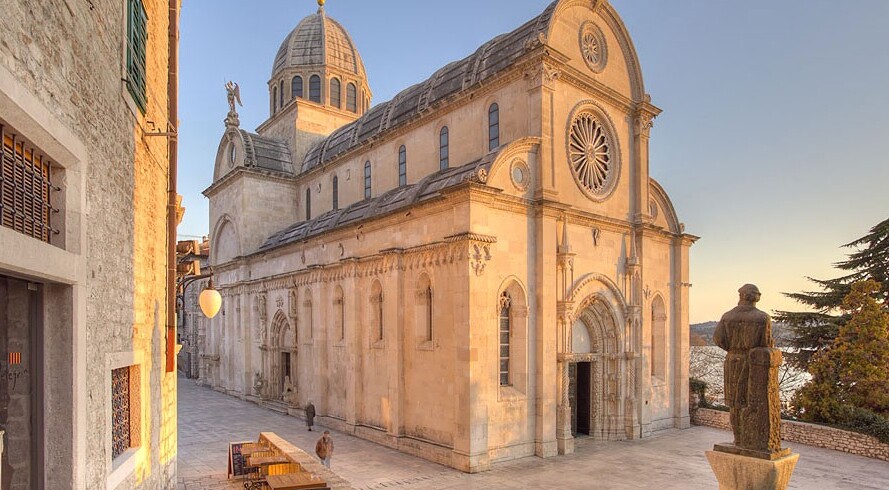

Imagine standing in the heart of Šibenik in the 15th century, gazing up at an architectural marvel that seems to float in the sky—the Cathedral of St James. Built between 1431 and 1535, this striking structure, hewn from local white stone, is a testament to the ingenuity of its time. The cathedral not only serves as the most significant landmark in Šibenik but also represents a remarkable intersection of artistic influences from Northern Italy, Dalmatia, and Tuscany.
The history of the Cathedral of St James is steeped in dedication and craftsmanship. Construction began under the guidance of Francesco di Giacomo, whose vision laid the foundation of the cathedral. After his untimely death, Georgius Mathei Dalmaticus took over, and later, Niccolò di Giovanni Fiorentino completed the masterpiece. Each architect contributed their unique style, leading to a harmonious blend of Gothic and Renaissance elements. The cathedral was consecrated in 1555, and it gained recognition as a UNESCO World Heritage Site in 2000, solidifying its significance in the cultural and architectural landscape of Croatia.
Stepping inside the cathedral, visitors are greeted by a stunning array of artistic details. The vaults and dome are remarkable feats of engineering, constructed entirely from stone without any wooden supports. This innovative technique was revolutionary for its time. The interior is adorned with intricate sculptures, including a frieze featuring 71 sculptured faces of men, women, and children, each telling its own story. This remarkable artistic detail underscores the cathedral's role as a canvas for the fusion of styles, showcasing the craftsmanship and dedication of the artists who labored on it.
Beyond its architectural grandeur, the Cathedral of St James serves as a vibrant center of local culture. The community of Šibenik celebrates various traditions throughout the year, with St James’ Day on July 25th being one of the most significant. This festival draws locals and visitors alike to celebrate with processions, music, and traditional folk dances that echo the town's rich history. The atmosphere is electric, infused with the spirit of camaraderie and cultural pride, making it a vibrant experience for anyone lucky enough to be in the area.
Šibenik's culinary scene is as rich as its history. Local specialties include pašticada, a slow-cooked beef dish marinated in red wine, and soparnik, a savory pastry filled with Swiss chard, which is a staple of Dalmatian cuisine. Don’t forget to pair your meal with a glass of Vugava, a local white wine that reflects the unique terroir of the region. Dining in Šibenik is not just about the food; it’s an invitation to experience the local way of life.
For those keen on discovering hidden gems, the Cathedral of St James holds a few surprises. One lesser-known detail is the secret passageway that connects the cathedral to the nearby Bishop's Palace, a remnant of the past that added an aura of intrigue to the structure. Additionally, the stone faces on the frieze are said to represent real townsfolk of Šibenik, immortalized in stone, which adds a personal touch to the cathedral's grandeur.
The best time to visit the Cathedral of St James is during the shoulder seasons of spring (April to June) and early autumn (September to October). The weather is mild, and the crowds are fewer, allowing for a more intimate experience. Be sure to take your time exploring not only the cathedral's interior but also the surrounding old town with its narrow cobblestone streets, quaint shops, and breathtaking views of the Adriatic Sea.
While visiting, look for the intricately carved details on the exterior, particularly the portal and the lions guarding the entrance. These details reflect the skill of the artisans and the importance of the cathedral in the community.
As you plan your journey to Šibenik, consider utilizing the Secret World app to create a personalized itinerary that will enhance your experience in this enchanting coastal town.


