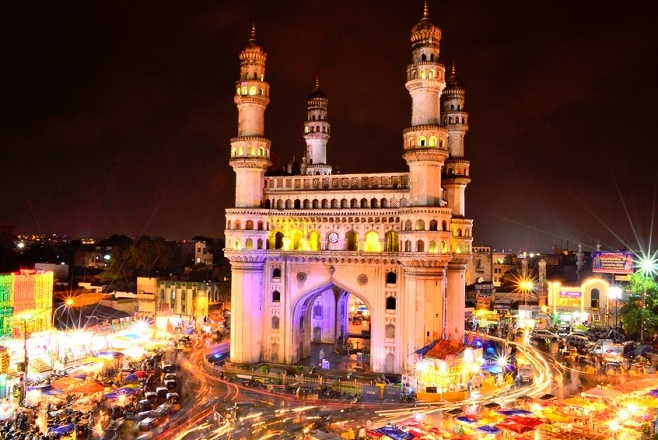

At the heart of Hyderabad, where the bustling streets resonate with the sounds of vibrant bazaars, stands the Charminar, a majestic symbol of the city’s rich tapestry of history and culture. Built in 1591 AD by Muhammad Quli Qutb Shahi, the fifth ruler of the Qutb Shahi dynasty, the Charminar not only marks the founding of Hyderabad but also serves as a testament to the end of a devastating plague that had ravaged the region.
The structure's name, derived from the Urdu words 'Char' (four) and 'Minar' (towers), aptly describes its form: a grand edifice crowned by four towering minarets. It is strategically positioned near the bank of the Musi River, close to the bustling Laad Bazaar and the historic Makkah Masjid, two other landmarks that contribute to the area's cultural vibrancy.
### History and Origins
The Qutb Shahi dynasty, known for its patronage of art and architecture, envisioned Hyderabad as a city of unparalleled beauty and grandeur. The construction of the Charminar marked the beginning of this dream, a monument built to celebrate life after tragedy. This iconic structure not only commemorated the end of a plague but also signified the founding of a new capital, as the dynasty shifted from Golconda to Hyderabad.
### Art and Architecture
Charminar is an exemplary piece of Indo-Islamic architecture with Persian influences. The monument, constructed using granite and lime mortar, stands on a square base with each side measuring 20 meters. The four graceful arches that face the cardinal directions are adorned with intricate stucco decorations. These arches support the minarets, each rising to a height of approximately 48.7 meters, offering panoramic views of the cityscape.
The structure also houses a small mosque on the western side of the open roof, adding to its spiritual significance. The blend of architectural styles and the exquisite artistry in the form of carvings and motifs invite admiration from architectural enthusiasts and casual visitors alike.
### Local Culture and Traditions
The Charminar area is a cultural hub, pulsating with life and traditions. It serves as the epicenter during festivals like Ramzan, when the region is illuminated and bustling with activity. The streets are lined with stalls selling traditional Hyderabadi delicacies, and the air is filled with the aroma of spices and sweets.
### Gastronomy
Hyderabad is renowned for its culinary delights, and a visit to Charminar is incomplete without indulging in local flavors. Hyderabadi Biryani, a fragrant rice dish mixed with aromatic spices and tender meat, is a must-try. Another local favorite is the Haleem, a slow-cooked stew made of meat, lentils, and wheat, often enjoyed during the Ramadan month.
### Lesser-Known Curiosities
Few know that the Charminar was initially intended to serve as a madrasa (Islamic school), highlighting the educational ambitions of its founders. Additionally, beneath the monument runs a hidden tunnel that was said to link Charminar to Golconda Fort—an escape route intended for the royal family during sieges.
### Practical Visitor Information
The best time to visit Charminar is during the cooler months from November to February, when temperatures are more comfortable for exploring. Early mornings or late afternoons are ideal to avoid the midday crowds. Visitors should not miss the opportunity to explore the surrounding bazaars for traditional bangles, pearls, and textiles.
In a city where tradition meets modernity, the Charminar stands as a proud emblem of Hyderabad's past and present. For a seamless and personalized itinerary to explore Hyderabad’s rich offerings, consider using the Secret World app.
