


The Choragic Monument of Lysicrates is a captivating testament to the architectural and artistic excellence of ancient Athens. This remarkable structure, dating back to 335/334 BC, stands as one of the finest examples of a choregic monument, which was originally erected to celebrate the triumph of a victorious chorus in ancient Greek theatrical and choral contests.
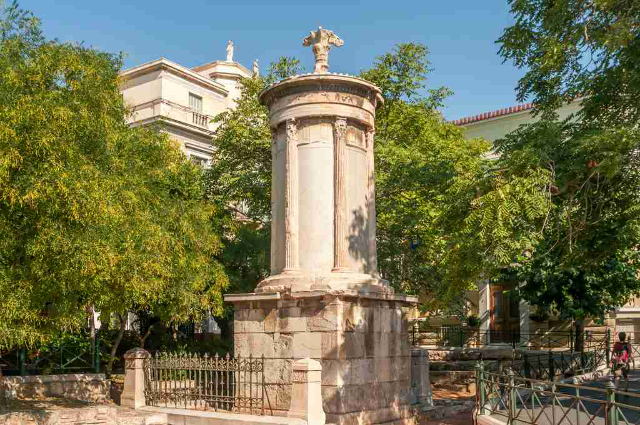
Architecturally, the monument is a marvel. It exhibits the Corinthian order, distinguished by its intricately designed capital adorned with acanthus leaves. The monument is a circular structure topped with a dome-shaped roof, and its exterior is adorned with exquisite friezes.
One of its most notable features is the intricately carved frieze that wraps around the monument. This frieze narrates the mythological story of Dionysus and the pirates. It illustrates the transformation of the pirates into dolphins by the god Dionysus as a divine punishment for attempting to bind him. This narrative is a part of the larger story that traces the adventurous journeys of the god.
Originally erected on the Street of the Tripods in Athens, the monument served as a pedestal for the bronze tripod that Lysicrates had won as a choregos. This practice was customary for choregic monuments during that era.
The monument had an interesting history of rediscovery. In the 18th century, it was uncovered and quickly became one of the first ancient structures to be systematically studied and sketched by European architects and archaeologists. This marked the early phases of the study of classical architecture.
Today, tourists and history enthusiasts flock to admire the Choragic Monument of Lysicrates, which stands as an iconic symbol of Athens' cultural and historical heritage. Its enduring beauty and the narrative of its frieze provide a captivating window into the rich history of ancient Greek theater and the significance of choral competitions in that era.


