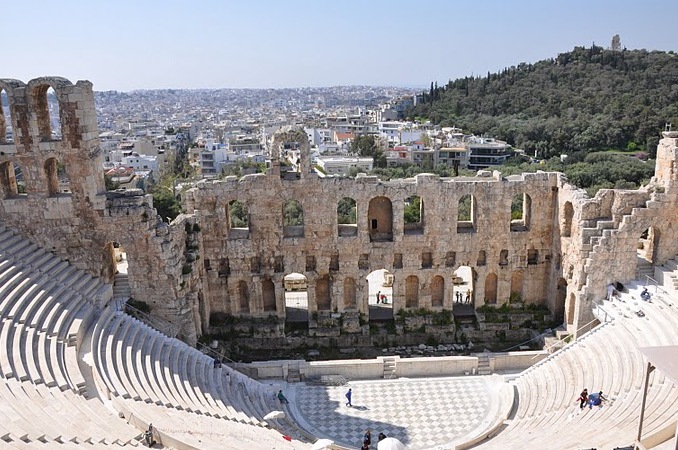

Nestled on the southern slopes of the Acropolis Hill, the Théatro Dionysou (Theatre of Dionysus) is a monumental witness to ancient Athenian culture and creativity. This cradle of dramatic art is not just a relic but a symbol of the city’s rich literary and theatrical heritage, where the likes of Aeschylus, Sophocles, Euripides, and Aristophanes first captivated audiences.
### History and Origins
The origins of the Theatre of Dionysus date back to the 6th century BC, making it one of the oldest theatres in the world. Initially constructed as a simple wooden structure, it evolved over the years into a grand stone auditorium, primarily under the influence of Pericles in the 5th century BC. This period marked the height of Athenian democracy and cultural achievement, where theatre became an essential aspect of civic life.
The theatre was dedicated to Dionysus, the god of wine, fertility, and festivity, and it hosted the annual City Dionysia festival. This celebration was pivotal for the development of drama, as playwrights competed for prestigious awards, and thousands of citizens gathered to watch the performances. The theatre could accommodate approximately 17,000 spectators, who would sit on stone benches carved into the hillside, allowing for impressive acoustics that enhanced the dramatic experience.
### Art and Architecture
Architecturally, the Theatre of Dionysus is a remarkable feat of ancient engineering. Its semi-circular design, with a large orchestra (the performance space) at its center, laid the groundwork for future theatres around the world. The skene, a structure at the back of the stage, served as both a backdrop and a place for actors to change costumes, evolving into a crucial element of theatrical design.
Among the notable artworks of the period are the reliefs and frescoes that adorned the theatre, celebrating the myths and stories performed on its stage. Although much of the original decoration has been lost to time, the remnants still convey the artistic significance of this cultural hub. The theatre's strategic location also provided a breathtaking view of the Acropolis, merging the beauty of nature with the splendor of human creativity.
### Local Culture and Traditions
The Theatre of Dionysus remains a cornerstone of Athenian cultural identity. The rituals associated with the City Dionysia were not merely theatrical; they were religious celebrations that brought communities together. During the festival, citizens would participate in processions, sacrifices, and feasts, highlighting the theatre's role in fostering social cohesion.
Today, local customs often draw inspiration from these ancient traditions. The Dionysia Festival still inspires modern performances and cultural events throughout Greece, celebrating the legacy of ancient drama. The theatre is also a backdrop for various artistic endeavors, including contemporary plays inspired by classical works, bridging the past with the present.
### Gastronomy
No visit to the Theatre of Dionysus would be complete without indulging in the local gastronomy that reflects the flavors of ancient Athens. Traditional dishes such as moussaka, a baked casserole of eggplant, minced meat, and béchamel sauce, and souvlaki, skewered meats grilled to perfection, are widely available in nearby tavernas.
Washing down these delectable dishes with a glass of ouzo, an anise-flavored aperitif, offers a taste of the Athenian spirit. For dessert, baklava, with its honeyed layers of phyllo pastry and nuts, provides a sweet conclusion to any meal, echoing the festival's celebratory nature.
### Lesser-Known Curiosities
While the Theatre of Dionysus is renowned for its historical prominence, some lesser-known facts add to its allure. For instance, it was not only a stage for plays but also served as a venue for political gatherings and public announcements, demonstrating the theatre's multifaceted role in Athenian life.
Additionally, many visitors overlook the nearby Sanctuary of Dionysus, which houses ancient altars and votive offerings dedicated to the god. This sacred space provides insight into the religious practices of the time and enhances the experience of visiting the theatre.
### Practical Visitor Information
For those eager to explore the Theatre of Dionysus, the best time to visit is during the spring and fall months when the weather is pleasant, and the crowds are manageable. Early mornings or late afternoons are ideal for experiencing the site in a quieter atmosphere, allowing for reflection on the grandeur of ancient Athenian culture.
When visiting, be sure to look for the ancient seats, some of which are inscribed with the names of notable citizens who contributed to the theatre's legacy. Take a moment to imagine the vibrant performances that once echoed through the stone walls, connecting you to the past in a profound way.
As you plan your visit to this iconic site, consider using the Secret World app to create a personalized AI itinerary that ensures you capture the essence of Athens.
