
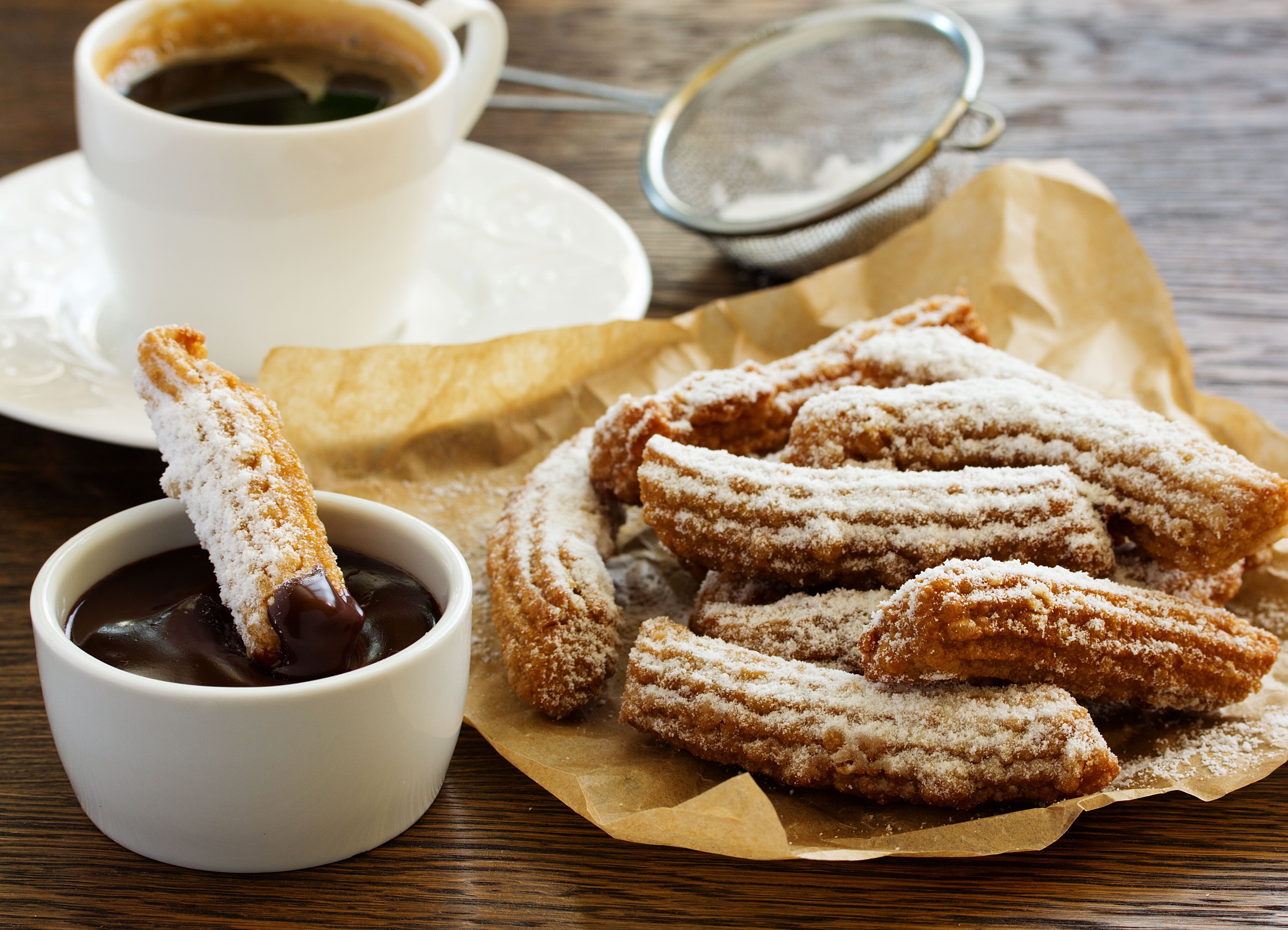

In the heart of Madrid, where the city's vibrant energy never sleeps, the alluring aroma of fried dough beckons locals and tourists alike. Here, churros are not just a snack; they are a cultural emblem, woven into the very fabric of Spanish life. As you wander through the bustling streets, especially during the early morning hours, the irresistible scent of these golden delights is your guide to one of Madrid's most cherished culinary experiences.

The history of churros is as intriguing as their taste. While the precise origins are debated, it's widely believed that the Moors introduced a similar fried dough to the Iberian Peninsula during their occupation. However, the churro as we know it today was likely refined by Spanish shepherds. These rural nomads, isolated in the mountains, crafted a simple dough that could be fried over an open flame, naming it after the Navajo-Churro sheep, whose horns the snack resembles. By the 1800s, churros had cemented their place in Spanish street food culture, becoming a staple at street parties and fairs.
A stroll through Madrid's historic neighborhoods reveals the city's rich tapestry of art and architecture. While churros themselves are not directly linked to any artistic movement, they have become a muse for many artists who capture Madrid's everyday life. The iconic churrerías are often tucked away in neighborhoods adorned with Baroque and Renaissance architecture, their vibrant tiles and wrought iron facades adding to the city's artistic charm. Notable among these is Chocolatería San Ginés, established in 1894, which stands as a testament to Madrid's enduring love affair with churros.

Churros are deeply embedded in local culture and traditions. No Spanish festival or fiesta is complete without them. During the Fiestas de San Isidro, Madrid's most important festival in May, churros are as essential as the traditional chulapo costumes. They are also a favorite during the holiday season, often enjoyed with a cup of rich, velvety chocolate a la taza. This thick, molten chocolate is not just a dip but an integral part of the churro experience, a practice so ingrained it feels like a ritual.
Beyond churros, Madrid's gastronomic offerings are diverse and delightful. Traditional dishes like cocido madrileño, a hearty chickpea-based stew, and tapas, small savory dishes, highlight the city's culinary prowess. Pair these with a glass of Tempranillo wine or a refreshing tinto de verano to truly savor Madrid's flavors.
Despite their popularity, churros hold a few lesser-known secrets. For instance, the churrerías in Madrid often operate in the early hours, catering to night owls and early risers alike. The tradition of "el chocolate con churros" is a beloved hangover cure, ingraining itself into the nightlife culture. Moreover, churros are not just elongated doughnuts; their cousin, porras, are thicker and doughier, offering a heartier alternative.
For the practical visitor, indulging in churros is best during the cooler months from October to March when the warmth of melted chocolate is most comforting. While Chocolatería San Ginés is a must-visit, exploring lesser-known spots like Churrería Madrid 1883 offers a more local experience. When choosing your churros, look for a crispy exterior with a soft, airy interior. They should be fresh, never greasy, and paired with chocolate so thick a spoon can stand upright in it.
Embrace the experience by taking your time, savoring each bite amidst the lively chatter of Madrileños. As the morning sun casts its glow over Madrid, you'll understand why this simple snack is a symbol of joy and community, as integral to the city as its grand boulevards and historic plazas.


