
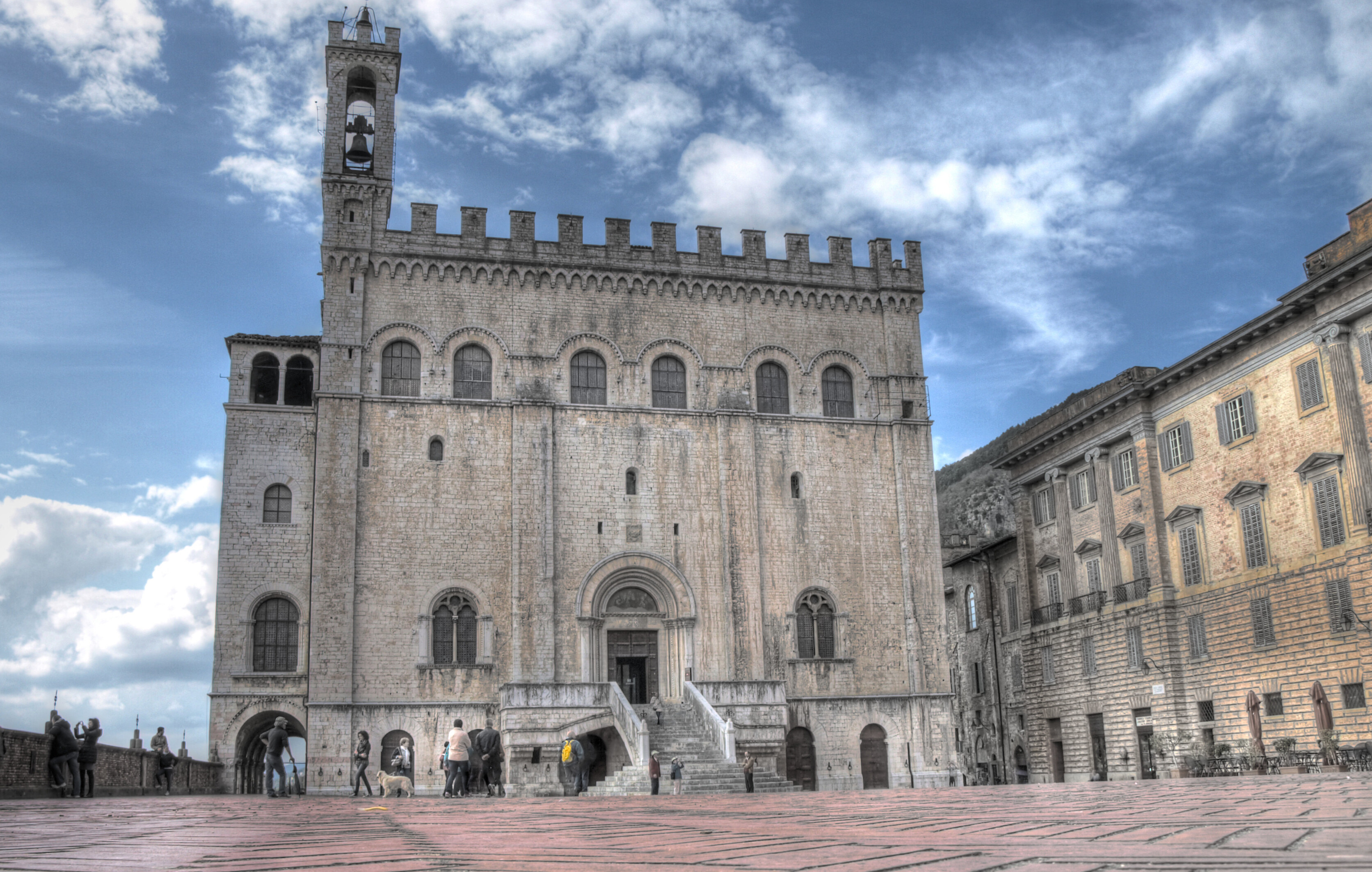

Nestled in the heart of Gubbio, the majestic Consuls Palace stands as a testament to the rich tapestry of history, culture, and art that defines this enchanting Italian town. Constructed between 1332 and 1349, this architectural marvel was designed by Angelo from Orvieto with the invaluable contributions of Matteo di Giovannello, known as Gattapone. Its imposing Gothic structure, characterized by a rectangular shape and high vertical pilasters, divides the façade into three distinct sections, each telling a story of the past.
The Consuls Palace served as a political hub for the town, embodying the civic pride and authority of Gubbio during the Middle Ages. It housed the local government and was central to many significant events in the region’s history. One of the most notable moments occurred during the Gubbio’s War of Independence in the late 14th century, where the palace became a focal point for discussions of freedom and autonomy from foreign rulers. Over time, it transitioned to a cultural institution, and since 1909, it has been home to the Civic Museum, preserving the town's rich heritage.
Within the museum's walls, visitors can traverse the ages—from prehistory to the 20th century—through an impressive collection of artifacts. Among the most significant items are the Tavole Iguvine, seven bronze slabs inscribed with the Umbrian language, detailing ancient religious rites and practices. These tablets are considered one of the most important archaeological finds in Italy, offering insights into local customs and beliefs that shaped the Umbrian identity.
The architectural style of Consuls Palace is a striking example of Gothic design, with elements that speak to both strength and beauty. The intricate stonework and high ceilings are complemented by the Hall of Loggetta, where the ceramics collection showcases the evolution of pottery from the 14th century into the 19th century. This collection features majolica that reflects the artistic trends and daily life during its time, revealing the craftsmanship that has flourished in the region for centuries.
As you ascend to the upper floors, the Municipal Picture Gallery awaits, showcasing a rich array of artistic works from local masters of the Middle Ages to the Baroque period. Here, visitors can marvel at the evolution of artistic expression in Gubbio, with pieces that illustrate the town's deep connection to its cultural roots.
Gubbio's charm extends beyond its architecture and museums; it is a town steeped in tradition and local culture. The annual Corsa dei Ceri, held in May, is a vibrant festival that attracts crowds from near and far. Participants carry towering wooden statues, representing Saint Ubaldo and two other saints, through the streets in a thrilling race. This event not only celebrates local devotion but also fosters a sense of community and pride among residents.
Culinary experiences in Gubbio are equally captivating. The region is renowned for its rustic cuisine, characterized by hearty dishes that reflect the agricultural bounty of the surrounding countryside. Local specialties include tortellini, which are often filled with wild game or herbs, and cinghiale (wild boar) stews that showcase the region’s game meats. Don’t miss out on sampling the famous Bocconcini di Gubbio, small meatballs made with a blend of local spices, typically paired with a glass of Sagrantino, a robust red wine that embodies the essence of Umbria.
For those eager to uncover hidden gems, the Consuls Palace offers surprising stories that often go unnoticed. One lesser-known fact is the Gubbio’s Stone, a unique geological formation that features intricate carvings believed to date back to ancient rituals. This stone is tucked away near the palace and often overlooked by tourists, making it a perfect secret for adventurous visitors.
When planning your visit to Gubbio, consider traveling in the spring or fall when the weather is mild and the crowds are fewer. The Civic Museum is open year-round, but check for specific hours and possible guided tours to enhance your experience. Be sure to explore the palace's stunning architecture and the surrounding medieval streets, where every corner offers a glimpse into the town's storied past.
To truly immerse yourself in the cultural richness of Gubbio, take the time to engage with locals and participate in community events. Their stories and traditions breathe life into the history you’ll encounter.
Whether you are drawn by the allure of ancient history, the beauty of Gothic architecture, or the delicious local cuisine, Consuls Palace and its surroundings promise an unforgettable experience. For a tailored itinerary that captures the essence of Gubbio, consider using the Secret World app to navigate your adventure seamlessly.


