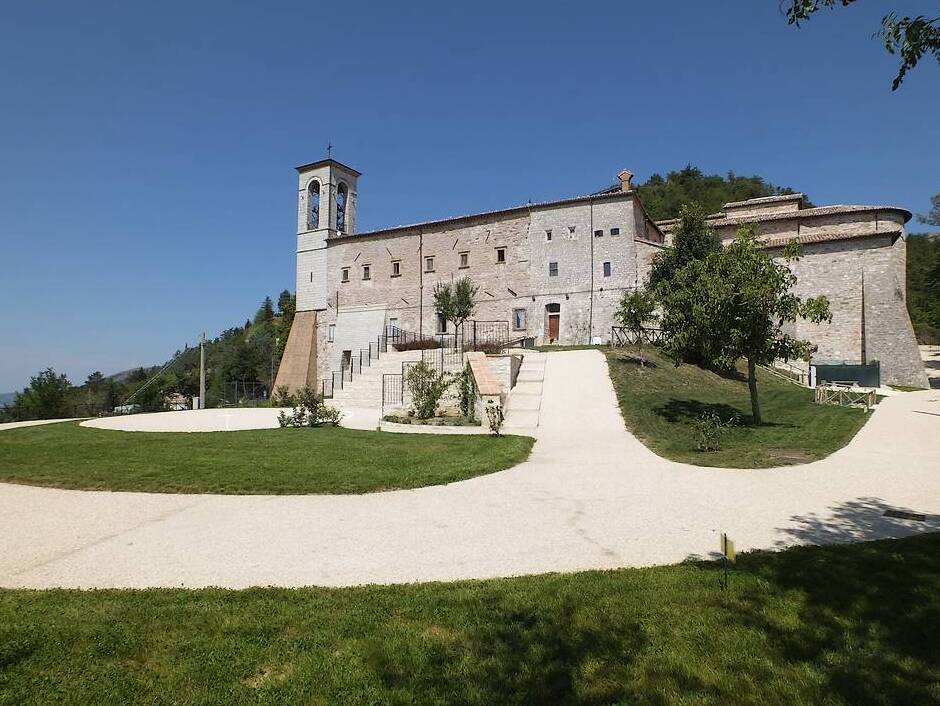

Perched majestically atop Monte Ingino, the Basilica of Sant'Ubaldo stands as a testament to the enduring legacy of Gubbio, a town steeped in rich history and vibrant culture. This remarkable structure not only serves as a sacred space but also as the heart of local traditions, where the spirit of its patron saint, Sant'Ubaldo, inspires devotion and celebration.
### History and Origins
The origins of the Basilica can be traced back to the 12th century, when it was constructed over pre-existing medieval structures. It was built to honor Sant'Ubaldo, the town's beloved patron saint, who is credited with numerous miracles and the spiritual guidance of the region. Known for his efforts to promote peace and community, he became a pivotal figure in Gubbio's identity.
Throughout the centuries, the Basilica underwent significant transformations. In the early 16th century, it was enlarged to accommodate the growing number of pilgrims and local devotees. This renovation included the addition of a convent and cloister, reflecting the evolving architectural styles of the Renaissance period. The building’s enduring presence has borne witness to key historical events, including the Corsa dei Ceri, a festival that dates back to the 12th century and involves a fervent race to honor the saint.
### Art and Architecture
The architectural style of the Basilica is a harmonious blend of Romanesque and Gothic elements, characterized by its robust stone façade that belies the opulence within. Upon entering, visitors are greeted by a striking interior featuring five naves and a semi-circular apse. The contrast between the simple exterior and the richly decorated interior is striking.
The walls of the Basilica are adorned with frescoes created between the 16th and 18th centuries. These vibrant artworks depict scenes from the life of Sant'Ubaldo and are attributed to notable artists, including Pier Angelo Basili, whose work in the cloister captures pivotal moments in the saint’s life. The interplay of light and color in these frescoes creates a captivating atmosphere, inviting contemplation and reverence.
### Local Culture and Traditions
The Basilica of Sant'Ubaldo is intrinsically linked to the Corsa dei Ceri, held annually on May 15th. This exhilarating festival sees three teams, representing Sant'Ubaldo, St. George, and St. Anthony, racing massive wooden structures called ceri through the streets of Gubbio. The event is a stunning display of community spirit; locals, adorned in traditional attire, cheer and support their teams in a cherished expression of cultural identity.
In addition to the Corsa, the Basilica hosts various religious ceremonies throughout the year, drawing both locals and visitors. The annual Feast of Sant'Ubaldo on June 16th further reinforces the saint’s significance, with processions, prayers, and communal meals that celebrate Gubbio's heritage.
### Gastronomy
The culinary scene in Gubbio is as rich as its history. Local specialties include torta al testo, a flatbread traditionally baked on a hot stone, often filled with cheese, greens, or cured meats. Another must-try is strascinati, a type of pasta served with a hearty sauce made from local vegetables and meats.
Visitors should also indulge in the region’s fine wines, particularly Sagrantino and Trebbiano, which pair beautifully with the local fare. For those with a sweet tooth, the town’s crostata di visciole (sour cherry tart) is a delightful way to end a meal, embodying the rustic flavors of Umbrian cuisine.
### Lesser-Known Curiosities
While many are drawn to the Basilica for its religious significance, few know that it also houses a fascinating relic: the urn containing the ashes of Sant'Ubaldo. This bronze urn, adorned with intricate designs, is a focal point during the Corsa dei Ceri, symbolizing the saint's enduring presence in the community.
Additionally, the Basilica is a prime spot for stunning panoramic views. Hikers and pilgrims alike are rewarded with breathtaking vistas of the surrounding countryside, making the ascent to Monte Ingino not just a spiritual journey, but a visual feast.
### Practical Visitor Information
The best time to visit Gubbio and the Basilica of Sant'Ubaldo is during the spring and early autumn when the weather is mild, and the town is less crowded. Plan your visit around the Corsa dei Ceri for a truly immersive experience, but be prepared for lively crowds.
When visiting the Basilica, take time to explore the cloister and appreciate the artworks that adorn both the church and its surroundings. Guided tours are available and can enhance your understanding of the Basilica's significance.
For a deeper dive into the local culture and traditions, consider participating in a cooking class to learn how to make local dishes, or attend a wine tasting to savor the flavors of the region.
As you explore this enchanting town, consider using the Secret World app to craft a personalized itinerary that ensures you don’t miss any of Gubbio’s hidden gems.
