
← Back

Diocesan Museum of Gubbio

Via Federico da Montefeltro, 06024 Gubbio PG, Italia ★★★★☆ 168 views
Renee Carlington
Gubbio
🏆 AI Trip Planner 2026

Get the free app

Discover the best of Gubbio with Secret World — the AI trip planner with 1M+ destinations. Get personalized itineraries, hidden gems and local tips. Free on iOS & Android.

🧠 AI Itineraries 🎒 Trip Toolkit 🎮 KnowWhere Game 🎧 Audio Guides 📹 Videos
Download on the App Store Get it on Google Play
Scan to download Scan to download
Diocesan Museum of Gubbio - Gubbio | Secret World Trip Planner

Nestled in the heart of Umbria, the Diocesan Museum of Gubbio offers a captivating glimpse into the rich tapestry of the region's history, art, and culture. This museum is not just a repository of artifacts; it is a gateway to understanding the profound legacy of Gubbio, a town that dates back to ancient times.

Diocesan Museum of Gubbio - Gubbio | Secret World Trip Planner

### History and Origins

Gubbio's roots trace back to the Umbrian civilization, which flourished in this area as early as the 9th century B.C. The town, known as Iguvium in antiquity, became significant due to its strategic location and was later absorbed into the Roman Empire. The Table of Iguvium, a series of bronze tablets inscribed with the town's laws and religious rites, exemplifies this ancient legacy and is among the earliest examples of Umbrian writing.

Diocesan Museum of Gubbio - Gubbio | Secret World Trip Planner

Throughout the Middle Ages, Gubbio blossomed, becoming a free commune in the 12th century. It was during this time that the Diocesan Museum began to take shape, reflecting the artistic and spiritual development influenced by pivotal historical events, such as the Guelphs and Ghibellines conflicts. As the town prospered, its ecclesiastical and cultural institutions grew, culminating in the establishment of the museum in the late 20th century to showcase its vast artistic heritage.

### Art and Architecture

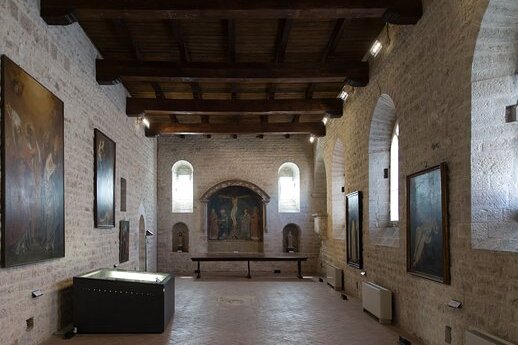
The architectural style of the Diocesan Museum of Gubbio is an exquisite blend of medieval and Renaissance influences, housed in the former Benedictine convent of San Francesco. Visitors are greeted by the museum's well-preserved interiors, which echo the past and enhance the viewing experience of the artworks.

Inside, the archaeological section exhibits an impressive collection of ceramics spanning from the 7th century B.C. to the classical period. Among the standout pieces are the Kilykes signed by Taleide and Fraix, offering insights into ancient Greek pottery. The museum also features a remarkable Roman and early medieval lapidary and an extensive numismatic collection that showcases the evolution of currency from Magna Graecia to the Carolingian period.

The artistic significance of the museum is further underscored by the works of Mello from Gubbio, whose splendid panels from the 14th century narrate religious themes with emotional depth. The 15th-century section highlights masterpieces from the workshop of Ottaviano Nelli and Taddeo di Bartolo, including a breathtaking cycle of frescoes depicting scenes from the Passion of Christ. The exquisite Flemish Renaissance cope adds to the rich tapestry of sacred vestments, illustrating the museum's commitment to preserving Gubbio's ecclesiastical heritage.

### Local Culture and Traditions

Gubbio is steeped in local customs and traditions, many of which find expression in its vibrant festivals. One of the most notable events is the Corsa dei Ceri, held annually on May 15th, where teams race through the streets carrying towering wooden structures representing the town's patron saints. This exhilarating festival is a testament to Gubbio's deep-rooted community spirit and devotion.

Another cultural highlight is the Festival of the Holy Ubaldo, honoring the town's patron saint. During this time, locals engage in processions, prayers, and communal feasting, reflecting the town’s strong ties to its spiritual history. Such traditions not only celebrate Gubbio’s past but also unify its residents and visitors in shared experiences.

### Gastronomy

The culinary scene in Gubbio is a delightful exploration of Umbrian gastronomy. Local specialties include torta al testo, a rustic flatbread often filled with a variety of ingredients, or strangozzi, a homemade pasta typically served with a rich truffle sauce. The region is also renowned for its porcini mushrooms, which feature prominently in many dishes.

Additionally, Gubbio produces excellent wines, with Sagrantino being a notable red variety from Montefalco, a short drive away. Pairing these local flavors with a glass of wine while enjoying the picturesque views of the surrounding hills creates an unforgettable culinary experience.

### Lesser-Known Curiosities

While many tourists flock to the more famous sites, several hidden gems within the Diocesan Museum deserve attention. For instance, the museum houses ethnographic collections that showcase the daily life and customs of Gubbio's inhabitants over the centuries. Visitors might also be surprised to find a small room dedicated to Christian relics, including venerated objects that recount the spiritual journeys of the town's past.

Another lesser-known fact is the museum's role in preserving local craftsmanship, showcasing the intricate work of artisans who have passed down their skills through generations. These hidden details add layers of meaning to Gubbio’s history, enriching the visitor experience.

### Practical Visitor Information

The best time to visit the Diocesan Museum of Gubbio is during the spring and fall months when the weather is mild and the crowds are thinner. To maximize your experience, consider joining a guided tour to gain deeper insights into the artworks and their historical contexts.

Make sure to look for the museum's temporary exhibitions, which often feature contemporary artists and thematic displays that relate to Gubbio's heritage.

A visit to Gubbio is incomplete without exploring the charming streets and savoring the local cuisine, making it an ideal destination for both art enthusiasts and food lovers alike.

For a personalized itinerary that captures the essence of Gubbio, consider using the Secret World app.

🗺 AI Trip Planner

Plan your visit to Gubbio

Suggested itinerary near Diocesan Museum of Gubbio

MAJ+
500.000+ travelers worldwide
  1. 🌅
    Morning
    Diocesan Museum of Gubbio
    📍 Gubbio
  2. ☀️
    Afternoon
    The Gothic architecture of Palazzo Pretori in Gubbio
    📍 0.1 km da Gubbio
  3. 🌆
    Evening
    Consuls Palace in Gubbio
    📍 0.1 km da Gubbio

Buy Unique Travel Experiences

Powered by Viator

See more on Viator.com

Explore nearby · Gubbio
