
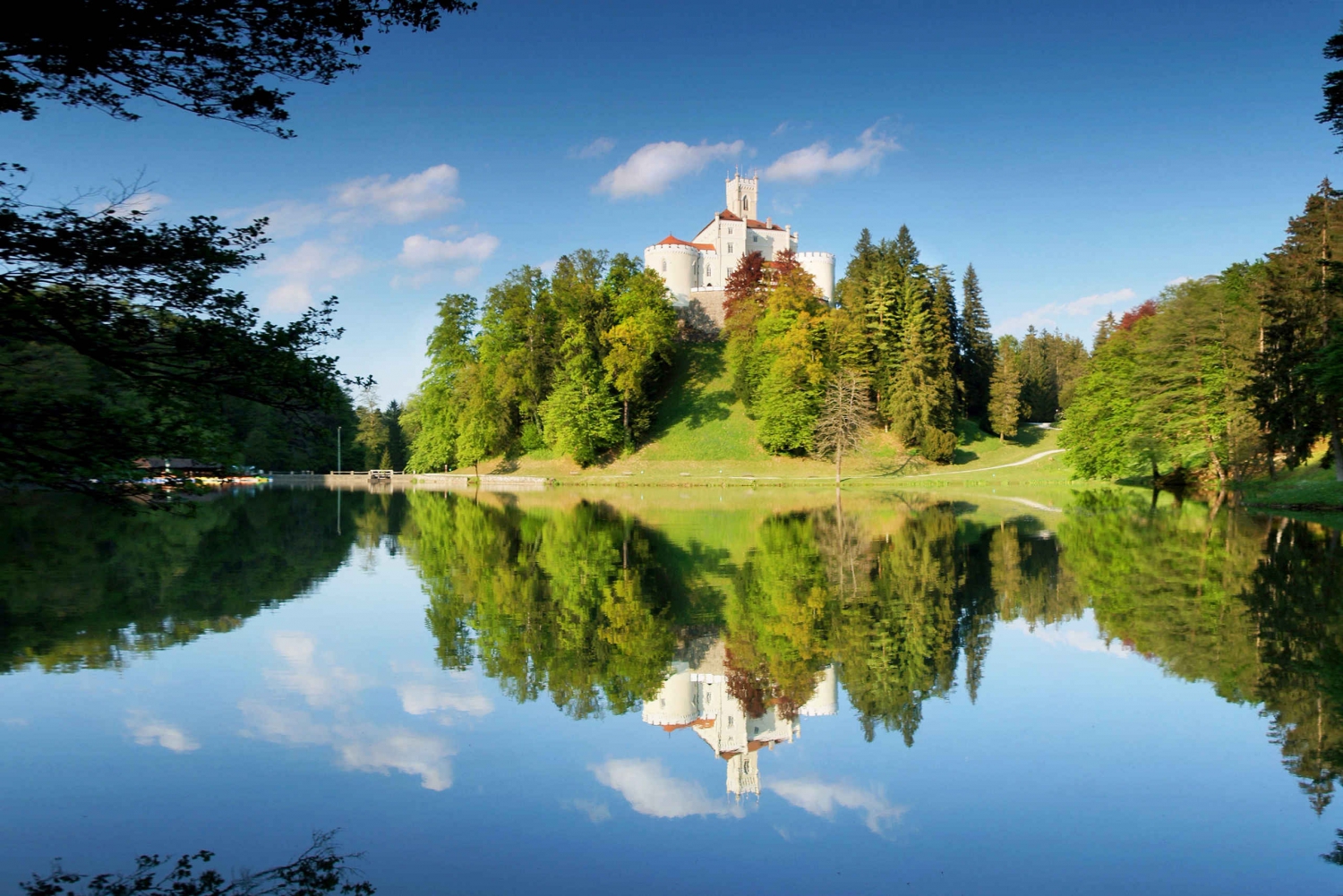

Nestled amidst the serene hills of Bednja, Trakošćan Castle stands as a magnificent testament to Croatia's rich history and architectural prowess. Often perceived as a “small” observation fortress, this enchanting castle, dating back to the 13th century, has captivating stories echoing through its halls.
The origins of Trakošćan can be traced back to 1252, when it was first mentioned in historical records. Initially constructed as a defensive structure, the castle underwent significant changes in the 16th century under the ownership of the noble Drasković family. By the time Ban Juraj Drasković took over in the 19th century, it had transformed into a residence replete with romantic aesthetic enhancements. The castle was eventually seized by the communist regime after World War II, leading to its preservation as a museum that now showcases its historical significance.
Architecturally, Trakošćan Castle is a blend of Gothic and Renaissance styles, characterized by its steep roofs and elegant towers that rise above the lush landscape. The castle’s interior is adorned with exquisite Baroque furniture, alongside a diverse collection of weaponry that spans from the 15th to the 19th century. Visitors can admire the intricately designed great hall, where grand chandeliers illuminate the ornate decor, and the library, which houses rare books that speak to the intellectual pursuits of its former inhabitants. A stroll along the castle’s corridors reveals frescoes and family portraits that narrate the Drasković lineage and their contribution to Croatian history.
The local culture surrounding Trakošćan is vibrant and deeply rooted in tradition. The area is known for its rich folklore, with annual festivals celebrating local customs and heritage. One of the most notable events is the Trakošćan Castle Open Air Concert, where classical music resonates through the gardens, inviting visitors to immerse themselves in the cultural ambiance. During the Feast of St. George, celebrated in April, locals participate in various rituals that honor their patron saint, showcasing traditional costumes and folk dances.
Gastronomy in Bednja is a delightful exploration of flavors. The region is renowned for its štrukli, a traditional dish made of dough filled with cheese and baked to perfection. Additionally, a visit to the nearby Varaždin town introduces food enthusiasts to kulen, a spicy sausage that encapsulates the essence of Croatian cuisine. Pair these local delicacies with a glass of Graševina, a white wine that flourishes in the region, and you’ll experience a true taste of Croatian hospitality.
Lesser-known curiosities about Trakošćan Castle add layers to its already rich narrative. For instance, the castle is often shrouded in legends of ghostly apparitions, with tales of former inhabitants said to wander the grounds. One story recounts the tragic fate of a young noblewoman, whose spirit is believed to protect the castle's treasures. Furthermore, the castle's picturesque surroundings, including the artificial lake created in the 19th century, were designed not only for beauty but also for practical purposes, such as fishing and leisure activities.
For those planning a visit, the best time to explore Trakošćan Castle is during the spring and early autumn months when the gardens burst into bloom, offering a stunning backdrop for photographs. Make sure to set aside ample time to walk the scenic paths around the lake, where swans glide gracefully, and the tranquility of nature complements the castle's historical grandeur. Additionally, consider taking a guided tour to gain deeper insights into the castle’s history and the significance of its artifacts.
In conclusion, a visit to Trakošćan Castle is more than just a glimpse into Croatia's past; it’s an immersive experience that encompasses art, culture, and gastronomy. Allow yourself to be enchanted by the stories embedded in its walls and the beauty of its surroundings. For a personalized journey exploring Bednja, consider using the Secret World app to craft your perfect itinerary.


