
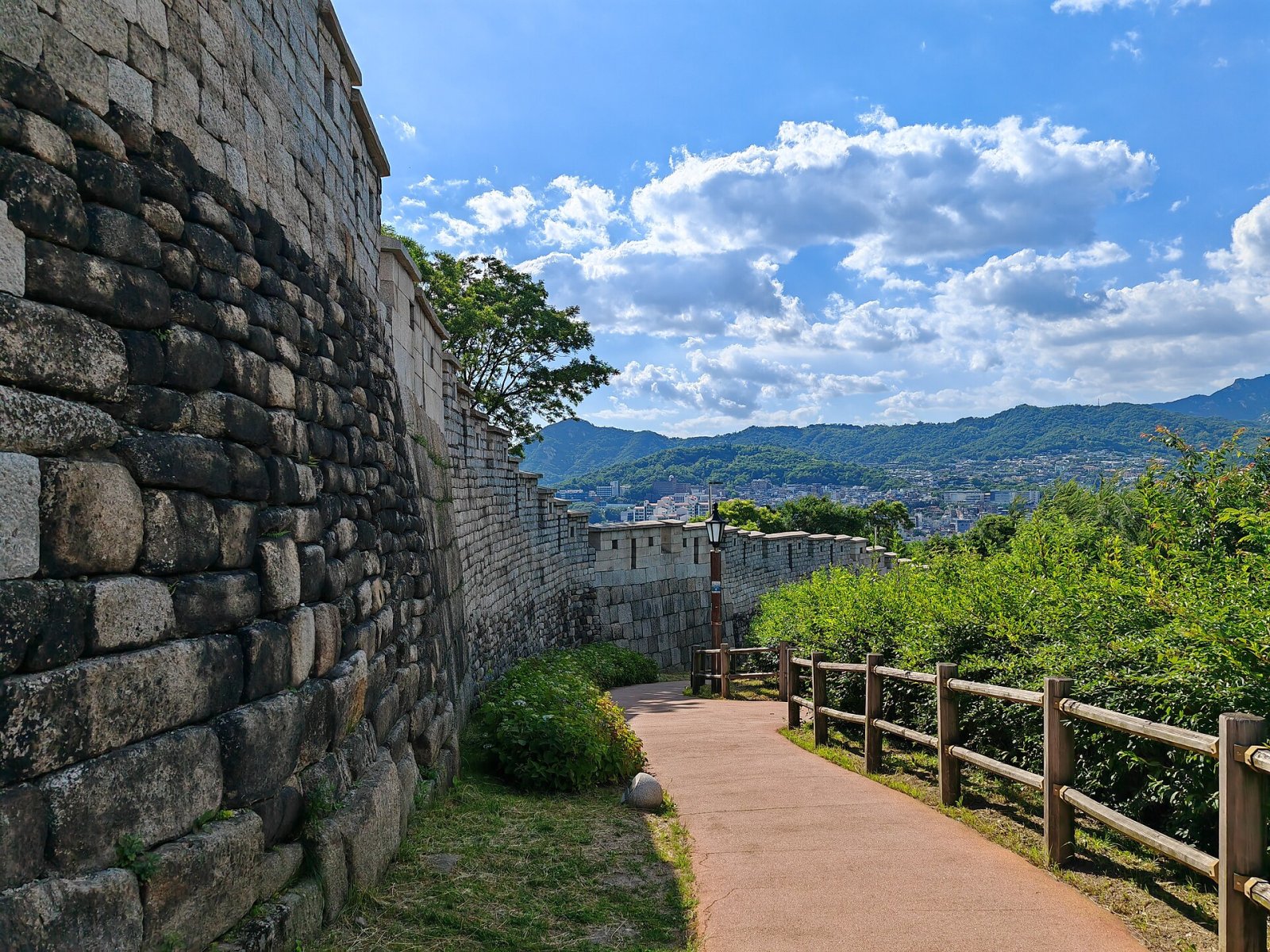

The Seoul City Wall, also known as Hanyang Doseong, is an impressive defensive structure that tells centuries of Korean history and culture. Built for the first time in 1395 by King Taejo of the Joseon dynasty, this wall played a crucial role in protecting the capital, Hanseong. Today, the Seoul City Wall is not only a historical monument but also a popular tourist attraction that draws visitors from around the world.
Walking along the ancient walls offers a unique experience, allowing one to immerse in the history of one of Asia's most fascinating cities. The wall, which stretches for about 18.6 kilometers, surrounds the center of Seoul and provides spectacular views of the modern city in contrast to its historical roots.
History and Origins
The construction of the Seoul City Wall began in 1395 and was largely completed in 1396, including the famous Eight Gates. The wall has undergone numerous reinforcements throughout its long history, with three main periods of fortification dating back to the 14th, 15th, and 18th centuries. Initially, the Seoul City Wall also served as an administrative demarcation, distinguishing the center of the capital from the peripheral areas.
During the Joseon period, the wall represented not only protection against external invaders, such as Japanese and Chinese attacks, but also a symbol of the power and stability of the dynasty. Its historical significance was recognized in 1963 when it was designated as a Historic Site of South Korea.
Elements to Observe
Walking along the Seoul City Wall, visitors can admire several historical gates, each with its own uniqueness and significance. The Sungnyemun Gate, for example, is one of the eight original gates and represents a masterpiece of traditional Korean architecture. Each gate tells stories of past eras and the challenges faced by the city over the centuries.
Additionally, along the route, there are viewpoints that offer spectacular views of the modern city and the surrounding mountains. These spaces not only serve as resting spots but also as opportunities to reflect on the history and evolution of Seoul from a historical capital to a contemporary metropolis.
Why It Is Interesting Today
Today, the Seoul City Wall is a symbol of resilience and cultural continuity. Its presence in the heart of one of the world's most dynamic cities represents a tangible link between the past and the present. Visitors can explore not only the wall itself but also the numerous parks and trails that surround it, creating an environment that encourages reflection and discovery.
The Seoul City Wall has also become a meeting place for cultural events and community activities, making it a vital element in the daily life of residents. Its importance as a tourist attraction continues to grow, attracting those seeking to better understand the history and culture of South Korea.
Practical Information for Visitors
For those wishing to visit the Seoul City Wall, it is advisable to wear comfortable shoes, as the path can be uneven in some areas. The wall is accessible from various gates, each offering a unique entry point and the opportunity to explore different sections. It is possible to plan a walk that connects multiple gates for a complete experience.
Additionally, it is recommended to visit the Seoul City Wall during the early morning or late afternoon to avoid crowds and enjoy milder temperatures. For more information and tips on what to see and do in Seoul, the Secret World app can be a useful ally during your visit.


