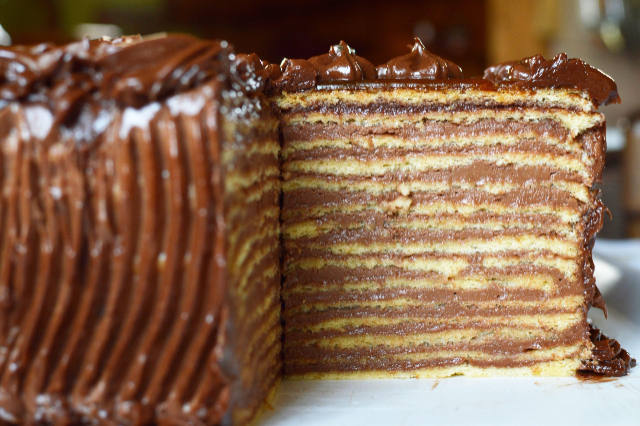
Top of the World



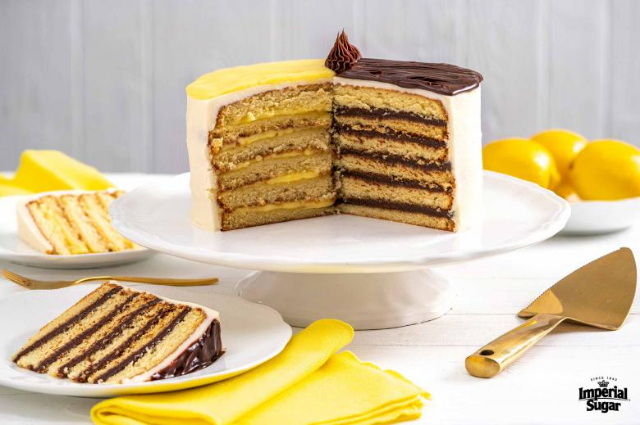
Doberge Cake is a delicious layered cake originating in New Orleans, USA. This cake is famous for its combination of flavors and distinct layered presentation.Doberge Cake traditionally consists of layers of thin, fluffy sponge cake, alternating with layers of buttercream and chocolate frosting. Each layer of sponge cake is dipped with a light frosting or rum syrup to keep it moist and add extra flavor.One of the distinctive elements of this cake is the buttercream used for its layers. Buttercream can vary in flavor, with the most common variations including vanilla, chocolate or coffee. The buttercream gives the cake a rich, creamy texture, while the chocolate frosting covers and complements each layer.Doberge Cake is usually decorated on top with a smooth, glossy chocolate frosting, which can be embellished with decorations or designs as desired. This cake is often served in slices, revealing the well-defined layers and inviting a real feast for the eyes and palate.The history of the Doberge Cake dates back to the 1930s, when it was introduced in New Orleans by Beulah Ledner, a pastry chef of Croatian descent. The name "Doberge" comes from its Creole dialect pronunciation of the word "dobash," which means "chocolate" in Croatian.Doberge Cake has become a beloved delicacy in New Orleans and has gained popularity outside the city as well. Its combination of complex flavors, layered presentation, and rich culinary history have made this cake an icon of New Orleans' culinary heritage.Today, Doberge Cake can be found in several variations, with some pastry chefs experimenting with flavors and decorations to create unique versions of this treat. It is a cake that delights chocolate lovers and fans of elaborate cakes, offering a memorable taste experience.In conclusion, Doberge Cake is a delicious layer cake that has its roots in New Orleans. Its layers of sponge cake, buttercream and chocolate frosting blend together to create an extraordinary taste experience. This cake, with its history and spectacular presentation, continues to be a beloved delicacy and a part of New Orleans' culinary heritage.