
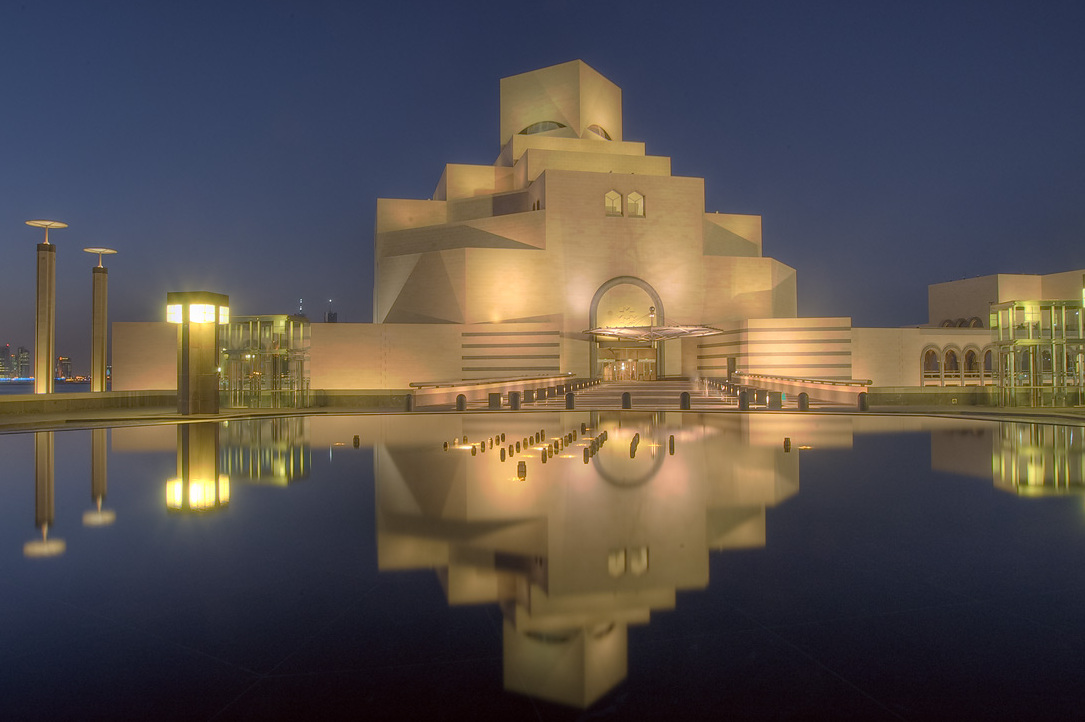

To tell the story of the Museum of Islamic Art’s creation is to tell the story of an uncompromising architect. When the project began, the first task was coaxing 90-year-old architectural icon I.M. Pei out of retirement. Pei—famous for adding beautiful expansions to museums like the National Gallery of Art and the Louvre—then spent six months touring the Islamic world for inspiration. Finally, when Pei was inspired and convinced to work, he suggested the building might look better if it was 60 meters offshore on a man-made island. And so it was. The resulting building is as distinctly Pei as it is Islamic, made of monumental chunks of stone stacked atop each other; the building seems to have been around for thousands of years and lends to the thought that it will be around for many more.
History and Origins The Museum of Islamic Art opened its doors in 2008, but its roots delve deep into the rich tapestry of Islamic history. Qatar, long a trading hub due to its strategic location on the Arabian Peninsula, has been influenced by various cultures since ancient times. The establishment of the museum was part of a broader ambition by the Qatari royal family to position Doha as a center for art and culture, a vision articulated by Sheikh Hamad bin Khalifa Al Thani. The museum houses over 14,000 objects that date from the 7th to the 19th century, showcasing the vastness of Islamic art from Spain to South Asia.
Art and Architecture The architectural style of the museum is a blend of modernism and traditional Islamic design. Pei's vision materialized in a structure that incorporates elements such as intricate geometric patterns and expansive spaces that invite contemplation. The building itself is constructed from limestone, which gives it a timeless appearance, and features a central atrium flooded with natural light, creating a serene atmosphere. Inside, highlights include the exquisite Alhambra tile work and Mamluk glass lamps, which serve as a testament to the artistic achievements of the Islamic world.
Local Culture and Traditions In addition to its artistic importance, the museum is a pivotal cultural institution in Qatar. It hosts various events, including the Qatar International Art Festival, which celebrates local and international artists. Traditional Qatari customs, such as falconry and diwaniya (a social gathering), are also integral to the experience. Visitors can witness the annual Qatar National Day festivities, which take place on December 18, celebrating the nation’s culture and heritage.
Gastronomy No visit to Doha is complete without indulging in the local cuisine. The museum café offers a taste of Qatar, with dishes like machboos (a spiced rice dish with meat) and saffron-infused desserts like maamoul. For a true culinary experience, venture into the bustling Souq Waqif, where you can sample shish tawook (grilled chicken skewers) and sip on karak tea, a spiced milk tea that has become a beloved local staple.
Lesser-Known Curiosities While many visitors marvel at the museum's exterior, few know that it was inspired by the great Mosque of Muhammad Ali in Cairo. The museum’s waterfront location offers stunning views of the Doha skyline, which changes dramatically throughout the day, especially at sunset. Furthermore, the museum’s impressive collection includes rare manuscripts and ancient artifacts, such as a fragment of the Quran from the 8th century, showcasing the depth of Islamic scholarship.
Practical Visitor Information The best time to visit the Museum of Islamic Art is from November to March, when the weather in Doha is cooler and more comfortable for outdoor activities. The museum is open from 9 AM to 7 PM, Saturday through Thursday, and from 1 PM to 7 PM on Fridays. Admission is free, but guided tours are available for those wishing to delve deeper into the art and architecture. Don’t forget to explore the museum’s shop, which offers unique handcrafted items and art books.
In conclusion, the Museum of Islamic Art in Doha is not just a repository of history but a vibrant embodiment of the culture and traditions of the Islamic world. From its breathtaking architecture to its rich collection, it offers a unique glimpse into a heritage that continues to inspire. For a tailored experience, consider using the Secret World app to plan your personalized itinerary in Doha.


