
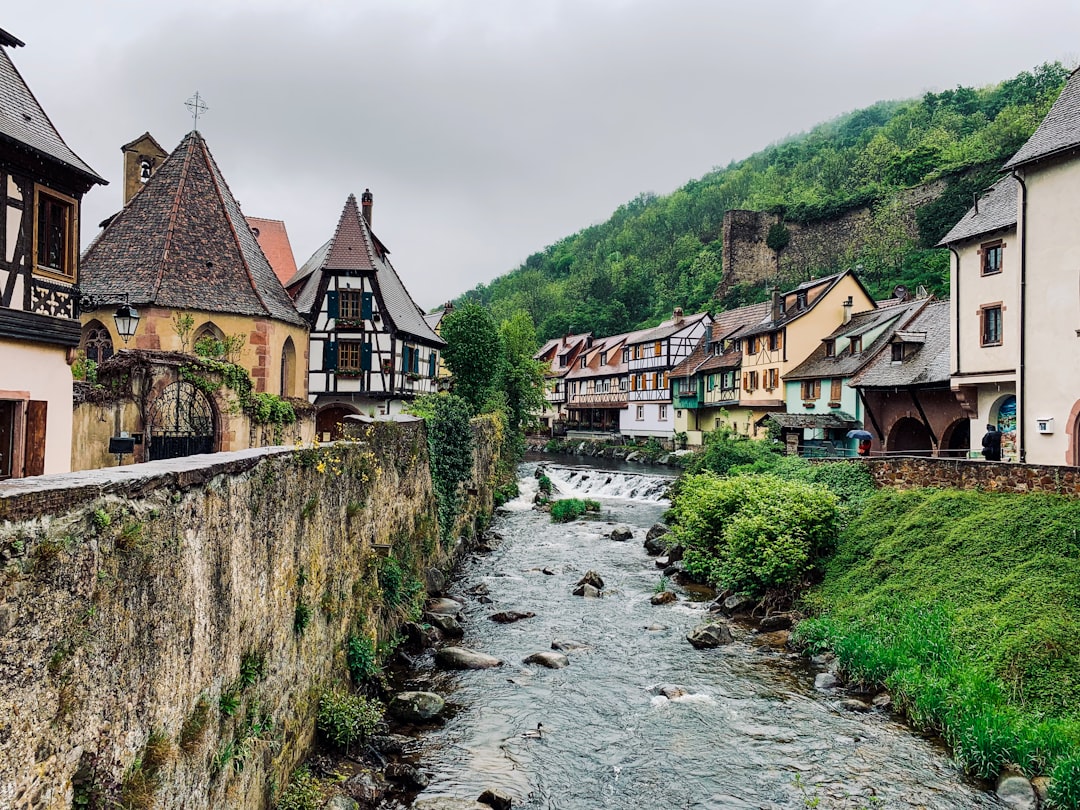

Behind an ancient stone wall that lines the road running through Kaysersberg Vignoble, in the heart of Alsace, lies one of the most fascinating wine estates in France. The Domaine Weinbach occupies the premises of a former Capuchin monastery founded in the 17th century, and its modern production history is inextricably linked to the Faller family, who have led the domaine for decades with a clear vision: to enhance the Alsatian terroir through respectful agricultural practices and careful winemaking.
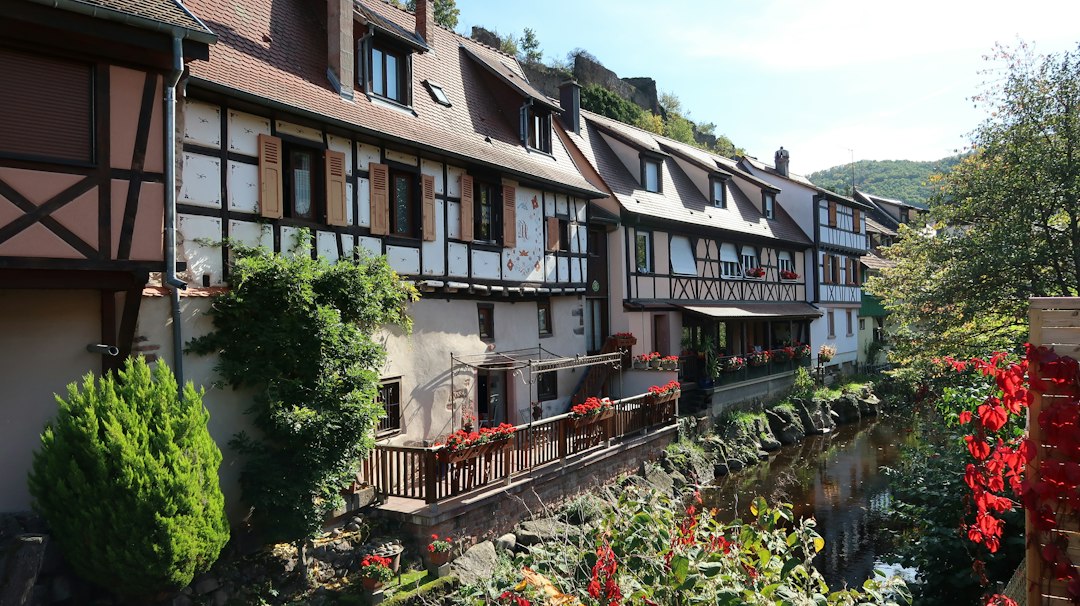
The very name of the domaine evokes water: Weinbach literally means "wine brook" in German, a reference to the small stream that flows at the foot of the Vosges and contributes to the unique microclimate of this area. The Alsatian summer, particularly sunny thanks to the barrier effect of the mountains, allows for a slow and complete ripening of the grapes, an essential condition for the great white wines of the region.
A monastery transformed into a winery
Entering the courtyard of Domaine Weinbach means crossing centuries of history in just a few steps. The 17th-century buildings are still perfectly preserved, with their sober architecture typical of the Capuchin order. The inner courtyard, surrounded by high walls and blooming in every season, conveys a sense of contemplation and silence that pleasantly contrasts with the productive activity taking place there.
The winery, carved out of the original spaces of the monastery, houses winemaking equipment alongside old wooden barrels that tell the story of a continuous tradition. Those who visit the domaine can closely observe the large Alsatian foudres, the characteristic oval oak barrels used for aging white wines, providing gradual oxygenation without imparting invasive woody aromas.
The terroir: grand cru and biodynamic agriculture
The Domaine Weinbach owns parcels in the grand crus Schlossberg and Furstentum, two of the most prestigious designations in Alsace. Schlossberg, entirely classified as grand cru and located on the hills above Kaysersberg, is characterized by granite soils that give Riesling a sharp minerality and remarkable aging potential. Furstentum, with its clay-limestone soils, is more suited to Gewurztraminer and Pinot Gris.
The entire estate is cultivated according to the principles of biodynamics, an approach that goes beyond organic farming and considers the vineyard as an integrated ecosystem, with soil cultivation, plant preparations, and lunar calendar. The visible result is the presence of spontaneous herbs between the rows, a sign of a living soil not sterilized by chemical treatments. This choice is reflected in the aromatic complexity of the wines, which clearly express the characteristics of the originating soil.
The wines: Riesling, Gewurztraminer and more
The Riesling is the symbolic wine of Domaine Weinbach, and in particular the versions from the grand cru Schlossberg are considered among the most representative of the varietal in Alsace. On the nose, one can recognize notes of citrus, white flowers, and a characteristic stony minerality that emerges with aging. On the palate, the acidity is precise and persistent, with a long and savory finish.
The Gewurztraminer produced by the domaine is equally significant: compared to more commercial interpretations of the grape variety, here the aim is to preserve freshness and avoid excessive residual sugar, resulting in aromatically intense wines — lychee, rose, oriental spices — but with a structure that allows for pairing at the table. Late Harvest and Selection of Noble Grains versions are also produced in favorable vintages, sweet meditation wines of rare concentration.
How to organize the visit
The Domaine Weinbach receives visitors by appointment, so it is essential to contact the winery in advance before showing up. The typical visit includes a walk through the courtyard and historical spaces, followed by a tasting of four or six wines in a dedicated room. The time required is about an hour and a half, but those who wish to delve deeper can request a vertical tasting of multiple vintages.
Kaysersberg Vignoble is easily reachable by car from Colmar, located about fifteen kilometers northwest along the Route des Vins d'Alsace. The visit to the domaine pairs well with a walk in the medieval center of Kaysersberg, with its ruined castle and covered bridges over the Weiss River. The recommended time is late spring or autumn, when the vineyards are at their peak visual expressiveness and the wineries are more available to welcome guests outside of the harvest.


