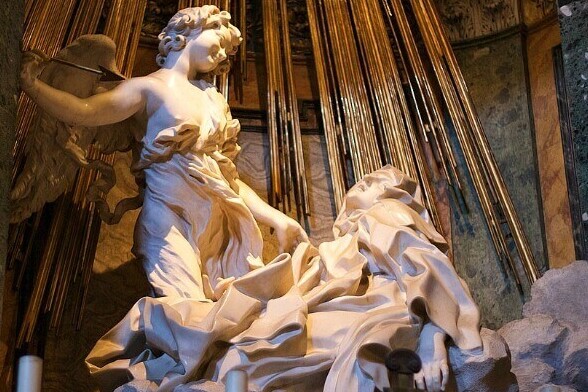


In the heart of Rome, a city steeped in history and artistry, lies a hidden gem that encapsulates the divine interplay of spirituality and creativity. Santa Maria della Vittoria, a Baroque church located at Via XX Settembre, is home to one of the most breathtaking masterpieces of the Italian Renaissance: the Ecstasy of St. Teresa.
### History and Origins
The church was commissioned in 1605 by the Discalced Carmelite Order, founded by Saint Teresa of Avila herself, a pivotal figure in the Catholic Reformation. Construction began shortly after its founding and continued until its completion in 1620. The church was dedicated to the Virgin Mary, commemorating her victory over the Protestant Reformation, hence the name "Santa Maria della Vittoria."
Over the years, the church became a spiritual haven and a center for artistic expression. Its patronage system allowed noble families to commission chapels, encouraging a flourishing artistic environment. The Cornaro family, notable patrons of the arts during the Baroque period, were instrumental in enhancing the church’s visual splendor, particularly with the commission of the Ecstasy of St. Teresa.
### Art and Architecture
The architecture of Santa Maria della Vittoria is an exquisite example of Baroque style, characterized by grandeur, dramatic use of light, and intricate details. The church features a stunning façade adorned with Corinthian columns and elaborate sculptures that beckon visitors into its celestial interior.
Inside, the atmosphere is nothing short of mesmerizing. The chapels are adorned with marble, gilded accents, and frescoes that create a sense of heavenly opulence. The highlight, of course, is Bernini’s Ecstasy of St. Teresa, completed between 1647 and 1652. The sculpture captures a moment from Saint Teresa’s autobiography, where she describes an encounter with an angel who pierced her heart with a golden arrow, a moment both ecstatic and painful.
The sculpture is a masterclass in composition, with Teresa depicted in a state of divine rapture, surrounded by soft, flowing drapery that contrasts with the hard marble. The theatrical setting, complete with members of the Cornaro family observing from their ornate boxes, creates an almost operatic scene, inviting viewers to engage with the profound emotional narrative.
### Local Culture and Traditions
Santa Maria della Vittoria is not just a feast for the eyes; it is deeply embedded in the local culture. The church plays a significant role in the spiritual lives of many Romans, particularly those devoted to Carmelite spirituality. Regular masses, religious events, and the annual feast days draw in faithful congregants and curious tourists alike.
Visitors may witness the Feast of St. Teresa celebrated on October 15, which includes processions, special masses, and a renewed focus on her teachings. This event reflects the enduring legacy of the saint and her impact on the community.
### Gastronomy
No visit to Rome would be complete without indulging in its rich gastronomy. Close to Santa Maria della Vittoria, one can find quaint trattorias offering traditional Roman dishes. Try the Cacio e Pepe, a simple yet flavorful pasta dish made with Pecorino Romano cheese and black pepper, or the Saltimbocca alla Romana, featuring tender veal wrapped with prosciutto and sage.
For a sweet treat, don’t miss out on Maritozzo, a sweet bun filled with whipped cream, perfect for enjoying after a visit to the church. Pair your meal with a glass of Frascati wine, a local favorite that complements the rich Roman cuisine beautifully.
### Lesser-Known Curiosities
While many tourists flock to the famous sites of Rome, the Ecstasy of St. Teresa often goes unnoticed. One fascinating detail is the hidden symbolism in the sculpture; the golden arrow represents divine love, piercing the heart of the saint, a metaphor for the transformative power of faith.
Additionally, many visitors overlook the intricate details of the chapel itself. The Cornaro Chapel contains not just the sculpture, but also a stunning fresco by Giovanni Battista Gaulli, which enhances the ethereal quality of the scene. The interplay of light from the windows above casts a heavenly glow on Bernini's work, further heightening its emotional impact.
### Practical Visitor Information
The best time to visit Santa Maria della Vittoria is during the early mornings or late afternoons when the church is less crowded. This allows visitors to fully appreciate the serene atmosphere and the intricate details of the artwork. Admission is free, although donations are encouraged to help maintain the church.
When visiting, take the time to explore the surrounding area, where you can find charming cobblestone streets and local artisan shops. Look for the small plaques that commemorate the church’s history and its significance to the local community.
To delve deeper into the artistic and cultural treasures of Rome, consider using the Secret World app to curate a personalized itinerary that captures the essence of this remarkable city.