
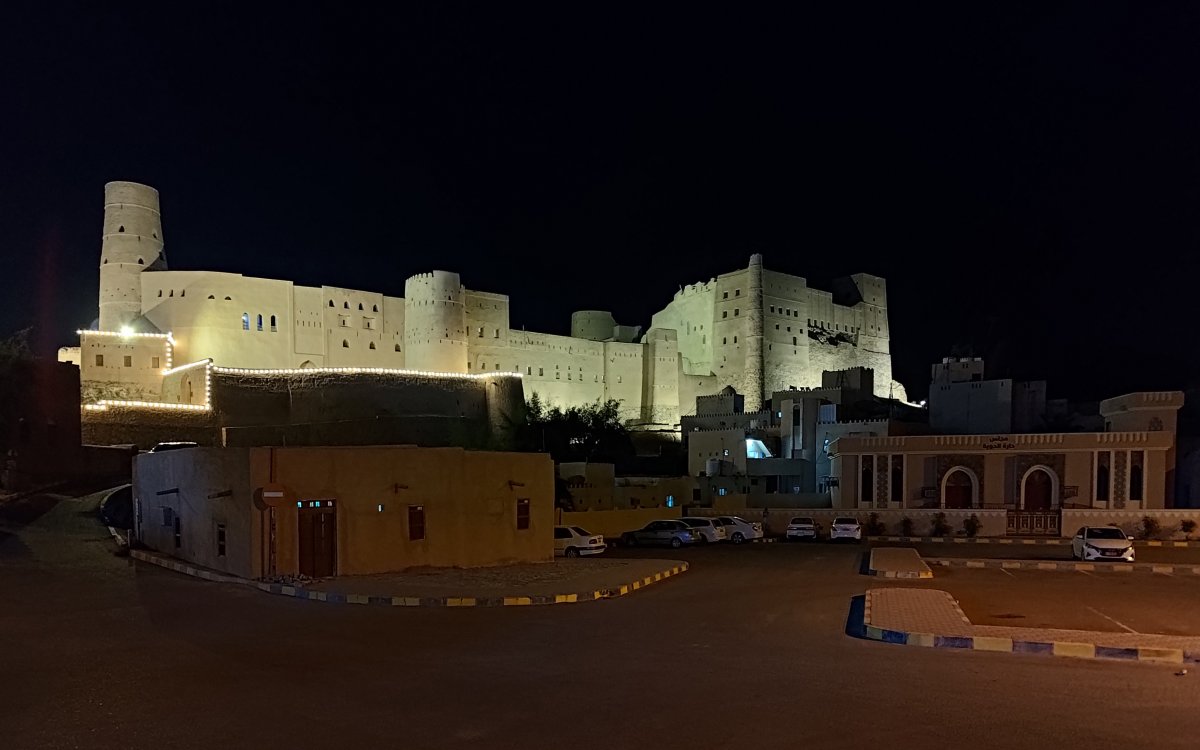

Thirteen kilometers of defensive walls made of raw mud bricks that wind between date palms: this is the first thing that strikes those who approach the Bahla Fort, in the Ad Dakhiliyah region, inland Oman. It is not just a simple tower or a small military outpost, but one of the most extensive architectural complexes in the country, declared UNESCO World Heritage Site in 1987 and later included in the list of endangered sites before being restored and removed from that list in 2004.
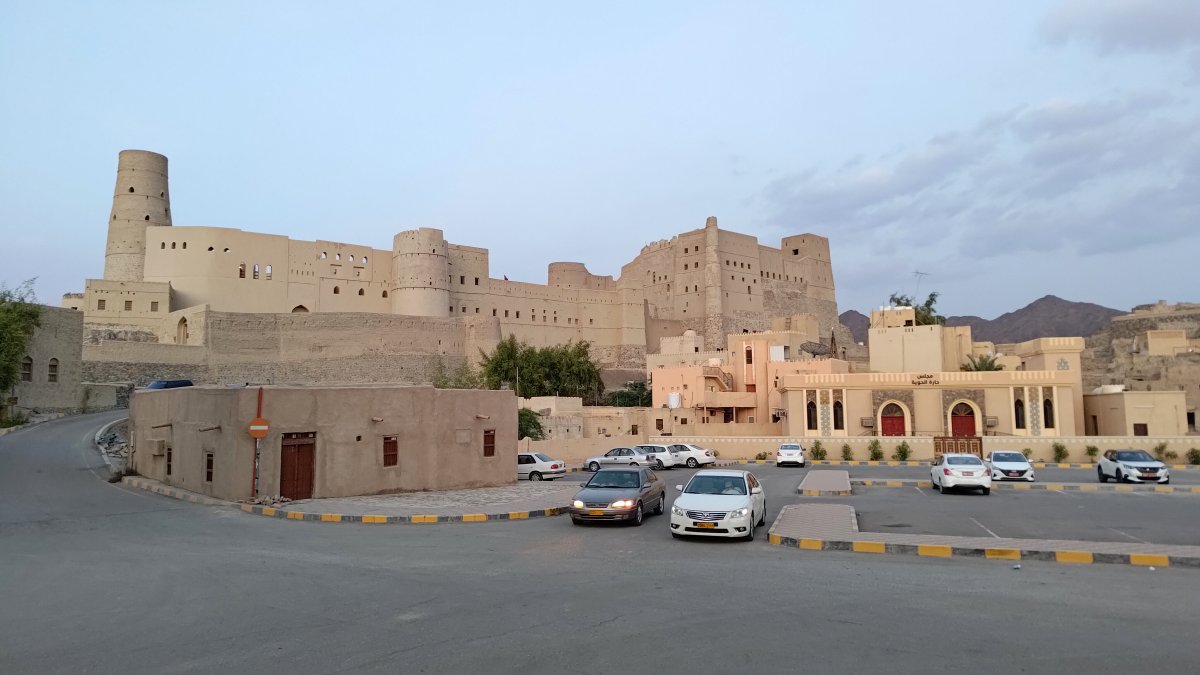
The fortress stands on a rocky outcrop above the oasis of Bahla, a city that reached its peak under the Banu Nebhan dynasty, a tribe that ruled the region between the 12th and 15th centuries. It was during this period that the fort took on its most imposing configuration, although the foundations of some sectors probably date back to the pre-Islamic era. The ensemble of towers, bastions, inner courtyards, and covered corridors tells of construction layers that have accumulated over many centuries.
Raw Earth Architecture: An Elaborate Defensive System
The dominant material of Fort Bahla is raw earth mixed with straw, worked into sun-dried blocks and then assembled with mud mortar. This construction technique, widespread throughout the Arab and African world, reaches an unusual complexity here: the outer walls, rising in certain sections to about 15 meters, feature semicircular and angular towers positioned at regular intervals to ensure visual coverage along the entire perimeter. Walking along the outer perimeter, one can observe how the mud bricks have been stacked in precise horizontal courses, with wall thickness in some places exceeding two meters.
Inside the fort, courtyards succeed one another through portals with semicircular arches decorated with geometric patterns engraved in white lime. The rooms designated for guards and storage still retain the original niches in the walls, used to store oil lamps. Particularly noteworthy is the main tower, which dominates the surrounding landscape and from which one enjoys a complete view of the underlying oasis and the villages of Bahla.
The artistic details to observe up close
Those who visit the fort attentively will find, on the internal walls of some rooms, traces of stucco decorations with stylized floral motifs, typical of the Arab-Islamic tradition. The solid wood doors — some original, others the result of restoration carried out in the 1990s and 2000s with the support of UNESCO — display geometric carvings that recall the same patterns found in the mashrabiyya windows of historic Omani houses.
The internal water system deserves specific mention: channels made of stone and terracotta run beneath the floors and along the walls, part of a falaj — the traditional Omani irrigation system — that supplied both the fort and the surrounding oasis. The falaj of the Bahla oasis was also recognized as UNESCO Heritage in 2006, along with other similar systems in Oman. Observing how water and defensive architecture integrated is one of the most instructive aspects of the visit.
How to Organize the Visit Effectively
The fort is located about 200 kilometers southwest of Muscat, accessible by car via the main road that crosses the Ad Dakhiliyah region. The route from Nizwa, the nearest historic city, is about 40 kilometers and takes less than half an hour. There is no direct public transport service, so renting a car is the most practical solution.
The best time to visit is early in the morning, preferably between 8:00 and 10:00, when the slanting light enhances the textures of the mud walls and the temperatures are still bearable, especially between April and October when the internal heat can become intense. Allow at least two hours for a complete visit that includes both the fort and a walk along the outer walls. Bring enough water, comfortable shoes with non-slip soles for the uneven stone floors, and a hat: many areas of the path are uncovered.
The context of the oasis: what to see in the surroundings
The fort does not exist in isolation: the entire city of Bahla preserves a historic center with mud-brick houses, an ancient mosque, and a traditional souk where local potters produce ceramics using techniques that have remained unchanged for centuries. The ceramics of Bahla are renowned throughout Oman for their unique shapes and the use of locally sourced pinkish clays. Purchasing a piece directly from the potters in the souk is one of the most authentic souvenirs that can be taken away from this region.
Combining the visit to the fort with that of the nearby Nizwa Fort, located about 40 kilometers away, allows for a comparison of two different architectural approaches to Omani military defense: the first dominated by mud-brick and horizontal extension, the second characterized by a massive circular stone tower. The comparison is useful to understand how local resources and strategic needs have shaped military architecture in the Arabian Peninsula differently.


