
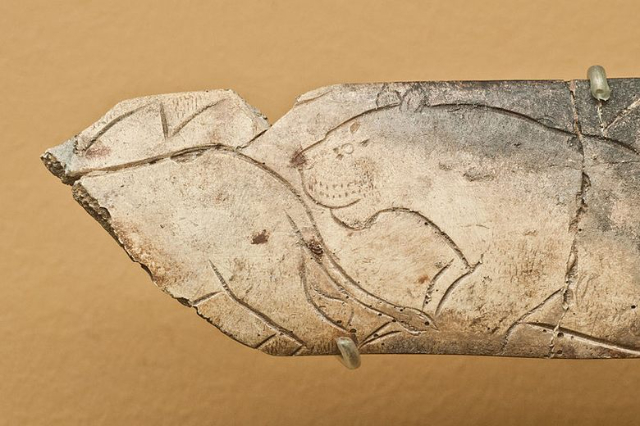

In Saint-Germain-en-Laye, France, is the famous Lion Frieze, a pair of running lions engraved on animal bone that represents one of the earliest artistic depictions of big cats.The Lion Frieze dates back to the Upper Paleolithic and is dated to about 15,000 years ago. This extraordinary archaeological find is made on long bone, presumably mammoth bone, and depicts two lions in motion. The sculpture features detailed carving that captures the power and elegance of the running lions.What makes the Lion Frieze so significant is that it represents one of the earliest artistic representations of big cats in human history. This prehistoric artwork testifies to the artistic skills and aesthetic sensibility of our ancient ancestors, who were able to capture the details and essence of lions through the art of sculpture.Currently, the Lion Frieze is on display at the National History Museum in Saint-Germain-en-Laye, where visitors can admire this extraordinary work of prehistoric art. The sculpture offers a fascinating link to the past, allowing us to appreciate the artistry of our ancient predecessors and their ability to depict the majesty of the big cats.Visiting the Lion Frieze offers a unique opportunity to immerse yourself in prehistoric history and art, and to appreciate the cultural and historical importance of this artistic depiction of lions.


