
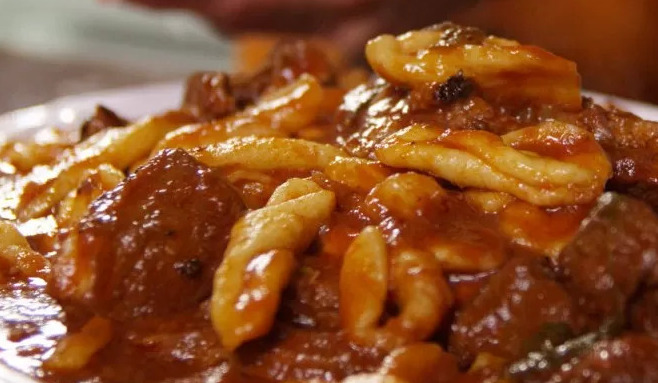

In the heart of Abruzzo, where the Apennine Mountains flirt with the Adriatic Sea, lies a culinary treasure: fusilli with hare sauce. This dish, deeply rooted in the traditions of Pescara, offers a taste of the region's rich history and vibrant culture. As you unravel the layers of this iconic pasta dish, you also uncover the stories of a land where the past and the present intertwine seamlessly.
The origins of this dish trace back to the pastoral communities that have thrived in Abruzzo for centuries. The region's ancient history, marked by the influence of the Romans and later the medieval Lombards, has left an indelible mark on its culinary landscape. Hunting, particularly of the hare, has been a part of Abruzzese life since these times, reflecting both necessity and tradition. As you savor the robust flavors of the hare sauce, you are tasting a piece of history that has been passed down through generations.
Beyond its culinary delights, Pescara is a city steeped in artistic heritage. While much of the city was rebuilt following World War II, remnants of its architectural past linger in places like the Basilica of Our Lady of the Seven Sorrows. The basilica, with its Baroque influences, stands as a testament to the region’s dedication to preserving its artistic roots. Meanwhile, the works of native son Gabriele D'Annunzio, a renowned poet and playwright, add a layer of literary prestige to the city. D'Annunzio's former residence, now a museum, offers a glimpse into the artistic soul of Pescara.
Cultural traditions in Abruzzo are as rich and varied as its landscapes. Festivals play a crucial role in the local life, with events like the Sulmona International Film Festival and the Festival of the Serpari—a snake-handling festival—drawing visitors from near and far. These celebrations, with their deep-rooted customs, reflect the community spirit and enduring traditions of the region. In Pescara, the annual Festa di Sant'Andrea, honoring the patron saint of fishermen, is a vibrant display of local devotion, featuring a procession of boats and a feast that highlights the bounty of the sea.
Gastronomy in Abruzzo is a feast for the senses, with fusilli with hare sauce being just one of many culinary gems. The region is also known for its arrosticini, skewers of lamb cooked over an open flame, and montepulciano d'Abruzzo, a robust red wine that pairs perfectly with the hearty dishes of the area. The interplay of flavors in Abruzzese cuisine is a reflection of the land itself—wild, rugged, yet remarkably harmonious.
Yet, beyond the well-trodden paths and the popular attractions, Pescara holds secrets waiting to be discovered. Did you know that Pescara is home to the Museo delle Genti d'Abruzzo, a unique museum dedicated to the ethnographic history of the region? Here, you can explore the diverse cultural influences that have shaped Abruzzo over the centuries. Another curiosity is the Trabocchi Coast, a stretch of coastline dotted with ancient fishing machines known as trabocchi. These structures, with their spider-like arms extending into the sea, are a testament to the ingenuity of past generations and offer stunning views of the Adriatic.
For those planning a visit, the best time to experience Pescara is in the late spring or early autumn. During these periods, the weather is mild, and the crowds are fewer, allowing for a more intimate exploration of the city and its surroundings. When visiting, take the time to wander through the Pescara Vecchia, the old town, where narrow streets and quaint cafes invite you to linger and soak in the local ambiance. As you explore, keep an eye out for local artisans crafting traditional ceramics and textiles, offering a tangible connection to the region's artistic heritage.
In Pescara, history, art, and culture converge to create a tapestry as rich and inviting as its beloved fusilli with hare sauce. Whether you're a history buff, an art aficionado, or a culinary explorer, this vibrant city offers a journey that delights the senses and nurtures the soul.


